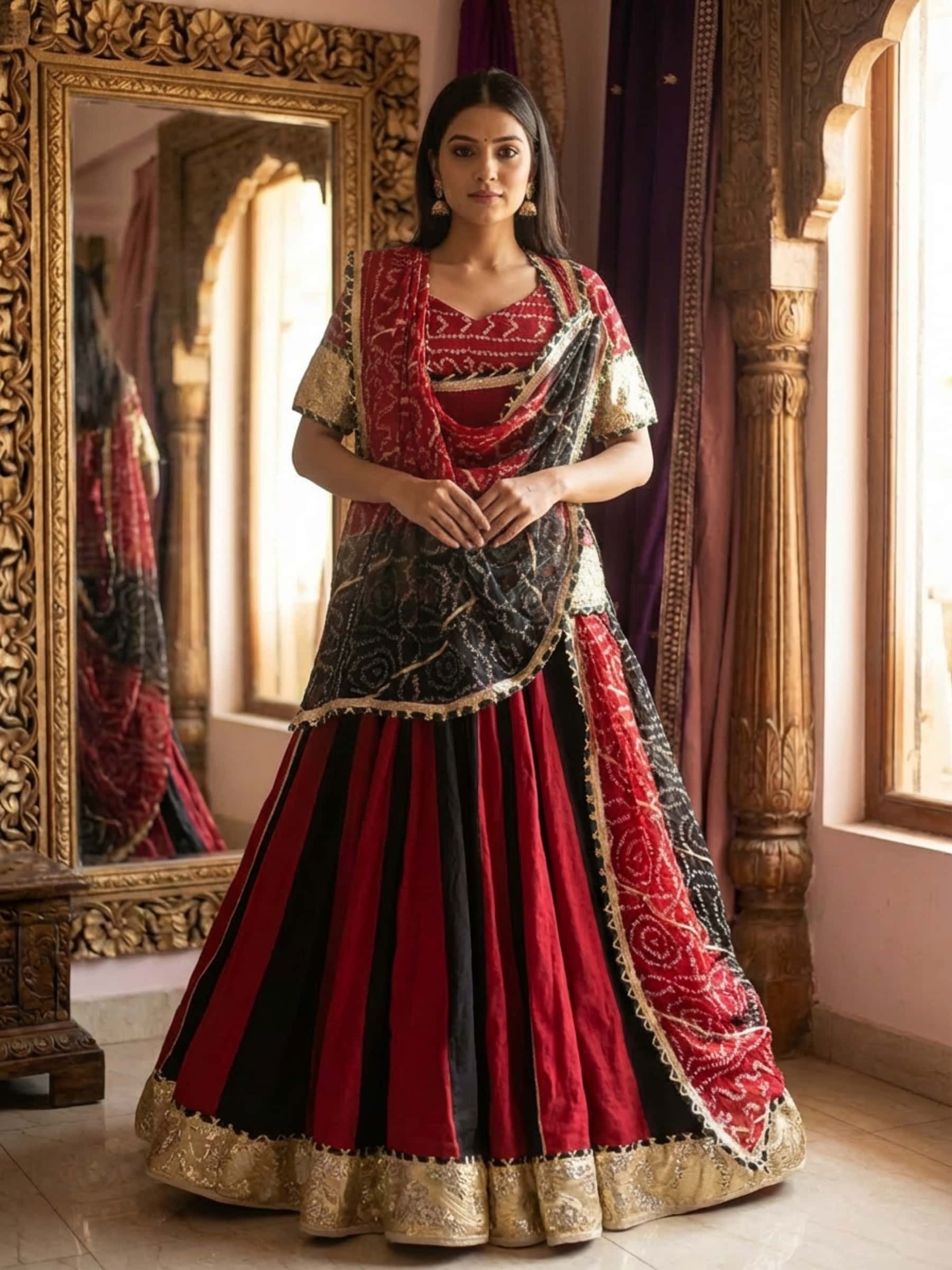
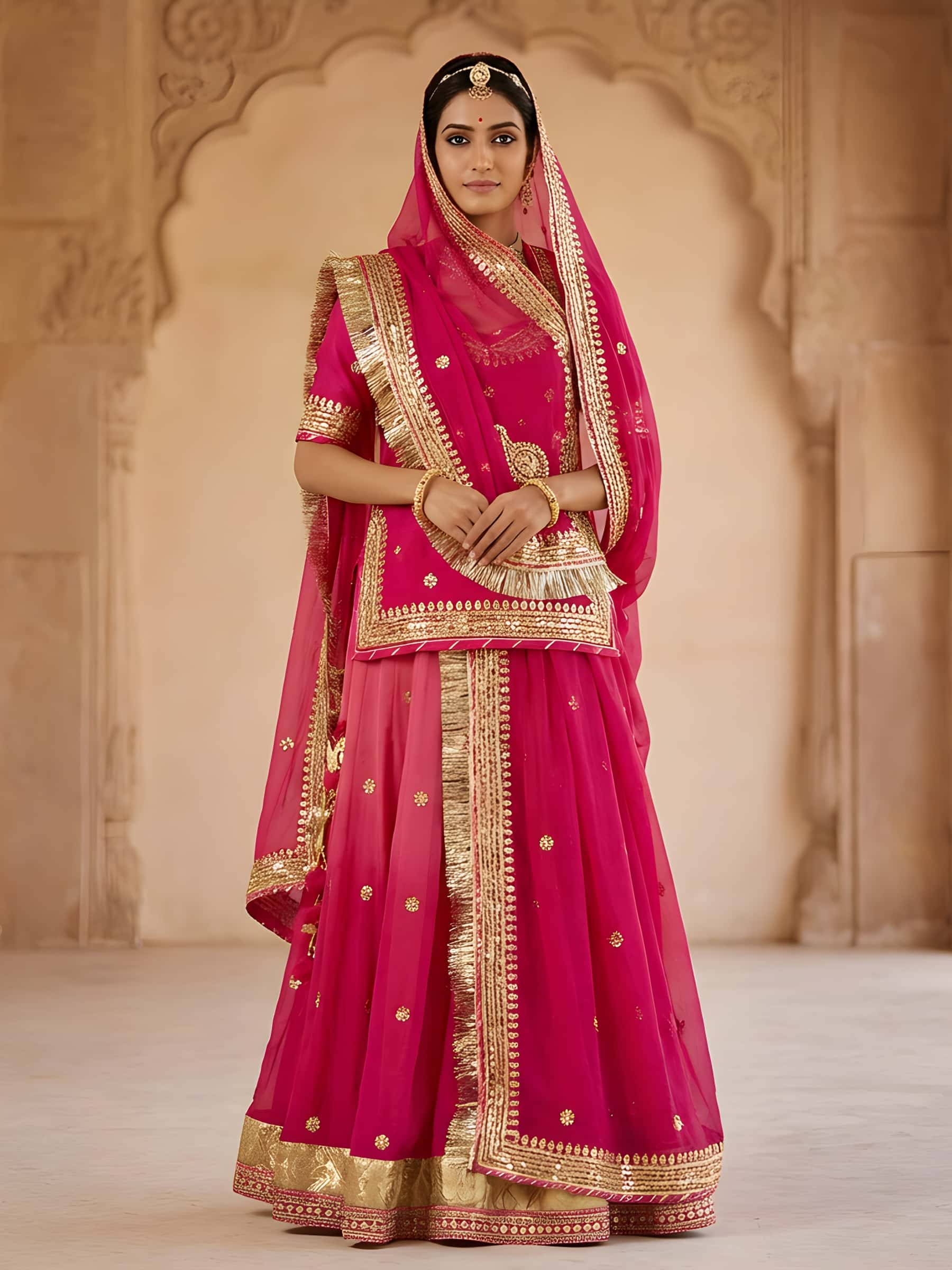
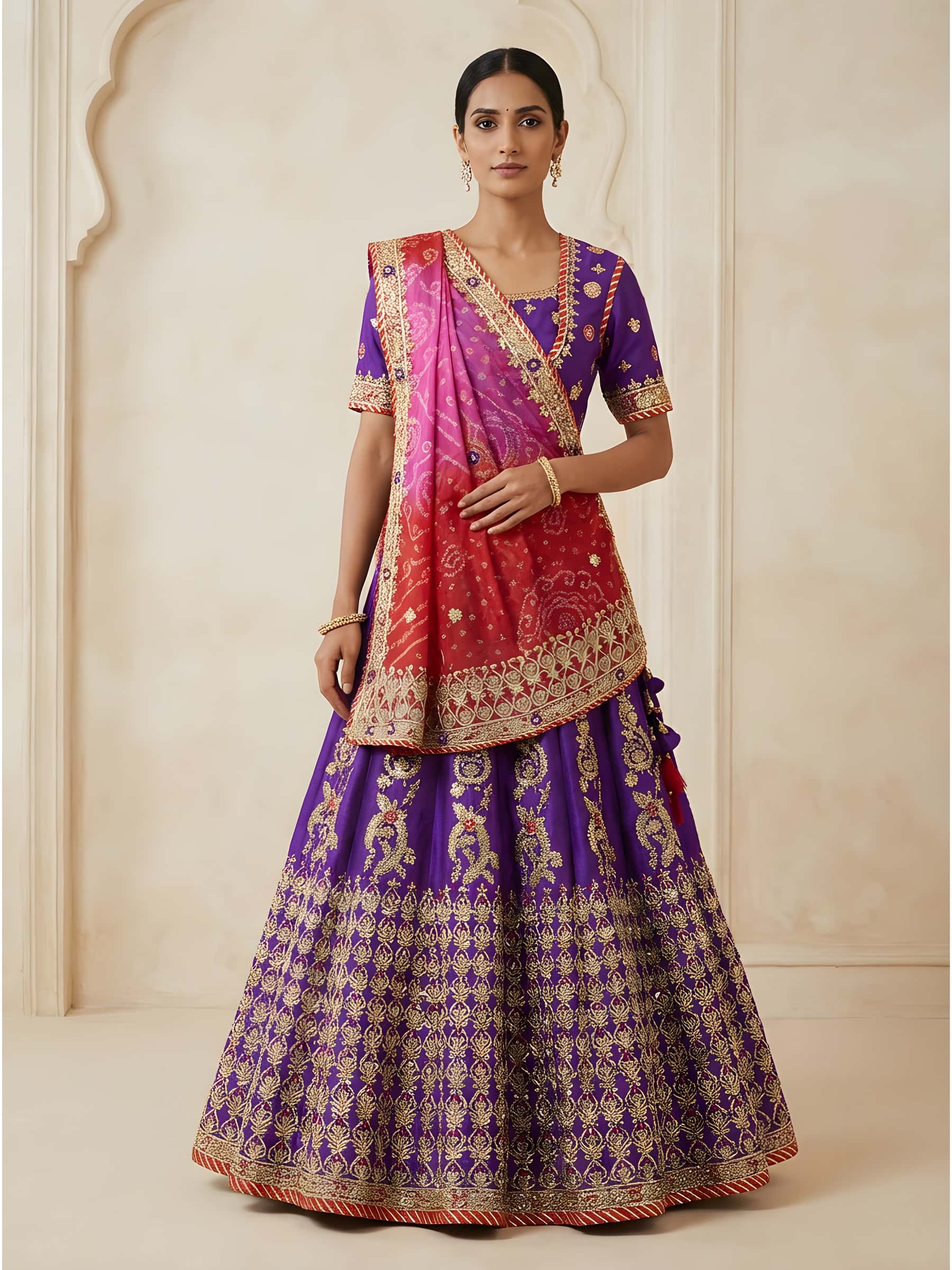
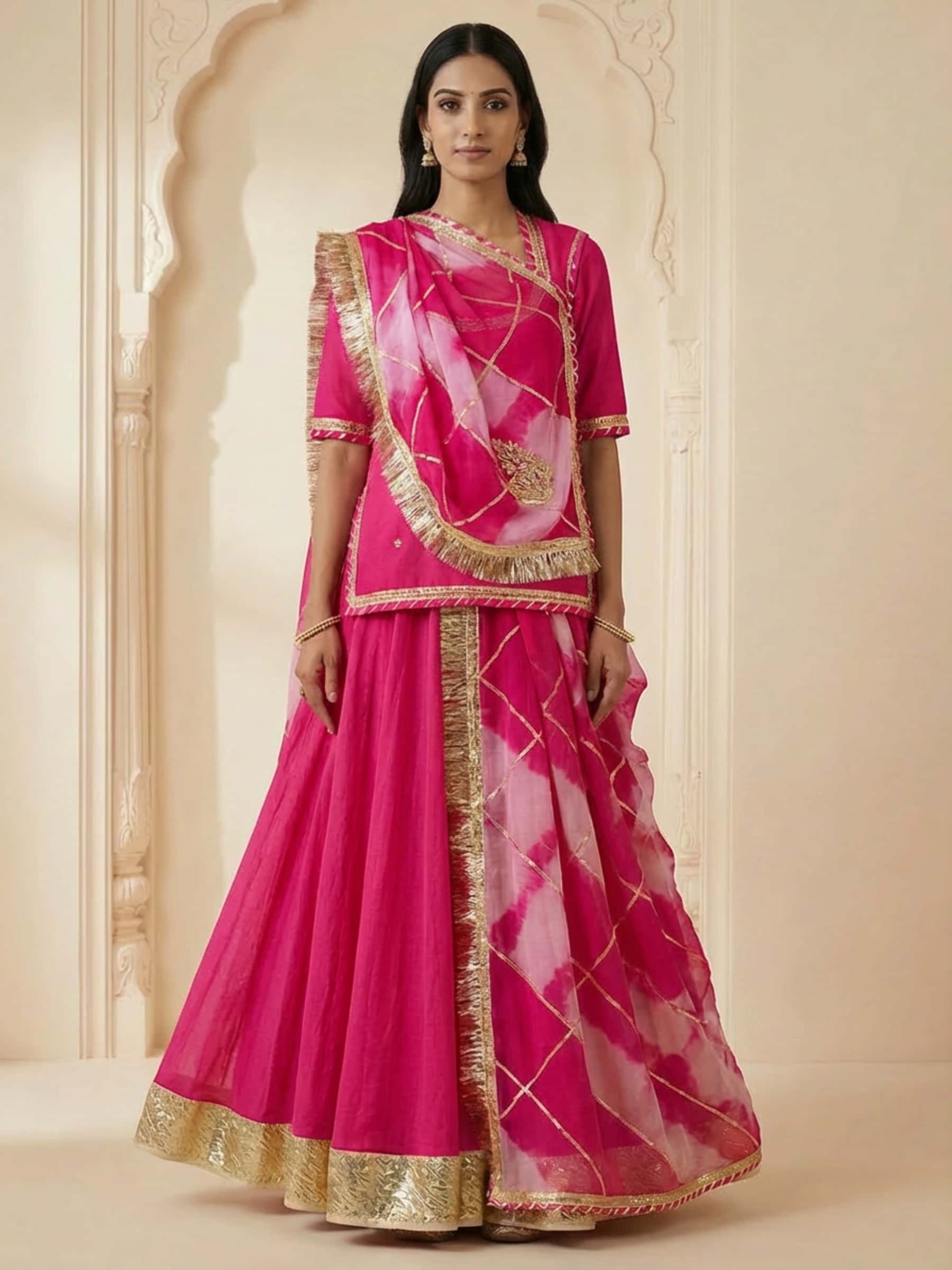
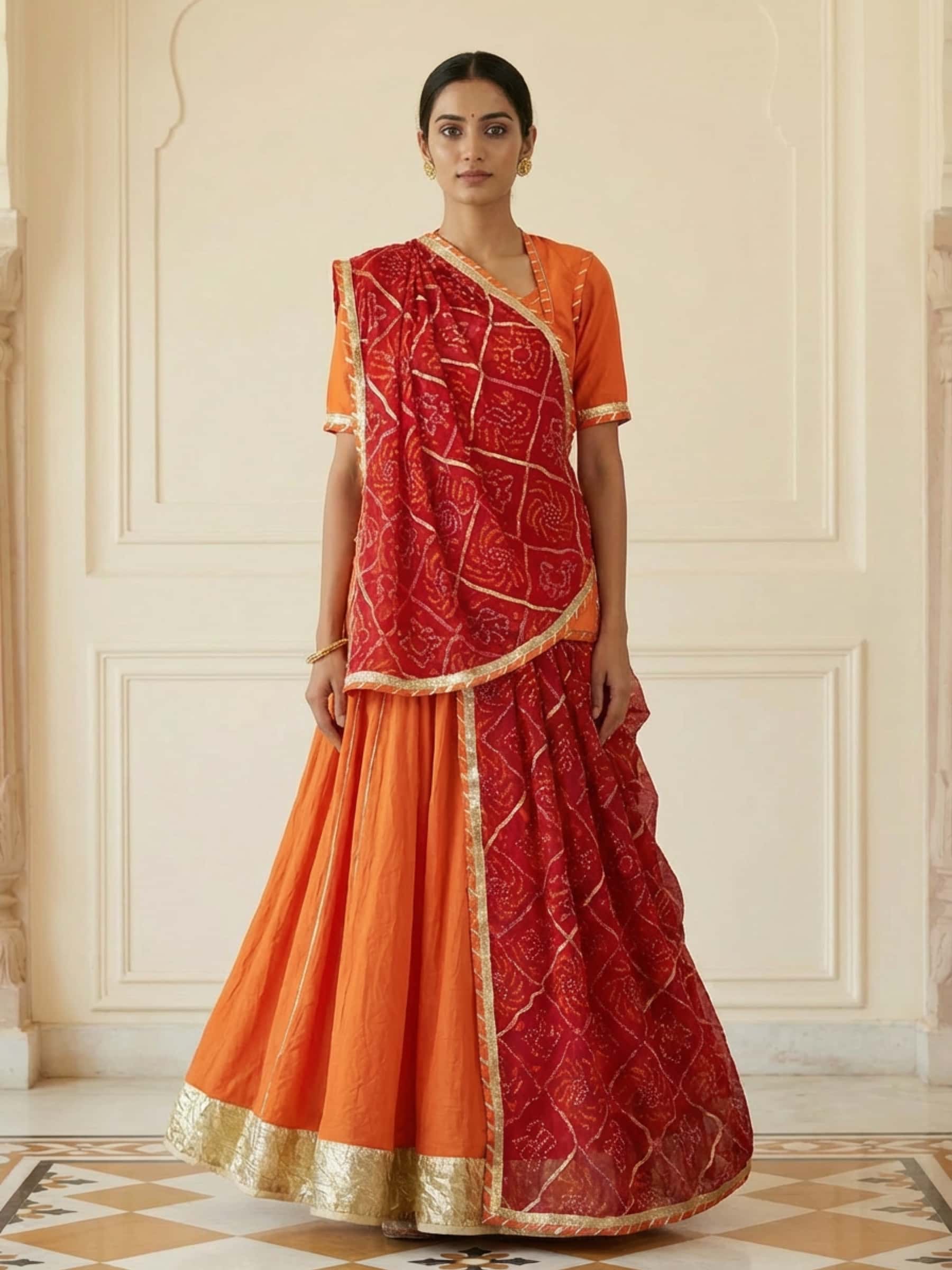
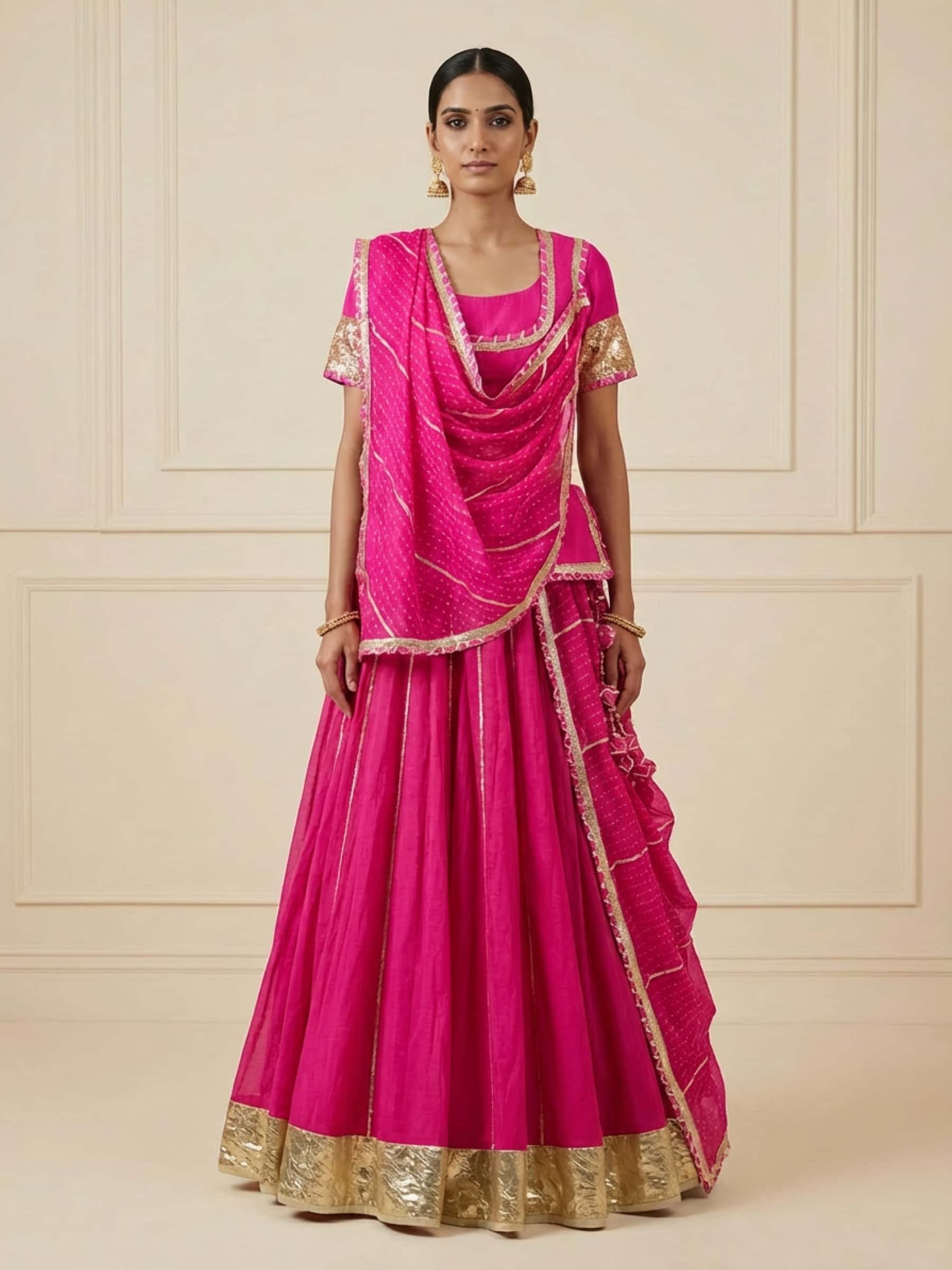
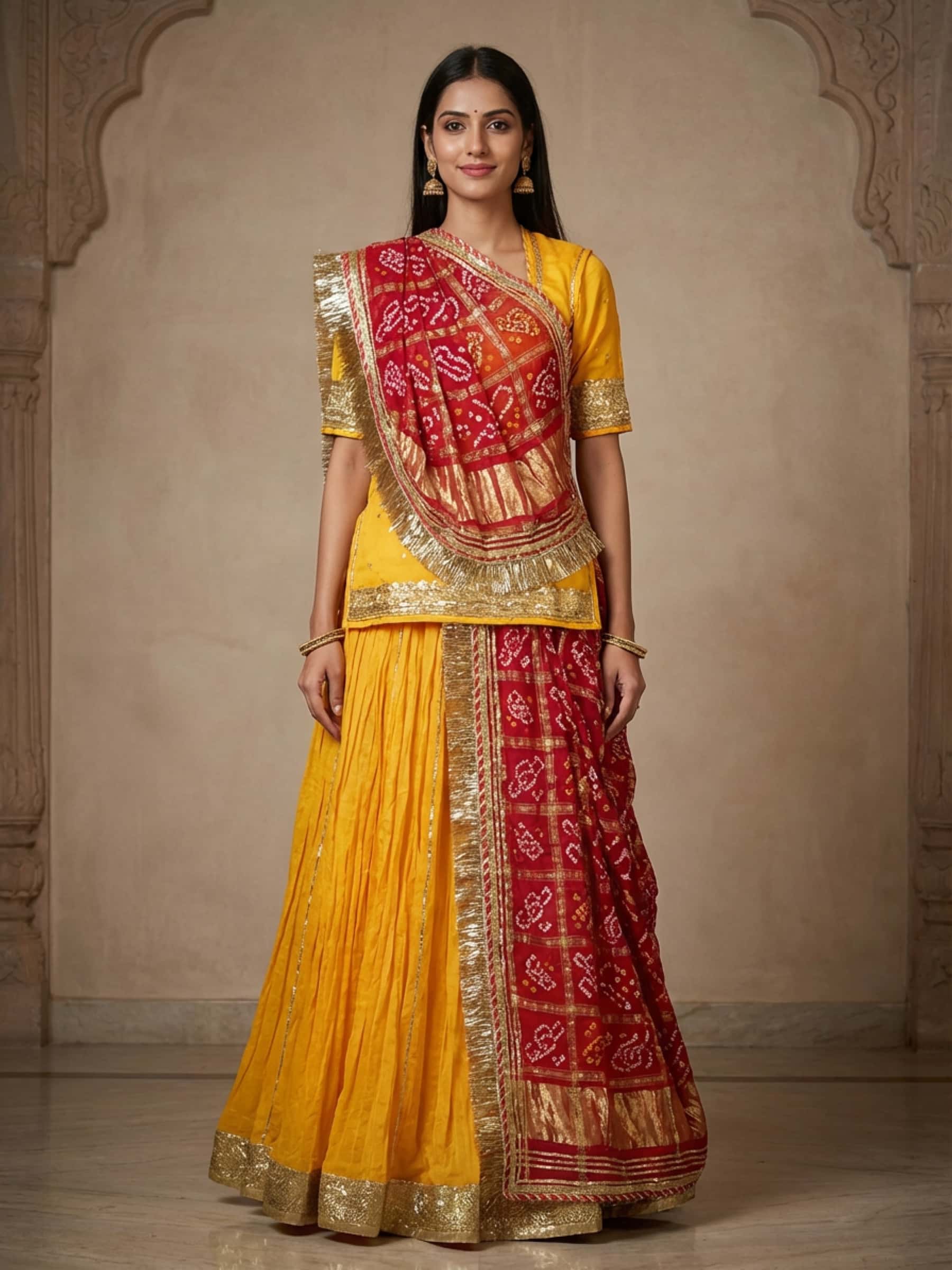
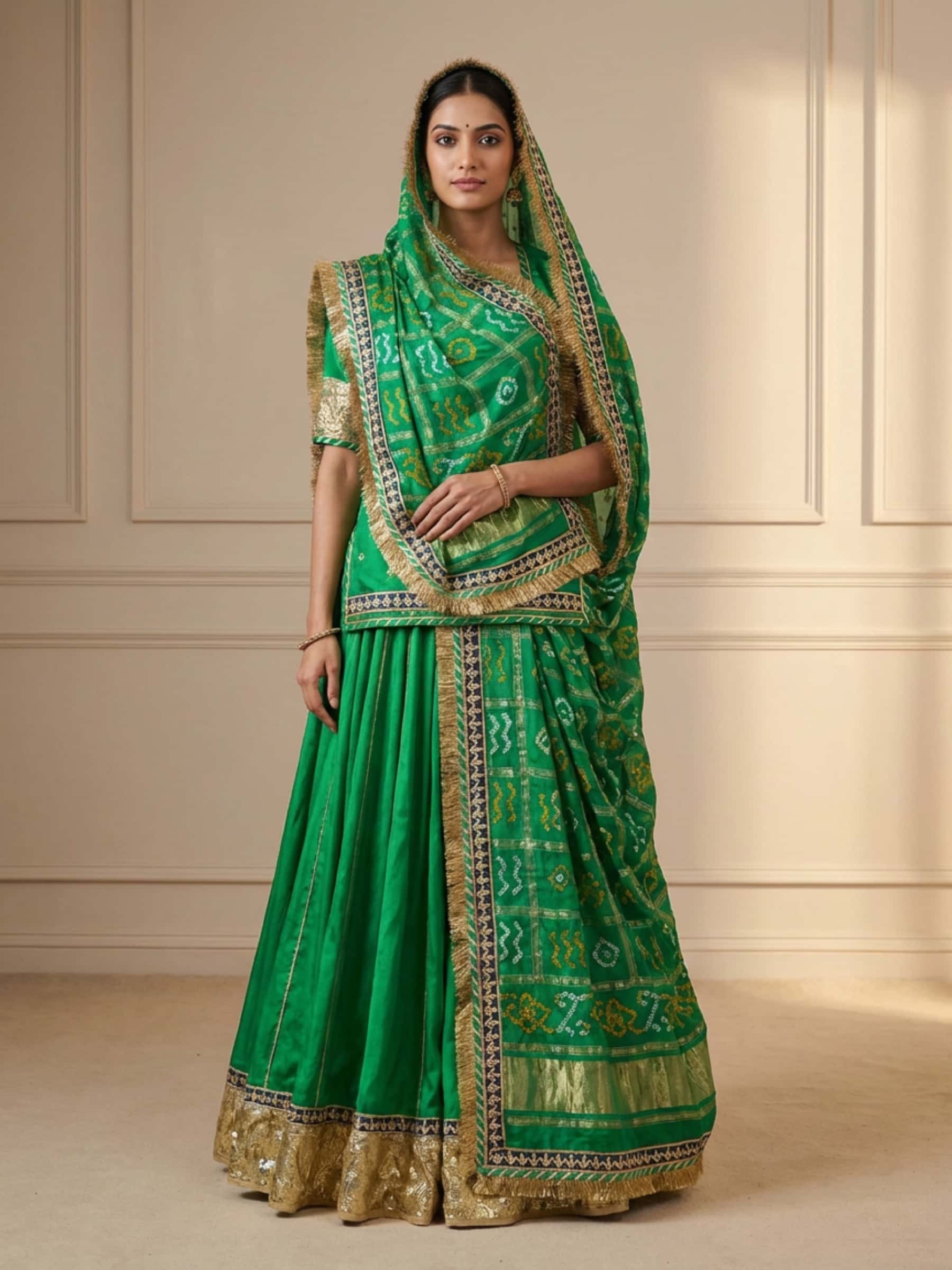
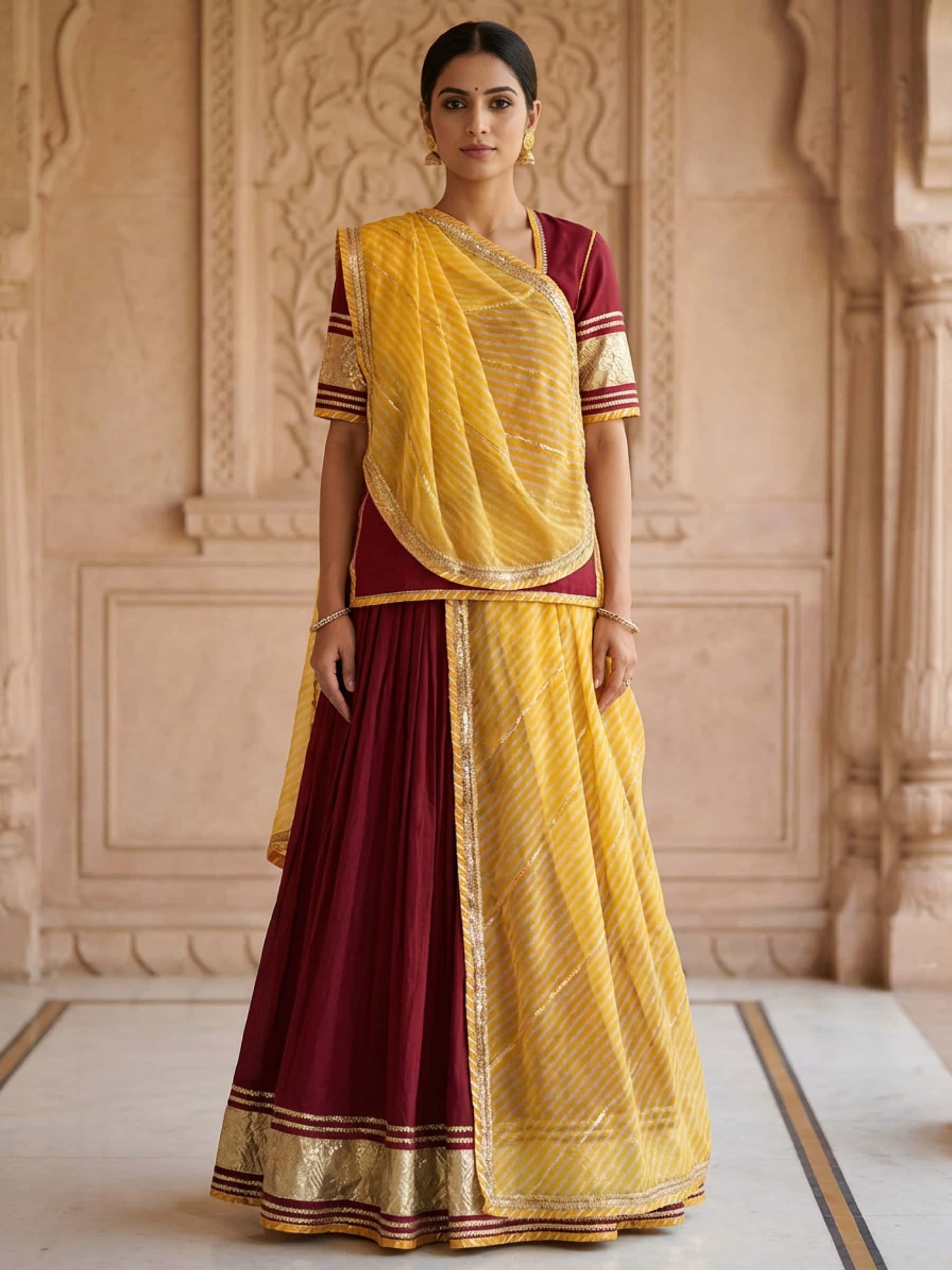
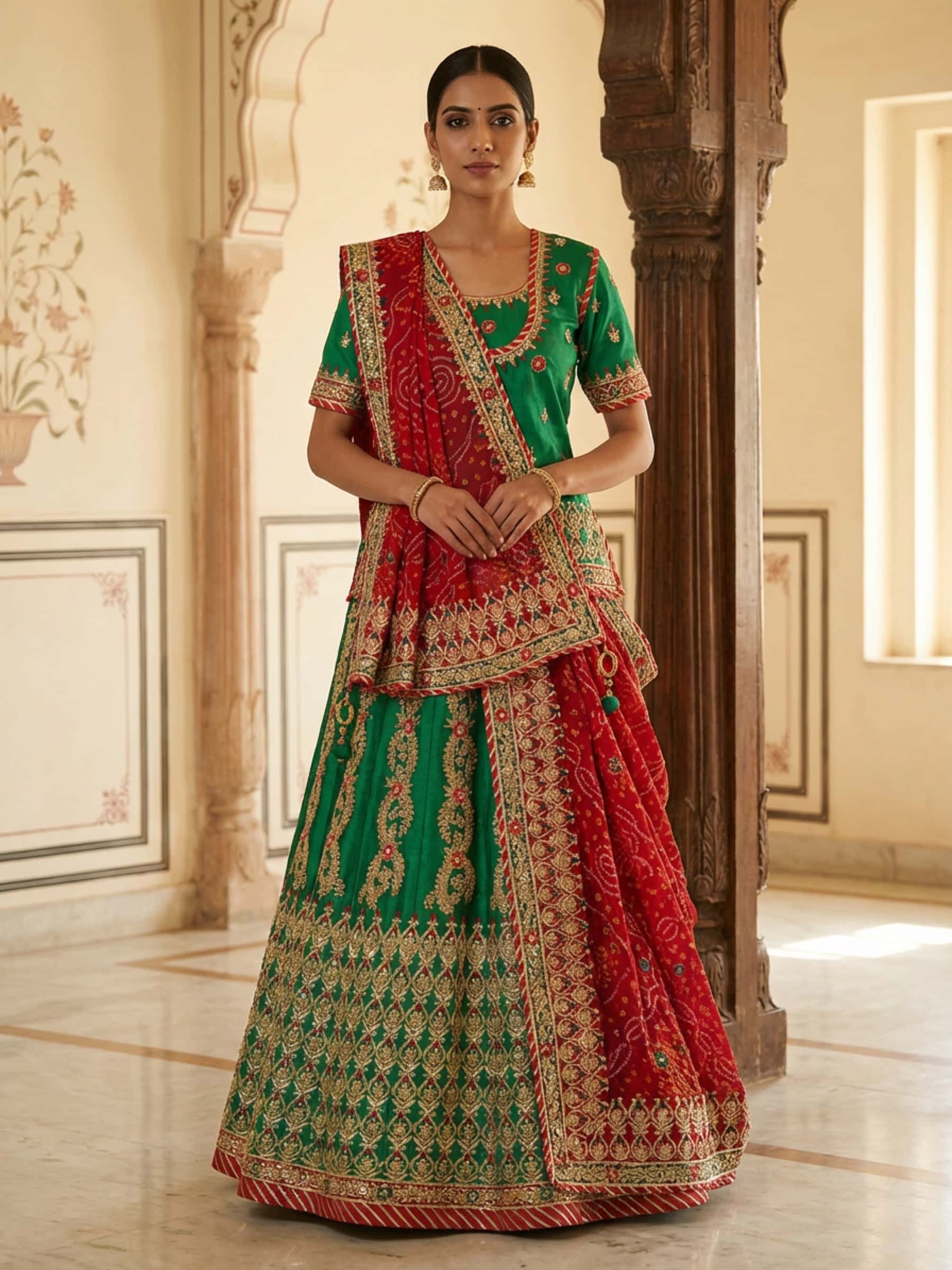
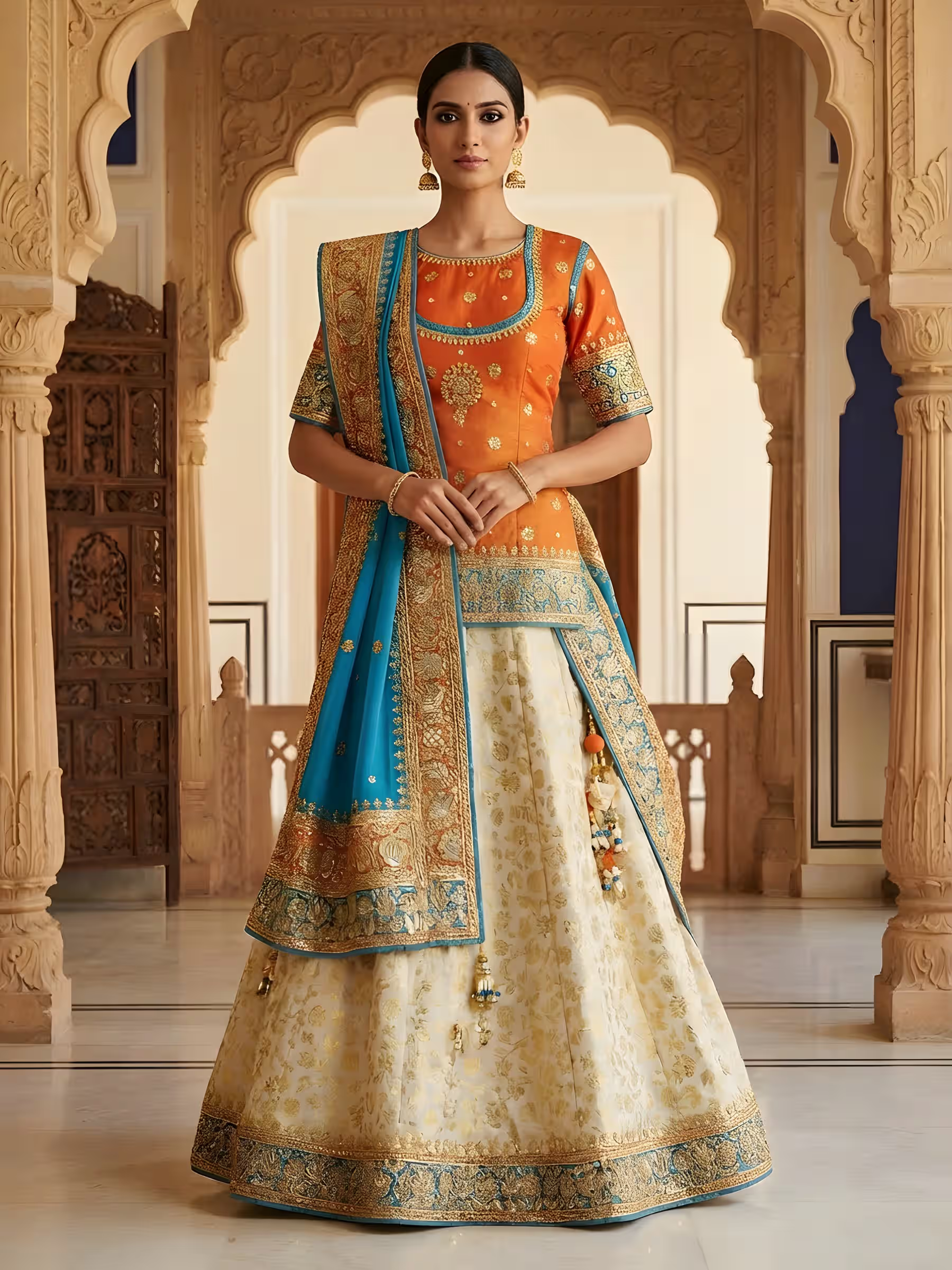
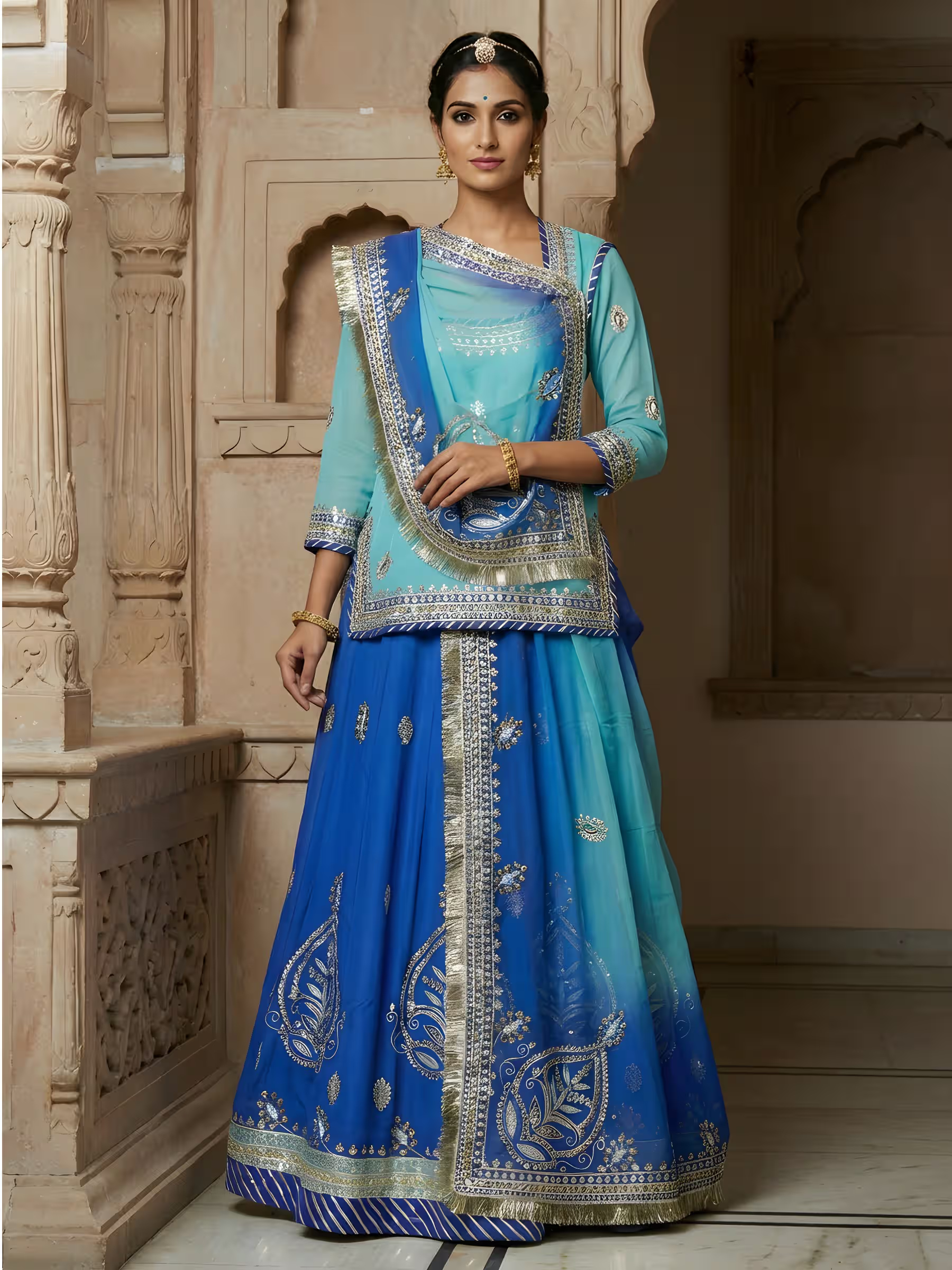
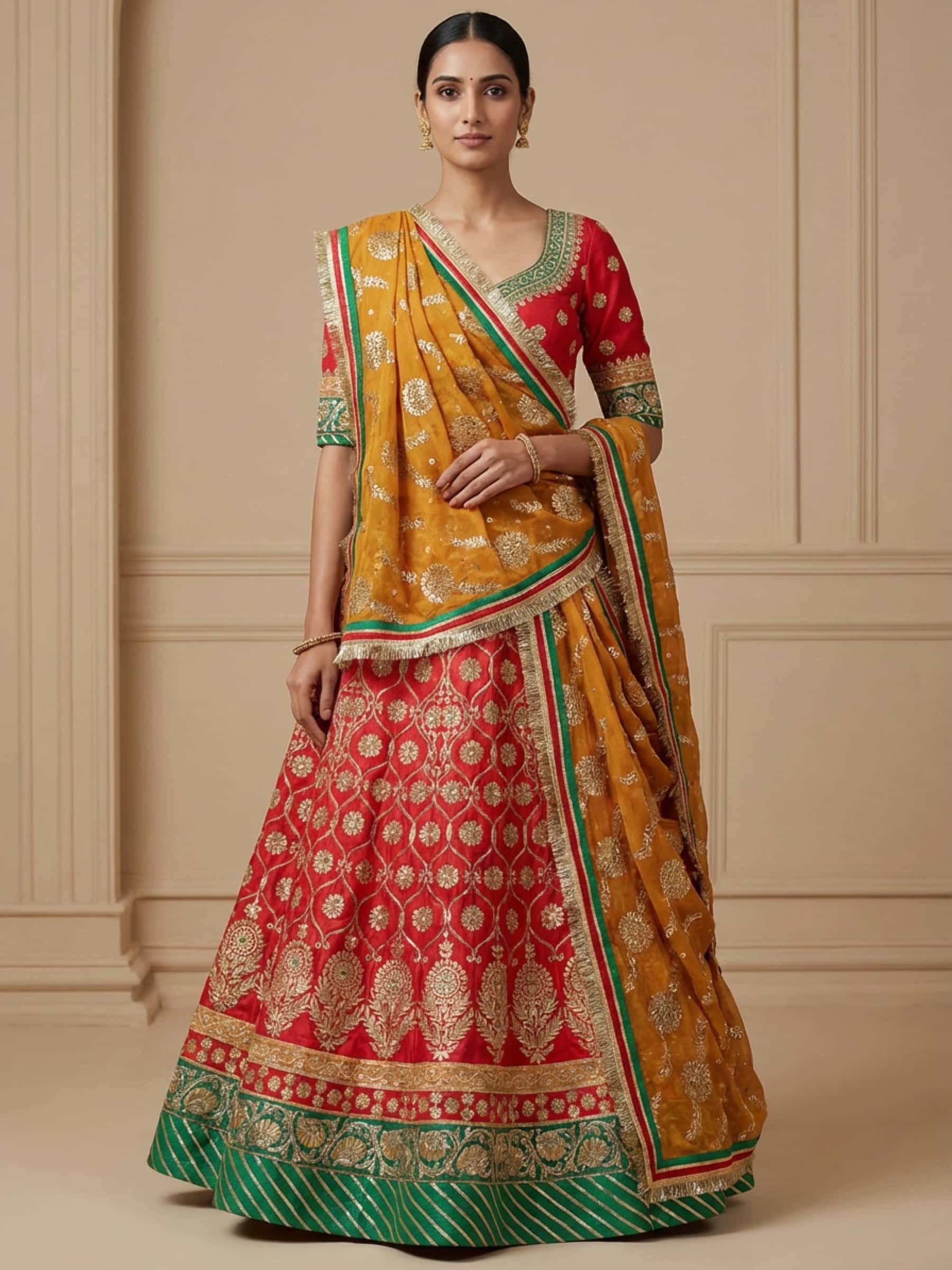
The Rajputi Poshak is the traditional dress of the Rajput community of Rajasthan — a four-piece ensemble that has been worn by Rajput women for over six centuries. Every Rajputi Poshak in our collection above is handcrafted in our Jaipur atelier by master artisans, with the fabric, embroidery, and silhouette traceable to a specific craft family. If you are new to the Poshak, start with our complete buying guide; if you are shopping for a wedding, the function-by-function guide walks you through what to wear for engagement, tilak, mayra, haldi, mehendi, wedding day, and reception.
What is a Rajputi Poshak?
A complete Rajputi Poshak comprises four distinct pieces, each with a specific role:
- Kanchli — the inner blouse, traditionally sleeveless, worn against the skin
- Kurti — the outer tunic with a unique horseshoe neckline that sits over the Kanchli
- Ghagra (Lehenga) — the voluminous pleated skirt, traditionally made with anywhere from 12 to 80 vertical panels called kalis
- Odhni — the long drape worn over the head and across the body
The number of kalis in the Ghagra is the single biggest determinant of how a Poshak moves and how royal it reads. A 12-kali skirt is lighter and suited to everyday or summer wear; a 50- or 80-kali skirt produces the full circular flare associated with bridal and ceremonial Poshaks. Our 80 Kali Poshak pieces include both classical and contemporary interpretations.
Cultural origin and regional variations
The Rajputi Poshak is rooted in the Rajput courts of Rajasthan and varies subtly by region. The Marwar style (Jodhpur, Bikaner) typically features heavier fabrics and richer embroidery. The Mewar style (Udaipur, Chittorgarh) leans on lighter silhouettes and floral motifs. The Shekhawati style (Sikar, Jhunjhunu) is known for its bold Bandhej and Leheriya odhnis. While modern Poshaks blur these lines, an authentic piece will often signal its regional origin through fabric choice, motif vocabulary, and embroidery density.
The Poshak is worn at every major life ceremony: weddings, sangeet, tilak, mayra, haldi, mehendi, Teej, Gangaur, Karwa Chauth, and the day-to-day occasions of family life. For NRI brides and the Rajasthani diaspora, the Poshak is the single most important garment in the wedding wardrobe — and the one most worth investing in handcrafted.
Choosing a Poshak by occasion
- Bridal (wedding day) — 80-kali Gota Patti or Zardozi Poshak in red or maroon. Maximum flare, heavy handwork, ceremonial weight.
- Reception — Bandhani 80-kali or Pyor Poshak in jewel tones. Photographs well, lighter to wear for long evenings.
- Sangeet / mehendi — Half-Pyor Poshak with Leheriya odhni. Easier to dance in; vivid colours suit the function.
- Engagement / tilak — 40-kali Gota Patti in pastel or sorbet shades. Lighter handwork, daytime palette.
- Teej / Gangaur — Bandhej Poshak with a traditional Leheriya odhni. Seasonal motif, mid-weight fabric.
- Everyday / festive — 12- to 20-kali Poshak in cotton or georgette. Wearable, low-maintenance.
If you are buying for a multi-function wedding, plan the Poshak set as a wardrobe rather than as individual pieces — colour palette across functions should read as intentional, not random.
Fabric guide
The fabric determines how the Poshak drapes, how heavy it feels through a long function, and how well it photographs.
- Pure georgette — our most-recommended bridal fabric. Drapes fluidly, holds heavy Gota work without sagging, photographs with depth.
- Pure silk (Banarasi, Gajji) — traditional and weighty. Ideal for cooler-weather weddings; can feel heavy in summer.
- Velvet — winter and Northern wedding choice. Carries Zardozi exceptionally well.
- Pure crepe — lighter drape, well-suited to non-bridal Poshaks and second-day functions.
- Cotton (mul-mul, voile) — daytime, summer, or Teej Poshaks. Breathable and easy to wear.
Avoid synthetic-blend Poshaks marketed as "designer" — they save weight at the cost of drape and longevity. Every Poshak in our collection is fabric-disclosed; you will know exactly what you are buying.
Sizing and customisation
Rajputi Poshaks are traditionally made-to-measure. We accept the bust, waist, hip, and Ghagra-length measurements; the kanchli and kurti are cut to fit, and the Ghagra is adjusted for height. Light poshaks take 8–10 weeks of production; standard heavy poshaks with substantial Gota Patti or Zardozi work take 12–24 weeks; the most intricate bridal poshak sets — full multi-piece kanchli + kurti + 40-to-80-kali ghagra + odhni with bridal-density handwork across every panel — take 32–52 weeks. Add 1 week for domestic shipping or 3 weeks for international shipping. For NRI customers, see our shipping policy for international delivery details.
If you have an existing Poshak whose Ghagra needs altering, we accept alterations on garments purchased from us. Returns and exchanges are not offered on made-to-measure pieces — please see our returns policy for full terms.
What to wear with a Rajputi Poshak
A Rajputi Poshak is incomplete without the right jewellery and accessories. The classical set includes the Borla (maang tikka centrepiece), Aad (choker), Timaniya (layered necklace), Bajuband (armlet), Haath Phool (hand ornament), and Payal (anklets). For a bridal Poshak, the full set is customary; for festive wear, a Borla and Aad with traditional bangles is sufficient. Pair with juttis or kolhapuris rather than heels — the Ghagra is cut to fall correctly with a flat shoe.
Browse the rest of our atelier: the Heritage Bridal Collection for matching wedding sarees and lehengas, the Handcrafted Bridal Lehengas if you are considering a lehenga alternative, or our Designer Lehengas for festive-light occasions.