
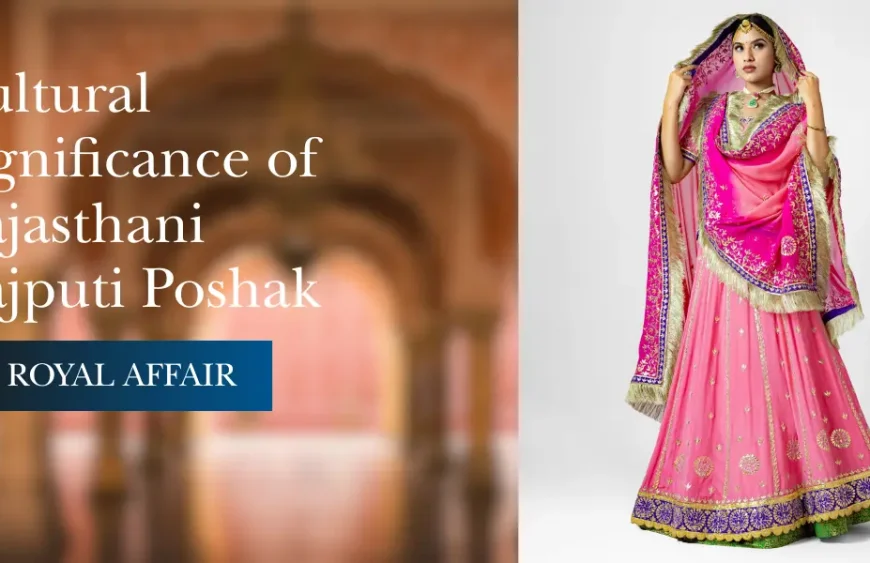
The cultural fabric of India is rich and diverse, and one of the most prominent states contributing to this vibrant outfit is Rajasthan. Known for its grand palaces, royal heritage, and legacy of bravery, Rajasthan’s fashion history is equally royal. Among the many attires that have stood the test of time, the Rajputi Poshak remains one of the most iconic. This traditional outfit is not just a garment; it is a symbol of Rajput pride, honour, and heritage. From the majestic colours to the intricate craftsmanship, every element of the Rajputi Poshak has a deeper cultural meaning that reflects the history and traditions of Rajasthan.
In this blog, we will delve into the cultural significance of Rajputi Poshak, its symbolism, and how it continues to be a living testament to Rajasthan’s regal heritage.
The Origin of Rajputi Poshak

The Rajputi Poshak finds its roots in the era of Rajput kings and queens, known for their valorous deeds and luxurious lifestyle. Historically, the Rajputi Poshak was worn by the noblewomen of Rajasthan’s royal families and high-ranking Rajput households. It was designed to meet the dual needs of grace and modesty, both central aspects of Rajput culture. The attire was functional yet opulent, offering ease of movement while upholding the wearer’s status and elegance.
The traditional Rajputi Poshak typically consists of four main elements:

- Pichwai (Top/Blouse)
- Ghagra (Skirt)
- Kanchli (Inner Blouse)
- Odhni (Veil/Dupatta)
These elements together make the Rajputi Poshak a comprehensive outfit that covers the body in a way that aligns with the modesty and grace expected of Rajput women. The Odhni, often made of fine chiffon or silk, is draped over the head and shoulder, serving not only as a cover but also as a mark of respect and dignity.
Cultural Symbolism of Rajputi Poshak
The cultural significance of Rajputi Poshak is far more profound than its appearance suggests. It carries deep symbolic meaning, rooted in Rajput values and customs. Let’s explore the symbolism behind the colours, intricate designs, and embellishments that make the Rajputi Poshak unique.
1. Tradition and Valour

Each colour used in the Rajputi Poshak has a unique meaning. Traditionally, bold and vibrant colours are used, such as red, yellow, and royal blue, symbolizing valour, purity, and royalty, respectively.
- Red: This is perhaps the most revered colour, particularly among Rajput brides. It symbolizes love, strength, and new beginnings. Wearing red on auspicious occasions reflects the Rajputi woman’s inner strength and resilience.
- Yellow: Known as the colour of warmth and prosperity, yellow is often worn during festive occasions and religious ceremonies. It is associated with happiness and spiritual enlightenment.
- Blue: A colour historically reserved for royalty, blue symbolizes power, grandeur, and the divine right of kings and queens.
2. Royal Craftsmanship

The Rajputi Poshak is often adorned with elaborate embroidery, which reflects the superior craftsmanship of Rajasthan’s artisans. Zardozi, gota patti, and kundan work are commonly used to embellish the attire.
- Zardozi Work: Originating from Persia, this metallic threadwork was introduced to India during the Mughal era but was perfected by Rajput artisans. Zardozi embroidery on a Rajputi Poshak adds a regal touch, often used to depict traditional motifs like peacocks, flowers, and religious symbols.
- Gota Patti: Gota work, especially the intricate detailing of gota patti, involves appliqué using gold and silver ribbons. It is most commonly seen on the edges of the odhni and ghagra, adding a shimmer that makes the attire look fit for royalty.
- Kundan Work: While Kundan jewellery is widely recognized, Kundan’s work on Rajputi Poshak adds a jewelled appearance to the outfit. It is particularly popular for wedding attires, further enhancing the luxurious appeal.
3. Rajput Traditions
Many designs on the Rajputi Poshak take inspiration from nature, royal history, and religious symbolism. Motifs like peacocks, lotus flowers, and elephants are commonly found in the designs. These motifs are not just decorative; they reflect the beauty and pride of Rajput culture. The peacock is often seen as a symbol of grace and beauty, while the lotus represents purity and divinity. The elephant, a symbol of strength and royalty, adds a majestic touch to the attire.
In addition to these, Bandhej or tie-dye patterns are also a popular feature of Rajputi Poshaks. Bandhej designs represent the vibrant and lively spirit of Rajasthan, with each dot, circle, and pattern symbolizing good luck and prosperity.
The Role of Rajputi Poshak in Modern Times

Today, women wear it during weddings, festivals, and special family occasions, keeping the tradition alive. Modern fashion designers have also embraced the essence of Rajputi Poshak, giving it contemporary spins while respecting its heritage. From Bollywood celebrities to brides across India, the Rajputi Poshak has become a coveted ensemble.
The Rajputi Poshak has now become an emblem of Rajasthan’s rich culture, cherished by women across generations, whether as a symbol of their heritage or as a fashion statement that transcends time.
Rana’s by Kshitija: Preserving the Legacy of Authentic Rajputi Poshaks
In the world of evolving fashion, it’s rare to find brands that truly honour the heritage of traditional attire. Rana’s by Kshitija, a renowned name in the industry, has been dedicated to preserving the authenticity of Rajputi Poshaks while providing modern women the chance to adorn themselves with a piece of Rajasthan’s royal heritage. Specializing in Rajputi Poshaks and traditional Rajasthani dresses, Rana’s by Kshitija offers a variety of designs that retain the original craftsmanship while infusing contemporary aesthetics.
For those looking to purchase an authentic Rajputi Poshaks online or a beautifully crafted Rajasthani dress online, Rana’s by Kshitija is the perfect destination to experience the luxury and grace of Rajasthani fashion.
Also read: Top 5 Lehengas for every festive occasion


