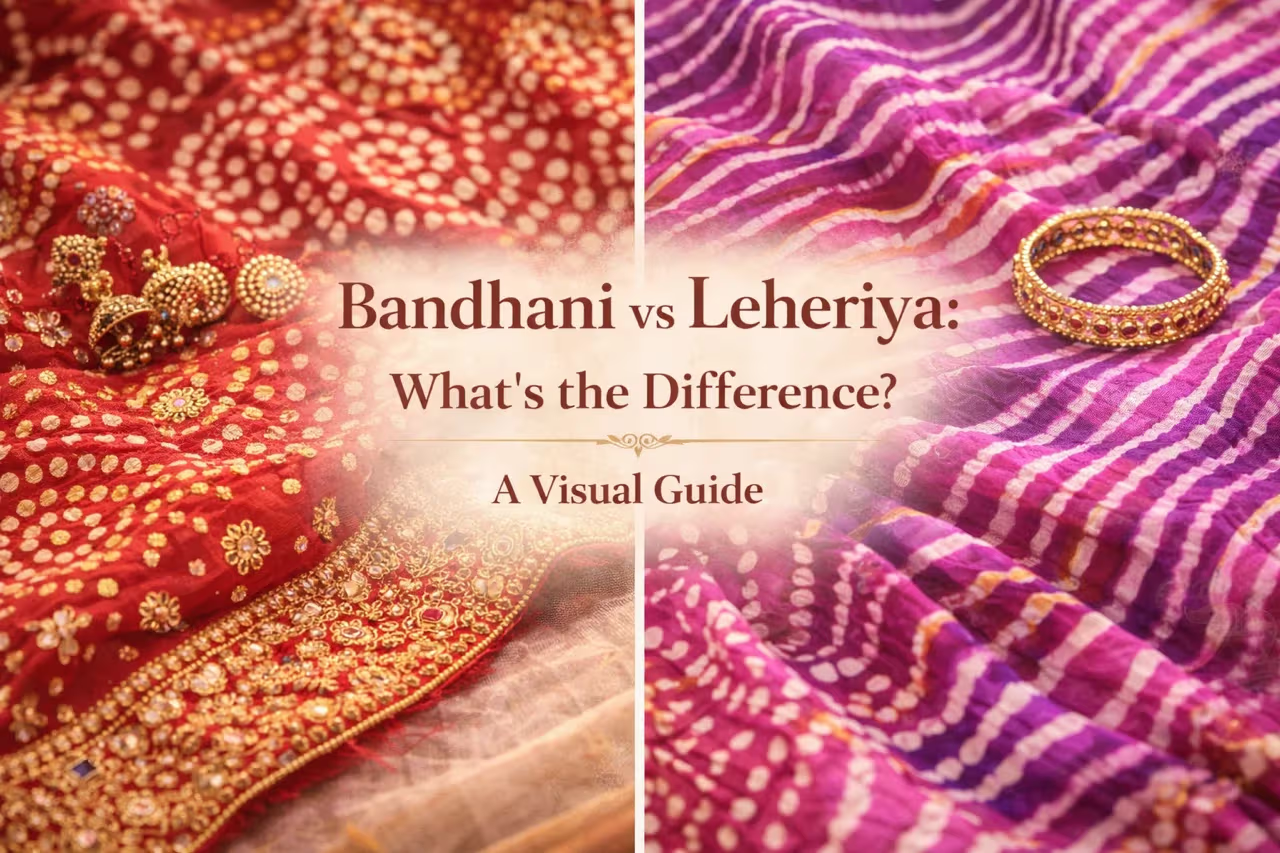
Bandhani vs Leheriya: What's the Difference? A Visual Guide
Bandhani and Leheriya are both Rajasthani tie-dye crafts — but they are very different. This visual guide explains the technique, patterns, occasions, and care tips for each.
Kshitija Rana
Editor
If you have ever browsed Rajasthani ethnic wear and wondered what sets Bandhani apart from Leheriya — or whether they are the same thing with different names — you are not alone. Both are traditional Rajasthani tie-dye crafts, both produce vibrant patterned fabrics, and both are deeply embedded in the culture of Jaipur and the region's festive dress. But the difference between Bandhani and Leheriya, once you know it, is immediately and unmistakably visible. This visual guide explains each craft, compares them side by side, and helps you choose the right one for your next purchase.
What is Bandhani?
Bandhani — derived from the Sanskrit word bandha, meaning "to tie" — is a resist-dye technique where tiny portions of fabric are individually pinched and tied with thread before the cloth is dipped in dye. The tied portions resist the dye and remain the original fabric colour, creating the signature small dot patterns across the surface.
The process is extraordinarily labour-intensive. A single Bandhani saree can require between 10,000 and 100,000 individually tied knots, each created by an artisan using their fingernails to pluck and secure the fabric. After dyeing and drying, the ties are opened to reveal the pattern.
Signature Bandhani patterns include:
- Boond (drops) — simple dots scattered uniformly across the fabric
- Shikari (hunt scene) — figurative motifs including deer, elephants, and hunters
- Leheriya within Bandhani — a hybrid where the wave pattern is combined with dot work
- Ekdali, Trikunti, Chaubundi — patterns defined by the number of dots in each grouping
Bandhani colours are traditionally vivid and high-contrast — bright red on yellow, white dots on deep green, yellow on deep red. The colour combinations have cultural and regional significance, with specific combinations traditionally associated with specific communities and ceremonies.
What is Leheriya?
Leheriya — from the Hindi/Rajasthani word lehar, meaning "wave" — is a resist-dye technique that creates diagonal stripe or wave patterns by rolling the fabric and binding it at intervals before dyeing.
The process works like this: a length of fabric is rolled diagonally from one corner and then wrapped with thread at regular intervals. When dipped in dye, the wrapped sections resist the colour and the unwrapped sections absorb it, creating diagonal stripes. For multi-coloured Leheriya, the fabric is unrolled, re-rolled in the opposite diagonal direction, and dipped in a second colour — creating the characteristic criss-cross wave pattern called Mothra.
Signature Leheriya patterns include:
- Single Leheriya — diagonal stripes in one direction only
- Mothra (Leheria) — the criss-cross double-dye pattern creating a diamond or wave grid
- Broad vs narrow stripes — varying the binding intervals creates different stripe widths
- Rainbow Leheriya — multiple dye baths creating graduated colour progressions
Leheriya is quintessentially Rajasthani — it is central to the state's festive dress culture, particularly for Teej, Gangaur, and Navratri, when women across Rajasthan wear Leheriya sarees and Odhnis in the traditional festival colours. Explore our pure Leheriya saree collection for authentic Jaipur-made pieces.
Bandhani vs Leheriya: Side-by-Side Comparison
| Bandhani | Leheriya | |
|---|---|---|
| Pattern type | Dots, spots, figurative motifs | Diagonal stripes, waves |
| Technique | Tying individual knots by hand | Rolling and binding diagonally |
| Labour intensity | Very high (thousands of knots) | Medium-high |
| Origin | Rajasthan + Gujarat | Almost exclusively Rajasthan |
| GI tag | Yes (Rajasthan + Gujarat separately) | Yes (Rajasthan) |
| Signature colours | High contrast, vivid primaries | Festival colours: saffron, pink, green |
| Best fabrics | Silk, georgette, cotton, gaji | Silk, cotton, georgette |
| Best occasions | Weddings, sangeet, festive | Teej, Gangaur, Navratri, casual festive |
| Price range | ₹2,000 – ₹30,000+ | ₹1,500 – ₹15,000+ |
When to Choose Bandhani
Choose Bandhani when you want:
- Intricate, all-over texture — the dot patterns create a rich surface across the whole fabric
- A wedding or sangeet look — heavy silk Bandhani in red or deep pink is a classic bridal choice
- A culturally specific Rajasthani or Gujarati statement — Bandhani is deeply associated with both regions' wedding traditions
- A piece that is genuinely rare — authentic fine-knotted Bandhani is becoming increasingly hard to find as fewer artisans practise the craft at its highest level
Our Bandhani sarees collection includes both traditional and contemporary colourways.
When to Choose Leheriya
Choose Leheriya when you want:
- A festive but lighter look — Leheriya is typically lighter and more breathable than heavy Bandhani silk
- A Rajasthani festival occasion — Teej and Gangaur sarees are almost always Leheriya
- Bold diagonal graphic impact — the diagonal stripes create a powerful visual line that elongates the silhouette
- A more affordable artisan piece — Leheriya offers authentic Rajasthani handcraft at a slightly more accessible price point
Explore our pure Leheriya sarees for the full range of authentic Jaipur tie-dye.
Can You Wear Them Together?
Absolutely — and it is very much in the spirit of Rajasthani festive dressing. Traditional combinations include:
- A Leheriya Ghagra (skirt) with a Bandhani Odhni (drape) for a Rajputi Poshak look
- A Bandhani saree with a Leheriya dupatta
- A Leheriya salwar suit with Bandhani jewellery-inspired border details
The contrast between the wave pattern and the dot pattern creates visual richness that is playful and deeply traditional at the same time.
Caring for Bandhani and Leheriya
Both crafts use reactive dyes that can run if not treated properly. Follow these care guidelines:
Do:
- Hand wash in cold water with mild soap, or dry clean
- Dry in shade — never in direct sunlight
- Iron on the reverse side on a low setting while slightly damp
- Store wrapped in muslin, away from moisture
Do not:
- Machine wash — the agitation can distort Bandhani knots and fade Leheriya stripes
- Soak for extended periods
- Wash with other garments that might absorb the dye
- Bleach or use harsh detergents
Frequently Asked Questions
Which is older — Bandhani or Leheriya?
Bandhani is believed to be older, with evidence of the craft dating back to the Indus Valley Civilisation (over 4,000 years ago). Depictions of Bandhani-like dot-dye patterns appear in Ajanta Cave paintings from the 6th century. Leheriya, while ancient, has less clearly documented pre-history, though it has been central to Rajasthani festive culture for several centuries.
How can I tell if a Bandhani saree is authentic?
Authentic Bandhani has slightly raised, textured dots on the fabric surface — you can feel them with your fingertip. The dots are slightly irregular in spacing and size, which is the mark of handmade knotting. Machine-printed imitations have perfectly uniform, flat dots with no texture. When untying authentic Bandhani, the tiny thread remnants are often still attached to the knot points.
Are Bandhani and Leheriya suitable for daily wear?
Cotton Bandhani and lightweight cotton Leheriya are excellent for daily wear — comfortable, washable, and festive enough for regular use. Silk versions are more suited to occasions. Both are extremely practical fabrics for the Indian climate, particularly in summer and monsoon months.
Which fabric makes the best Leheriya saree?
Silk Leheriya is the most traditional and luxurious — the dye takes more vibrantly on silk, creating richer colours. Cotton Leheriya is the most comfortable for daily and summer wear. Georgette Leheriya falls beautifully and is a popular choice for festive occasions where you want the drape of a light fabric with the pattern impact of Leheriya.
Is there a difference between Bandhej and Bandhani?
Bandhej is simply the Rajasthani variant of the name Bandhani — they refer to the same craft and technique. In Gujarat, it is universally called Bandhani; in Rajasthan, you will hear both terms used interchangeably.
Whether you are drawn to the intricate dot-work of Bandhani or the vivid diagonal energy of Leheriya, both crafts represent the best of Rajasthani textile artistry — and both deserve a place in your ethnic wear collection. To go deeper, read the full Bandhani and Bandhej tie-dye guide, the popular Leheriya patterns and designs, and the artisan story of the Bandhani knot-tyers of Jaipur.