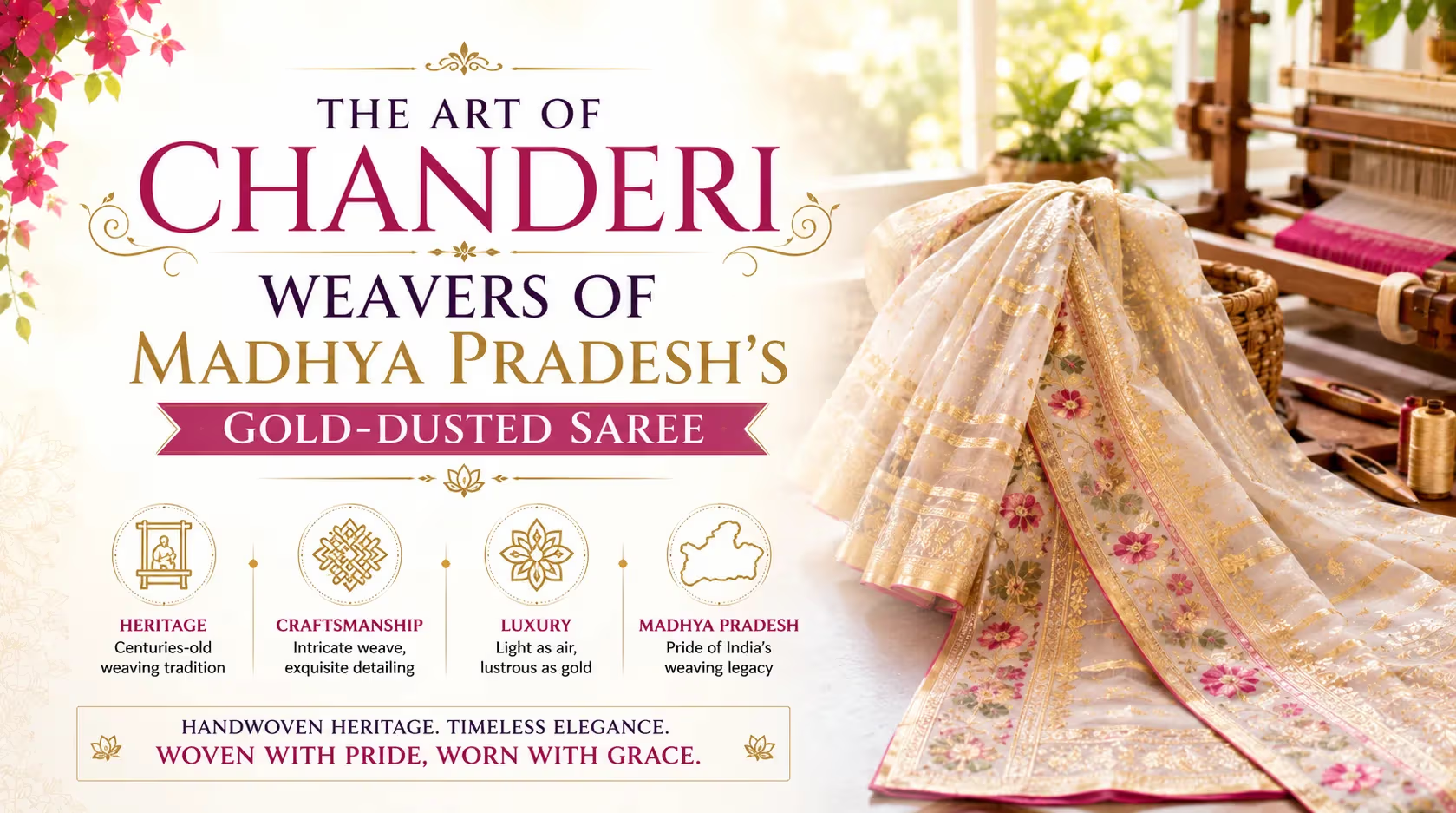
The Art of Chanderi: Weavers of Madhya Pradesh's Gold-Dusted Saree
Inside the town of Chanderi in Madhya Pradesh — the weavers, the 1300-year-old craft, the silk-cotton alchemy that produces India's most distinctive festive fabric, and how to identify authentic Chanderi.
Kshitija Rana
Editor
In the hilltop town of Chanderi, in the Ashoknagar district of Madhya Pradesh, the sound of handlooms has not stopped for 1,300 years. Mughal emperors commissioned Chanderi. The Chandela dynasty that gave the town its name built its wealth, in part, on the cloth woven by its weaver families. Colonial-era trade records show Chanderi fabric shipped to Europe. And today, in the same narrow lanes, in the same families' workshops, the same craft continues — a little modernised, a little embattled, but unmistakably alive.
This is the story of the Chanderi weavers, what they make, the silk-cotton alchemy that makes the fabric what it is, and what every Chanderi buyer should know.
A 1,300-Year-Old Craft
The history of Chanderi weaving dates to at least the 7th century, when Chanderi was already an established trade centre on the ancient route between northern and southern India. By the 11th century, under the Chandela dynasty, Chanderi fabric was noted in royal inventories. Mughal emperors — particularly Akbar and Shah Jahan — commissioned large quantities of Chanderi for court use.
The craft survived successive political upheavals, colonial industrial disruption, and 20th-century economic decline. Today, Chanderi is produced by approximately 3,500 weaver families in the town of Chanderi and its surrounding villages. The craft is protected by a Geographical Indication (GI) tag that legally restricts the "Chanderi" name to authentic handwoven production from this specific region.
The Silk-Cotton Alchemy
What makes Chanderi Chanderi is its unique weave structure: silk in the weft (crosswise threads) over cotton in the warp (lengthwise threads).
This combination produces:
- Lightness — the cotton warp keeps the fabric breathable and light.
- Sheen — the silk weft catches and reflects light, producing Chanderi's signature subtle shimmer.
- Structure — the cotton provides stability; the silk provides drape. The combination holds pleats and shape better than pure cotton alone.
- Transparency — Chanderi has a characteristic slight transparency, a legacy of its fine thread count.
There are three traditional Chanderi variants:
- Pure silk Chanderi — 100 percent silk in both warp and weft. Richest, most formal, heaviest.
- Chanderi silk-cotton — silk warp, cotton weft, or more commonly the reverse. Most popular, the classic Chanderi festival fabric.
- Chanderi cotton — 100 percent cotton in both directions. Lighter, less formal, excellent for office and everyday wear.
When buyers refer to "a Chanderi saree" without specification, they typically mean the silk-cotton blend, which accounts for roughly 70 percent of Chanderi production.
The Weaver's Day in Chanderi
Like most Indian handloom traditions, Chanderi is woven on pit looms — wooden frames set into pits dug into the floor of weaver homes. The weaver sits cross-legged with their legs in the pit, working the treadles with their feet while their hands manipulate warp and weft.
A weaver's day in Chanderi typically runs:
- 5:30 AM: Begin loom setup, check tension on the warp.
- 6:00 AM to 12:00 PM: First weaving session. Productivity is highest in cool morning hours.
- 12:00 PM to 2:00 PM: Break for lunch and midday rest.
- 2:00 PM to 7:00 PM: Second weaving session. Often with some family members also at the loom.
- 7:00 PM: End of day, tools put away.
A plain Chanderi saree with simple Zari borders takes 7–10 days to weave. Sarees with traditional butis (small woven motifs — peacocks, flowers, coins, mosques) take 12–20 days. Heavily patterned Chanderi with all-over Zari Jaal work can take 4–6 weeks.
Chanderi Motifs and Their Meanings
Chanderi weaving has a rich vocabulary of traditional motifs, each woven directly into the fabric during production (not embroidered afterwards):
- Peacock (mor) — elegance, divinity, royal association.
- Lotus (kamal) — purity, spiritual awakening.
- Coin (paisa) — prosperity, auspicious beginnings.
- Jasmine (chameli) — feminine grace, delicate beauty.
- Mosque (mehraab) — architectural heritage, Mughal influence.
- Tree of life — continuity, family.
- Fish (machli) — abundance, good fortune.
The motifs are called butis when small and scattered. When larger and more intricate, they are called butas. A Chanderi saree with butis scattered across the body and butas on the pallu is a traditional formal configuration.
The Zari Borders of Chanderi
The Zari borders of Chanderi are woven simultaneously with the fabric body using a technique called kadwa weaving. The Zari thread (historically silver, now usually silver-plated with gold wash) is introduced along the selvedge and woven into the border pattern during each weft pass.
Authentic Chanderi Zari is:
- Woven, not stitched — the border is part of the fabric structure, not applied afterwards.
- Subtly textured — the Zari thread has slight irregularities from handwork.
- Silvery or gold in colour — not the harsh yellow of cheap plastic imitation.
- Visible on both sides — authentic woven Zari is visible on the reverse of the fabric.
A good Chanderi saree has Zari borders on all three edges — two long sides (selvedges) and the pallu end. The density of the Zari pattern varies — traditional designs use simple vine patterns; modern designs include geometric motifs and contemporary pattern work.
The Economics of Chanderi in 2026
A plain Chanderi silk-cotton saree with simple borders retails at ₹3,000–₹8,000. A mid-range Chanderi with traditional butis and substantial Zari border sells for ₹8,000–₹20,000. Heavily patterned pure silk Chanderi with extensive Zari Jaal work runs ₹30,000–₹80,000. Heritage designer Chanderi with specialised techniques can reach ₹1 lakh or more.
Of those prices, the weaver typically earns 8–15 percent of the retail price. A weaver producing a ₹12,000 Chanderi saree with 14 days of work earns approximately ₹1,200–₹1,800 — about ₹100–150 per day of skilled handloom work.
This is why direct-to-consumer and designer partnerships matter. Every intermediary in the supply chain reduces the weaver's share. Ateliers and online retailers that source directly from weaver cooperatives can pay significantly higher rates per piece while still retailing at competitive prices.
Recognising Authentic Chanderi
Five signs of authenticity:
- Slight transparency — hold the fabric up to light. Authentic Chanderi has a characteristic subtle translucency.
- Silk-cotton thread variation — under close inspection, the silk threads (weft) catch light differently than cotton (warp). Uniform sheen suggests pure synthetic.
- Woven Zari borders — the Zari is part of the fabric, visible on both sides. Stitched or pasted Zari is not authentic.
- Irregular motif placement — handwoven butis have tiny variations in size and spacing. Machine patterns are perfectly uniform.
- GI tag documentation — reputable sellers can provide GI certification confirming Chanderi origin.
Chanderi for Modern Wardrobes
Chanderi's versatility is part of why it remains popular:
- Office wear — Chanderi cotton or light Chanderi silk-cotton in muted colours photographs polished in office settings.
- Festive daytime — Chanderi silk-cotton with Zari border is a classical choice for Puja, cultural functions, and daytime weddings.
- Pre-wedding functions — Chanderi sarees in pastels or jewel tones work beautifully for engagement, tilak, and daytime sangeet.
- Summer wedding guest — lightweight enough for outdoor summer events while formal enough for the occasion.
- Travel — Chanderi packs relatively well and wrinkles less than pure silk.
The Chanderi saree is possibly the most versatile handloom saree in the Indian market — it moves between office Monday and festive Sunday without missing a beat.
For a broader perspective on summer saree options, read our guide to the best lightweight sarees for Indian summer and our deep dive on Kota Doria weavers — another Madhya Pradesh-adjacent craft with shared history.
Shop Authentic Chanderi at Rana's
Browse our designer handmade saree collection for Chanderi silk-cotton, pure silk Chanderi, and Chanderi cotton sarees, or explore the wider pure silk saree collection for Banarasi, Kanjivaram, and Gajji silks alongside Chanderi. All our Chanderi is sourced directly from weaver cooperatives in Chanderi town, with full GI documentation available on request. For the wider story of India's regional handloom traditions, read our companion weaver stories on Kota Doria and the Mul-mul cotton sarees guide.
Chanderi is not a saree you buy because it is fashionable. It is a saree you buy because it is, quietly, one of India's most beautifully engineered fabrics — silk and cotton woven into something greater than either. Every authentic Chanderi you buy keeps a loom running in a town that has been weaving, without pause, for thirteen centuries.