The Weavers of Kota: Inside India's Lightest Saree Craft
Inside the villages of Kaithoon and Kota where artisan families have woven Kota Doria sarees for 400 years. The khat weave, the looms, the threat of machine imitations, and why this GI-tagged craft deserves your attention.
Kshitija Rana
Editor
In the village of Kaithoon, 15 kilometres outside the city of Kota in southeastern Rajasthan, there is a soft, rhythmic click that starts before sunrise and continues past sundown. It is the sound of the pit loom — the wooden frame set into a hand-dug pit in the floor, where a weaver sits cross-legged and pulls the warp and weft of what will eventually become a Kota Doria saree. This sound has defined Kaithoon for four centuries. And it is, slowly, becoming endangered.
This is the story of the Kota Doria weavers — what makes their craft one of the finest in India, what the khat (square) weave actually is, and why the fight against machine imitations matters to anyone who loves a handcrafted summer saree.
A Four-Hundred-Year-Old Craft
Kota Doria's origins trace to the 17th century, when Maharao Bhim Singh of Kota brought a group of master weavers from Mysore in southern India to set up looms in the Kota region. The weavers settled in Kaithoon and the surrounding villages. Over generations, they developed the distinctive khat weave that Kota Doria is now known for — blending the silk-weaving expertise they brought from the south with the cotton-weaving traditions they found in Rajasthan.
The result is a fabric unlike any other in India: almost impossibly light, with tiny transparent windows across the entire surface that allow the breeze through. A fabric engineered, almost four hundred years ago, for the Rajasthani summer.
What the Khat Actually Is
Hold a Kota Doria saree up to light and you will see it — a grid of tiny squares across the entire fabric, each no larger than a grain of rice. This is the khat.
The khat is created by the alternating thread structure of the weave itself. In a traditional Kota Doria, the weaver alternates:
- Cotton thread in the warp (lengthwise)
- Silk thread in the weft (crosswise)
- A specific pattern of dense and loose thread tensions
The dense sections create the solid "frame" of each square. The loose sections create the transparent "window" inside. When woven well, the squares are visible but not fragile — the fabric is both breathable and durable. A classical Kota Doria saree has about 300 khats per square inch.
This is why authentic Kota Doria feels the way it does: substantial enough to hold a drape, but light enough that you forget you are wearing six yards of fabric. A 5.5 metre Kota Doria saree typically weighs 200–300 grams. A comparable silk saree weighs 600–900 grams.
The Weaver's Day
A Kaithoon weaver's day begins around 5 AM. The pit loom is set into the floor of the house — the weaver sits on ground level with their legs in the pit, pushing the treadles with their feet while their hands work the warp and weft. The setup is physically demanding, and most weavers report knee and back issues by their late 40s.
A plain Kota Doria saree takes 3–5 days of continuous weaving. That is 8–10 hours a day at the loom, with only short breaks. Zari border sarees take 7–10 days because the Zari thread requires slower, more careful handling. Sarees with Jaal (all-over pattern) work or heavy Gota Patti embroidery take 3–4 weeks of loom time, plus additional weeks of post-loom embroidery done by separate artisans.
The weaver's pay per saree, depending on complexity, ranges from ₹800 to ₹4,000. A middle-complexity Kota Doria saree that retails for ₹12,000 pays the weaver approximately ₹1,500 — roughly ₹200 per day of their labour. This is why the craft is shrinking.
The Threat of Machine Imitations
Walk through any wholesale market in Delhi or Mumbai and you will see "Kota silk" or "Kota cotton" sarees at ₹800–₹1,500 a piece. Almost none of these are authentic Kota Doria. They are power-loom sarees, often made in Surat or Panipat, that imitate the khat pattern by weaving it mechanically in synthetic thread.
These imitations have done devastating damage to the Kaithoon weaver community. Three generations ago, Kaithoon had roughly 5,000 active weaver families. Today, the estimate is 2,500 — and most young people from weaver families are leaving the craft for urban jobs.
You can spot a machine imitation:
- The khats are too perfect. Real handwoven khats are slightly irregular because the weaver adjusts tension by hand.
- The fabric weight is wrong. Machine Kota is often heavier because of synthetic thread.
- No thread alternation. Authentic Kota alternates cotton and silk; machine Kota often uses polyester throughout.
- No GI tag. Authentic Kota Doria carries a Geographical Indication certificate. Ask your seller to produce it.
The GI Tag That Protects the Craft
Kota Doria received its Geographical Indication tag in 2005. The GI tag legally restricts use of the "Kota Doria" name to authentic handwoven products from the Kota region. Sellers who use the name on machine-made imitations are technically in violation of GI law.
In practice, enforcement has been uneven — the wholesale market is flooded with imitations and most consumers do not know to ask for the GI certificate. The best defence is an informed buyer who insists on authentic provenance.
Recognising Authentic Kota Doria
When you shop Kota Doria, look for:
- A visible, slightly irregular khat pattern when held to light.
- Weight under 300 grams for a 5.5 metre saree.
- A combination of cotton and silk thread visible under close inspection — the silk threads catch light differently.
- A GI tag certificate from the seller.
- A weaver or village name associated with the piece — reputable sellers can tell you which Kaithoon or Mangrol weaver made your saree.
How the Craft Is Evolving
The good news is that Kota Doria is not disappearing — it is evolving. A new generation of weavers, supported by designers and direct-to-consumer ateliers, is producing Kota Doria in contemporary designs: minimal pastel sarees, modern colour-blocking, fine Chikankari overlays, and hybrid Kota-silk blends for evening wear. Prices for these pieces are higher, which translates to better weaver wages, which keeps young people in the craft.
The Kaithoon Cluster Development Programme, a government-aided initiative, has also introduced health insurance, loom upgrades, and design training for weaver families. Several hundred weavers have benefited. More support is needed.
Shopping Kota Doria at Rana's
Our Kota Doria sarees are sourced directly from Kaithoon weaver cooperatives, alongside our wider pure silk saree collection covering Banarasi, Kanjivaram, Gajji silk, and Chanderi. Every Kota Doria piece carries a GI certificate. We work with specific weaver families whose names we know and whose craft we trust — because the only way this tradition survives is if the people buying Kota Doria understand what they are buying.
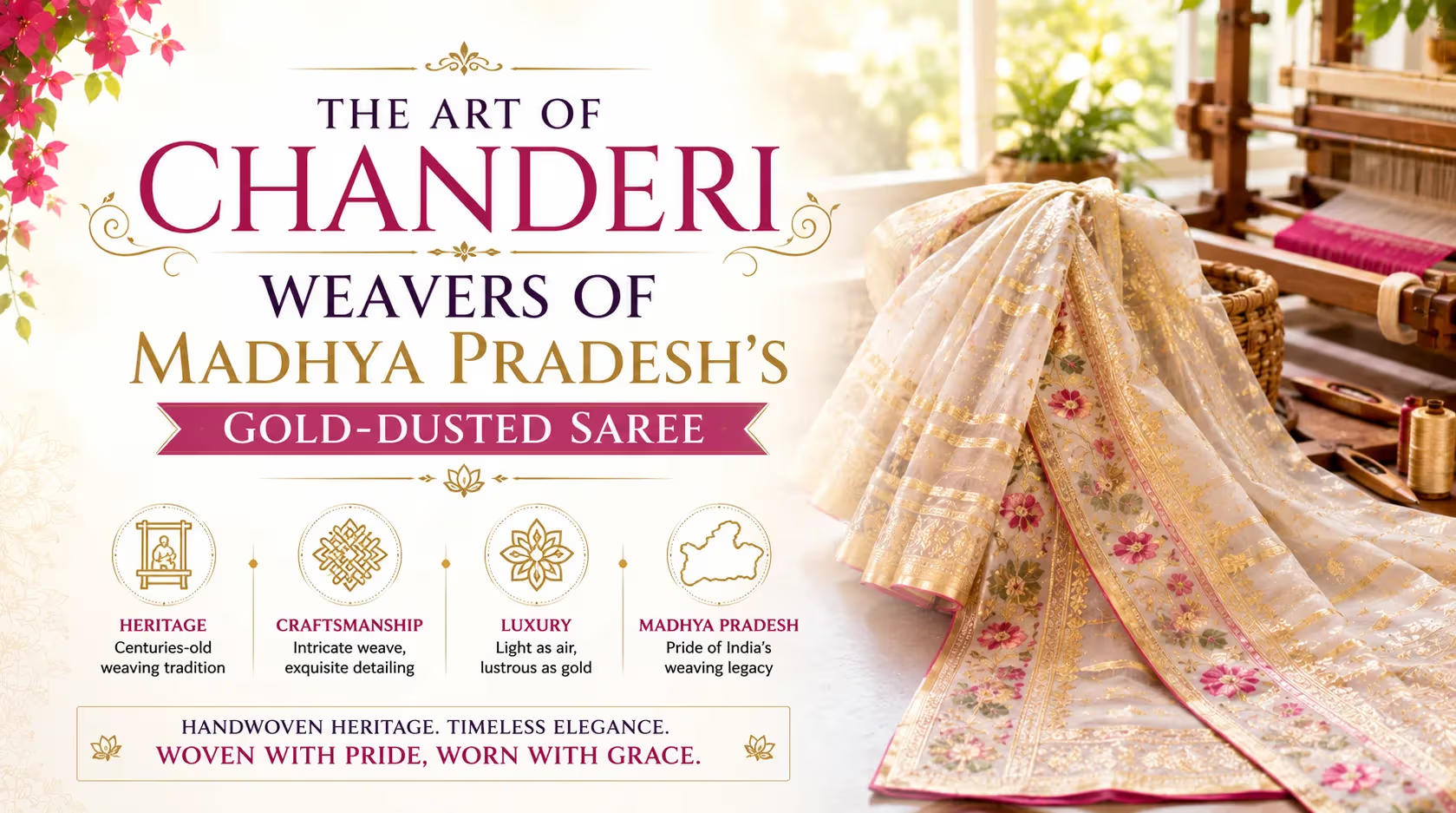
If you love summer saree fabrics, read our full guide to the best lightweight sarees for Indian summer — Kota Doria is the star of that list for a reason. For more weaver stories, see our companion guides on the Chanderi weavers and the Mul-mul cotton tradition.
Every authentic Kota Doria you buy is a vote for a weaver in Kaithoon to keep their loom running. That is not a marketing line — that is the actual economic reality of Indian handloom in 2026.