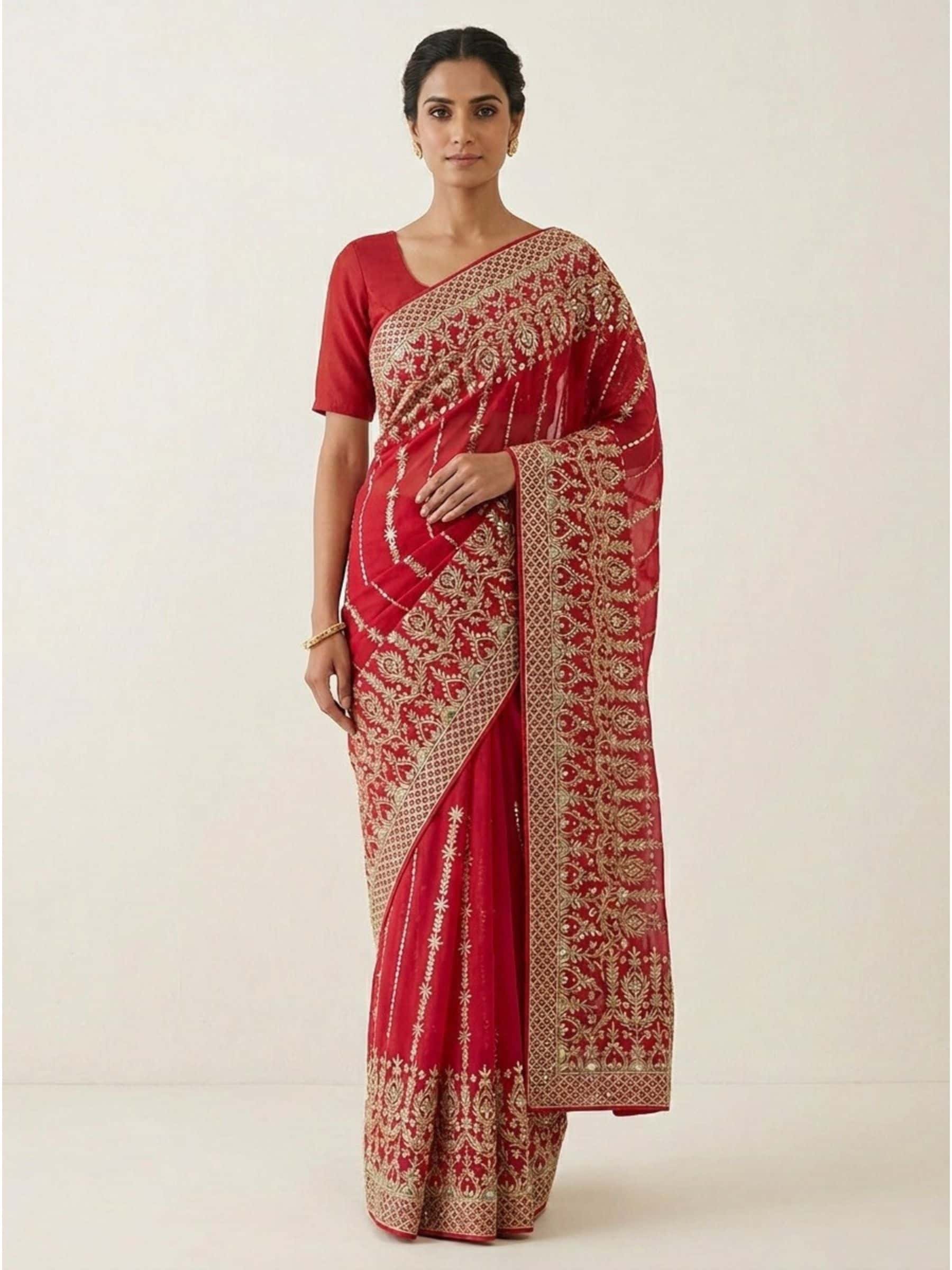
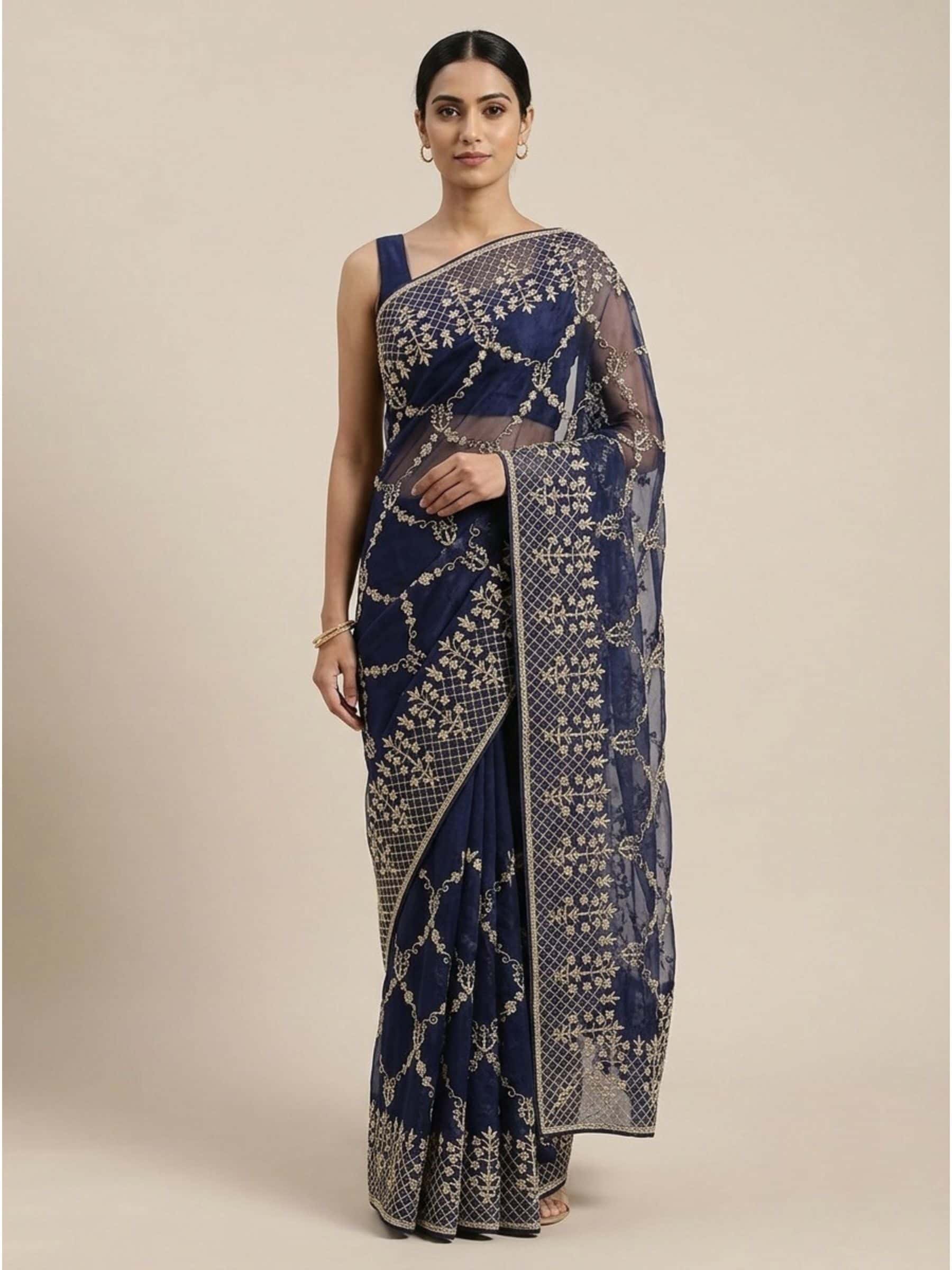
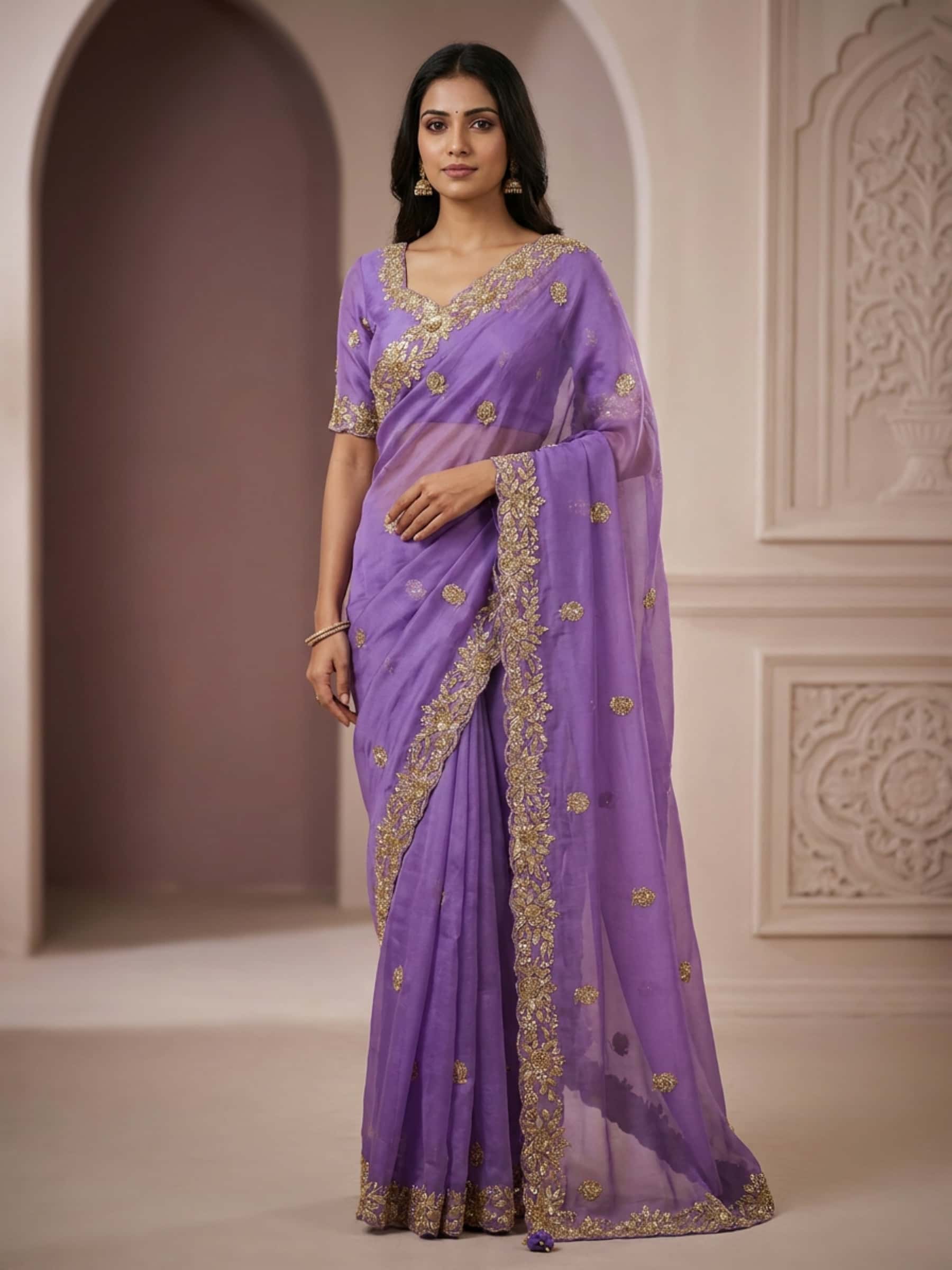
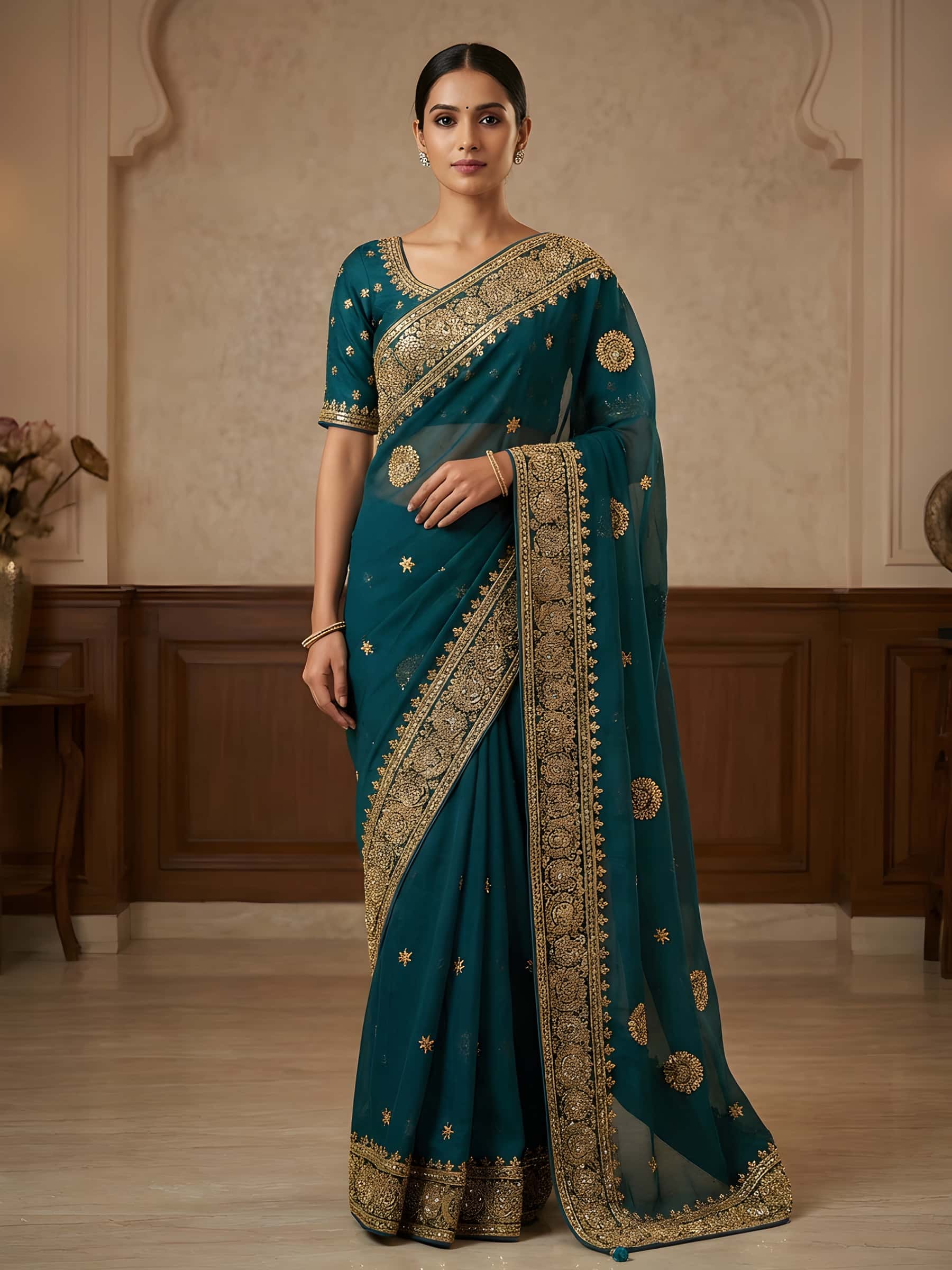
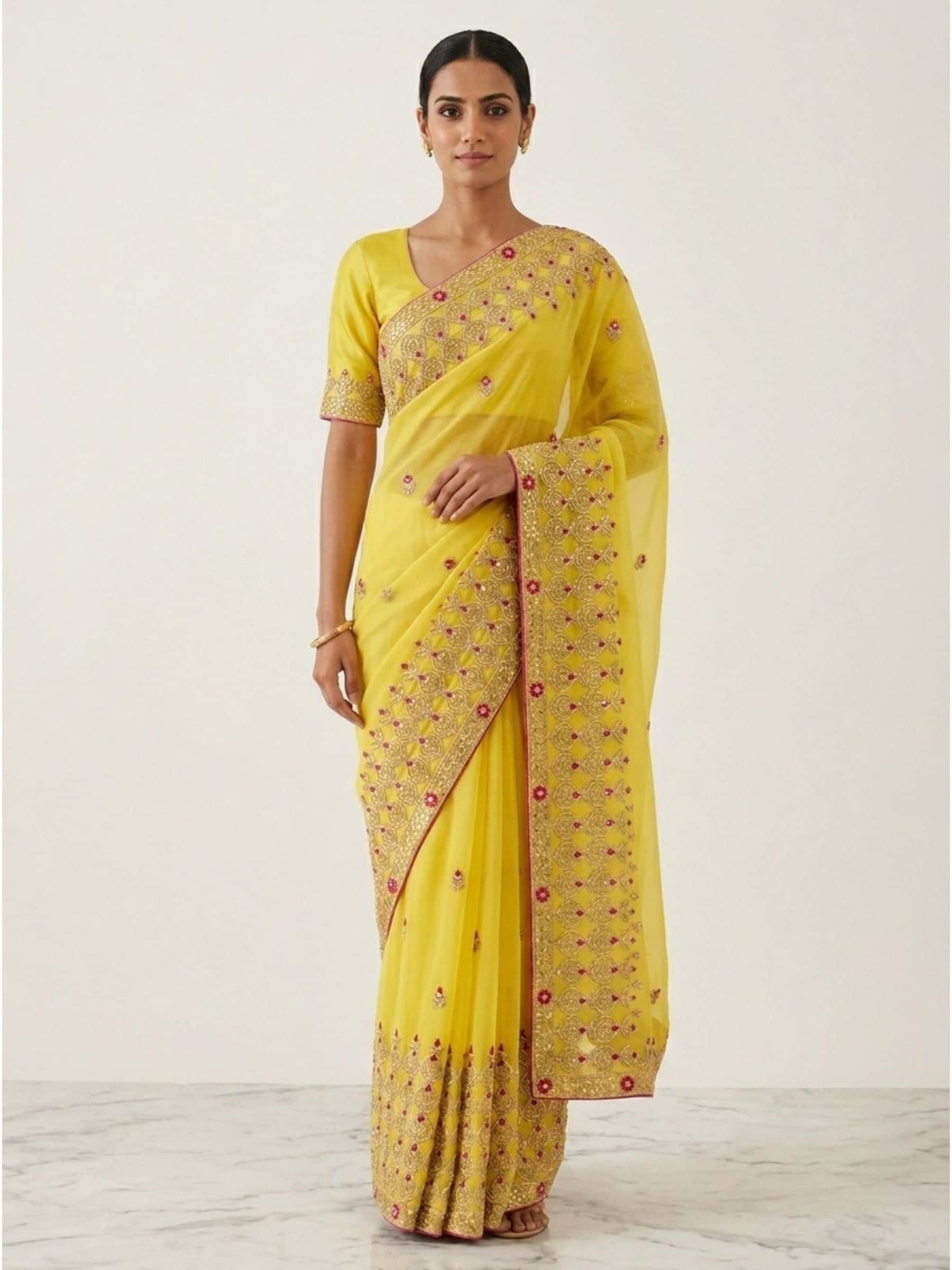
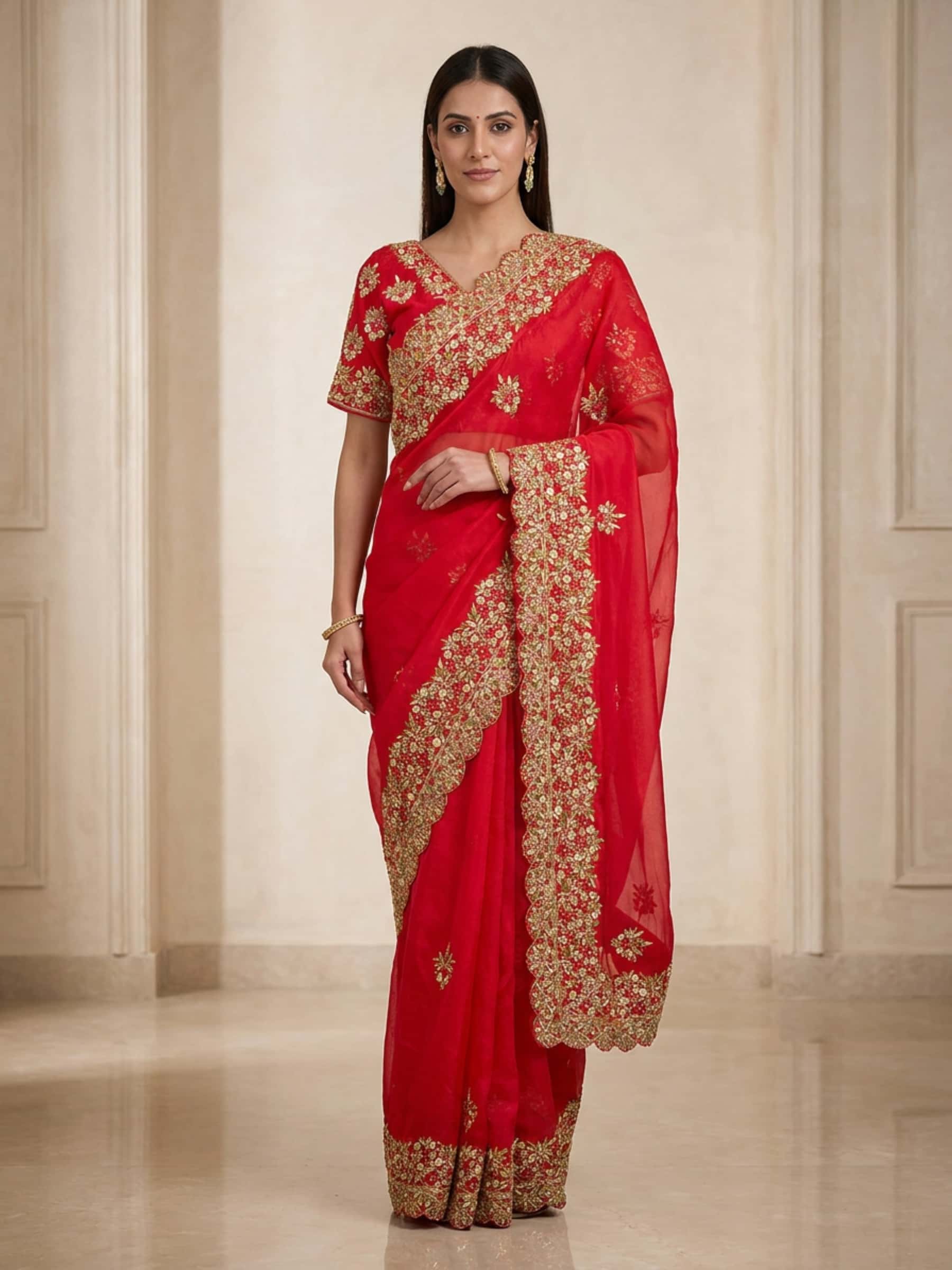
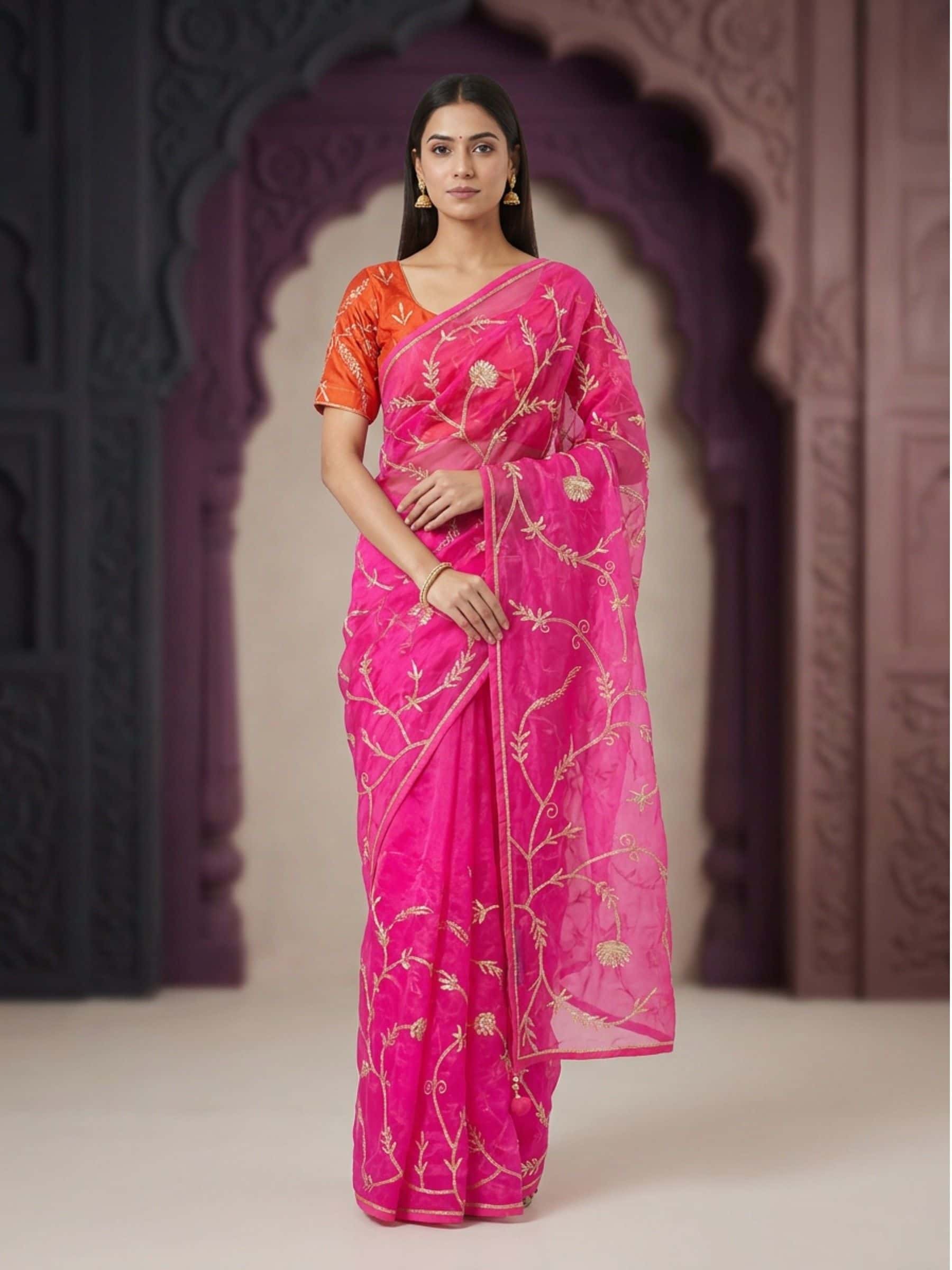
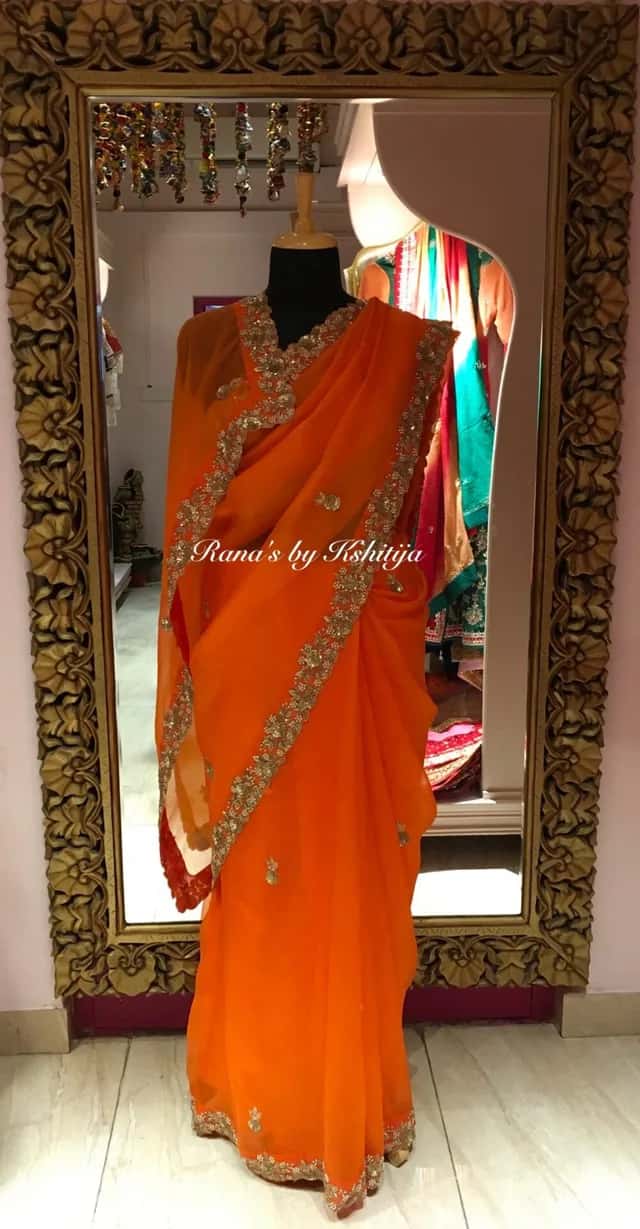
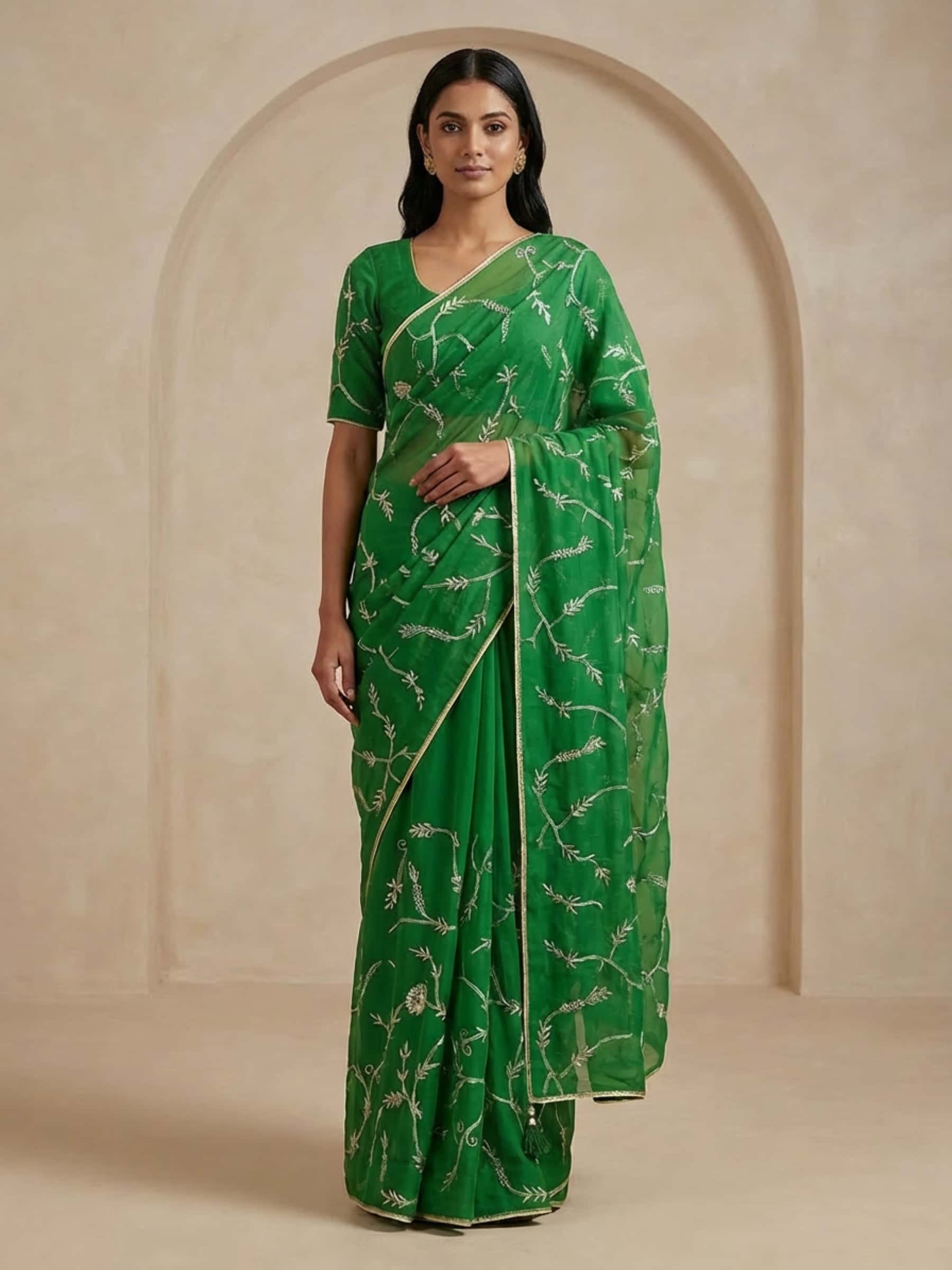
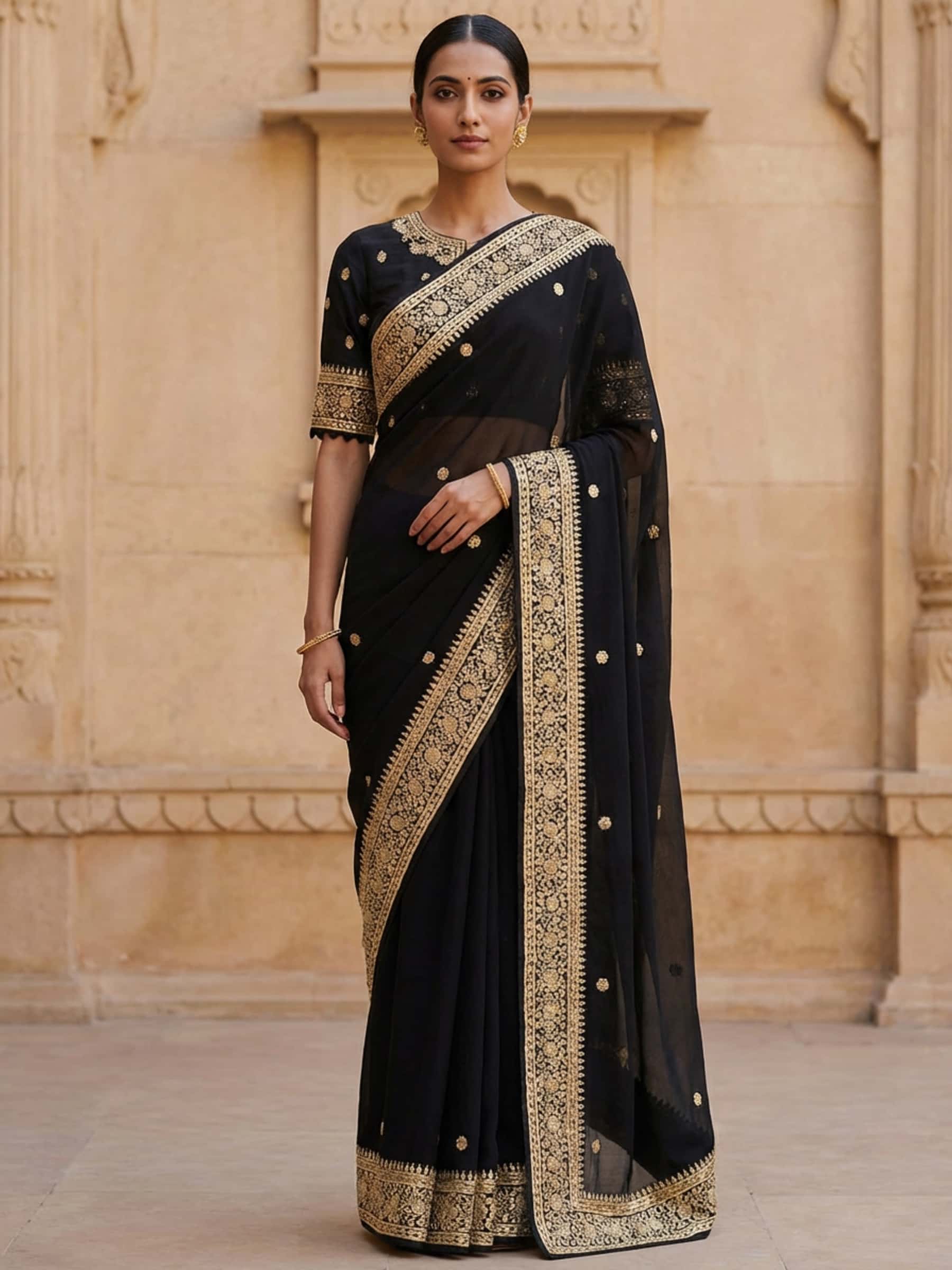
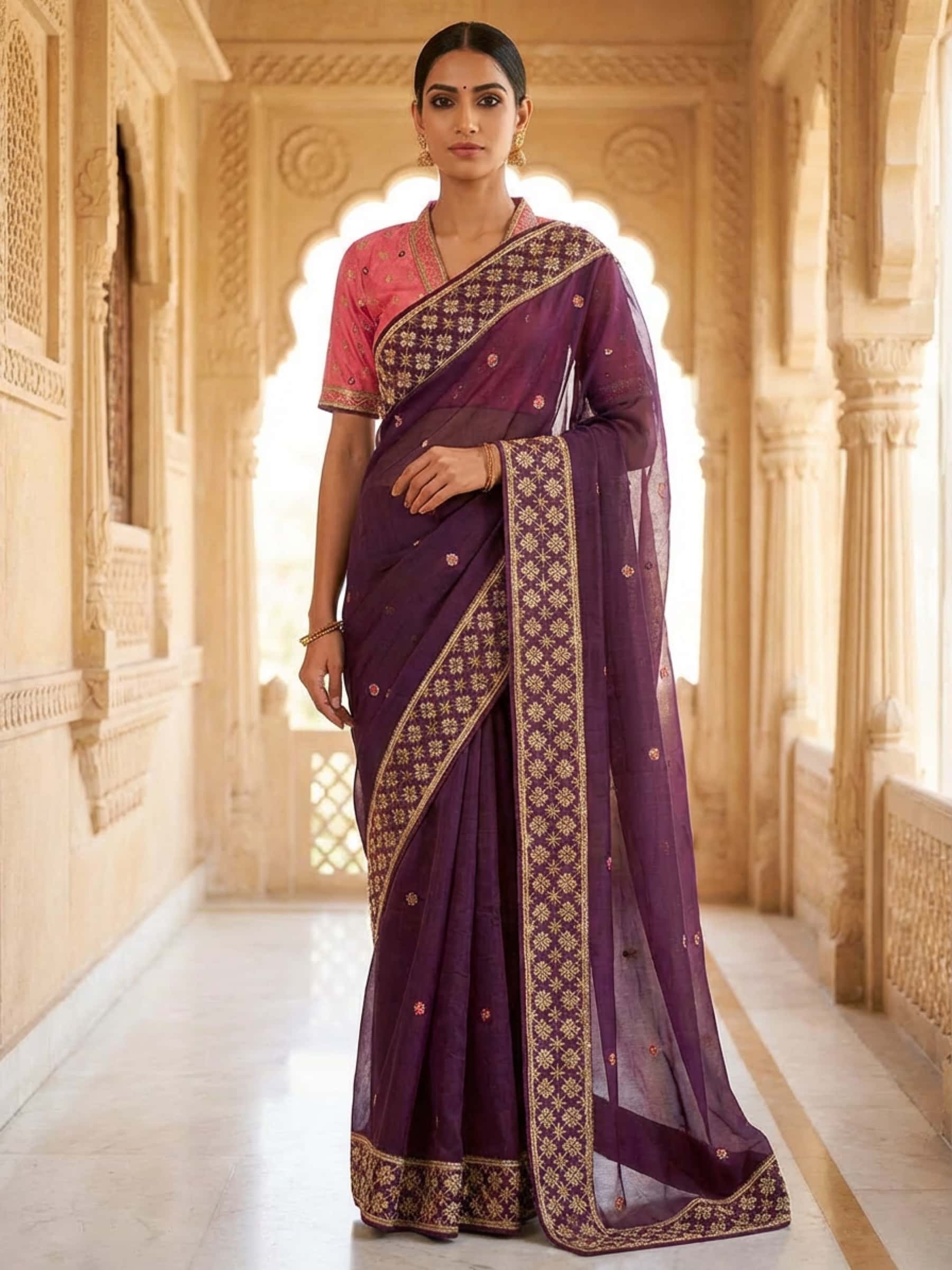
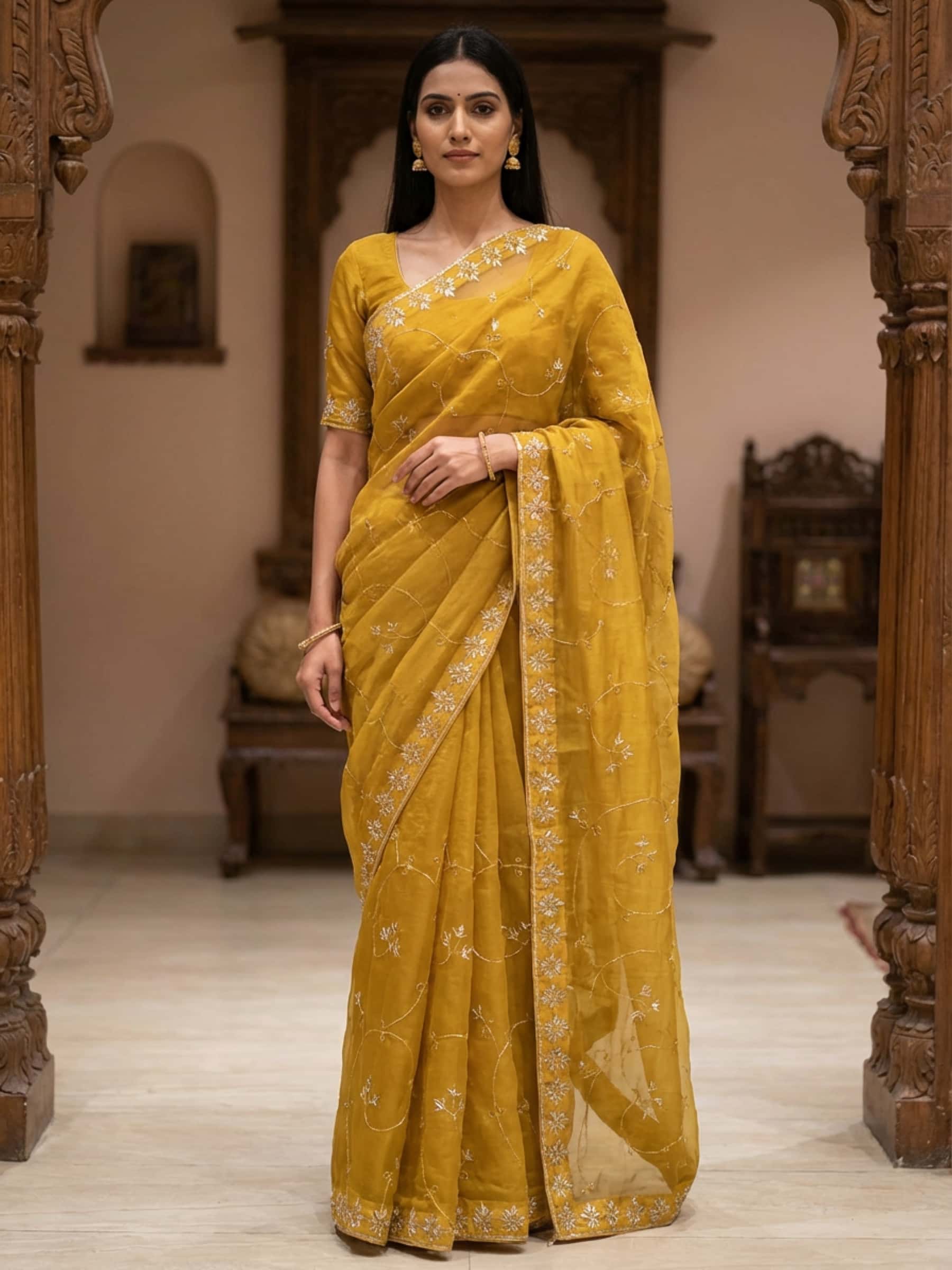
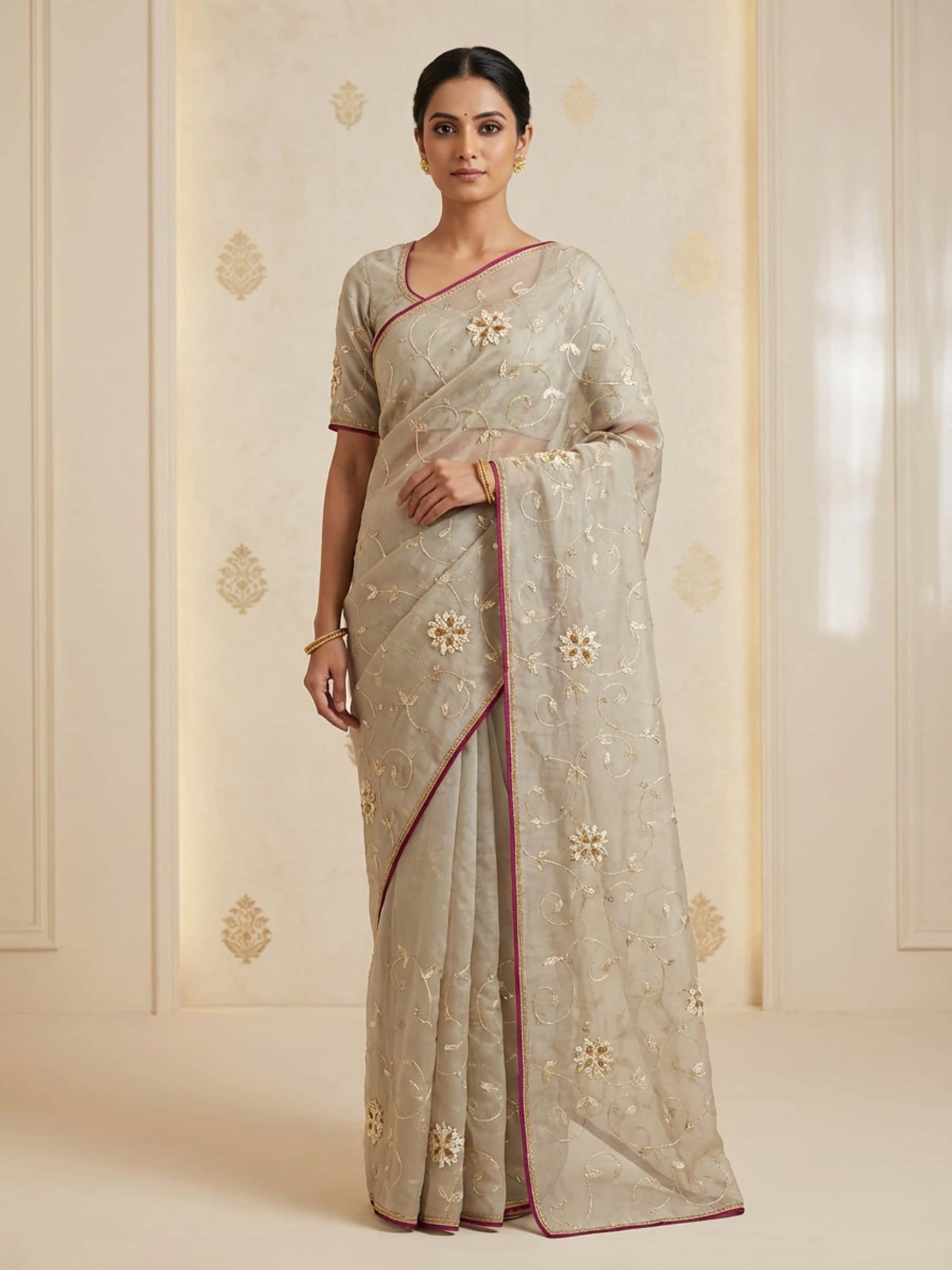
A pure organza saree occupies an unusual position in the Indian wardrobe — sheer enough to read as modern, structured enough to drape as a serious saree, and light enough to wear through a five-hour event without fatigue. For most of the last fifty years, organza was a niche fabric used mainly for dupattas and lehenga overlays. In the last decade it has moved into the centre of the saree wardrobe, driven by changing wedding aesthetics, urban office dressing, and the rise of daytime ceremonies where heavy silk reads as overdressed. Our pure organza saree collection above is built around organza's signature combination of transparency and structure — the rare fabric that drapes fluidly while holding its shape on the shoulder, and photographs with depth in both natural and event lighting.
What organza actually is
Pure organza is a plain-weave fabric made from tightly-twisted filament yarn — historically pure silk, today commonly fine polyester filament or a silk-poly blend. The character of organza comes from two things:
- Yarn twist — the individual yarns are twisted at high speed before weaving, which gives the finished fabric its characteristic crispness and slight rustle.
- Sizing finish — after weaving, the fabric is treated with a stiffening finish that gives organza its "structured drape" — the fabric falls in defined folds rather than soft pooling.
The combination produces a fabric that is simultaneously sheer (you can see through it), light (a six-yard organza saree weighs 350–500 grams compared to 800–1200 grams for silk), and structurally firm (it holds a pleat without crushing).
The three organza tiers you will encounter when shopping:
- Pure silk organza — woven from real silk filament. Most expensive, most lustrous, drapes the best, ages the best. Increasingly rare.
- Pure polyester organza — the most common form sold today. Modern poly organza is genuinely high-quality and indistinguishable from silk organza in most photographs. Accepts dye well, holds embellishment, and breathes better than people expect.
- Silk-poly blend organza — combines silk's lustre with polyester's structural reliability. Mid-range pricing.
Avoid synthetic-blend organza marketed as "fancy organza" or "designer organza" — these are typically nylon-blend fabrics with chemical stiffening that scratches the skin and degrades within months.
How to tell pure organza from imitation
Three quick tests:
- The transparency test. Hold the fabric up against light. Pure organza is uniformly translucent across the entire fabric. Cheap "organza" has uneven transparency — denser in some areas, sheer in others — because the underlying yarn is inconsistent.
- The rustle test. Gently shake a section of the fabric. Pure organza produces a distinct soft rustle from the high-twist yarn. Synthetic imitations produce either silence or a harsh plasticky crackle.
- The drape test. Hold a corner of the saree and let it fall. Pure organza falls in defined folds that hold their shape. Imitation falls in soft pooled shapes like georgette, or stays unnaturally rigid like a starched cotton.
A genuine pure organza saree starts around ₹8,000 for a simple piece with light embellishment, rises to ₹25,000–₹50,000 for hand-painted or hand-embellished pieces, and reaches ₹80,000–₹1.5L for heavy bridal organza with substantial Gota Patti, Zardozi, or hand-painted work.
Why organza is having its moment
Three converging trends have pushed organza into the centre of the modern saree wardrobe:
- Destination and daytime weddings. Outdoor mehendi and engagement ceremonies in warm weather make heavy silk impractical. Organza is the daytime fabric of choice for brides and guests.
- Office and cocktail formal-wear. The post-2020 shift toward semi-formal Indian dressing in offices and corporate events has created demand for sarees that read elegant without reading as wedding-wear. Organza is the fabric that solves this.
- Photographic depth. Sheer fabric photographs better than opaque fabric under both natural and event lighting. The translucency creates a layered visual effect that flat silk cannot replicate. As wedding and event photography has moved increasingly toward natural-light editorial styles, organza has moved with it.
The result: in 2026, organza is the saree fabric most likely to be on a fashion-forward bride at a daytime function, on a senior executive at a corporate Diwali, and on a wedding guest at a destination ceremony.
What works with organza embellishment
Organza's sheer base creates specific constraints on embellishment. Some techniques work beautifully on organza; others do not.
- Hand-painted organza — works exceptionally well. The paint sits on the fabric surface and the translucent backdrop creates visual depth that opaque painted sarees lack. A signature category in our atelier.
- Sequin work on organza — works well. Sequins catch light from both surfaces of the sheer fabric, doubling the visual sparkle.
- Light Gota Patti on organza — works well. The metalwork "floats" on the sheer fabric, creating a contemporary look distinct from Gota Patti on georgette.
- Hand-embroidered floral motifs (Phulkari-style) — works well for borders and pallu. Less suitable for full-surface embroidery (the fabric becomes too dense).
- Zardozi on organza — works but only for selective placement. Full-surface Zardozi makes organza too heavy and defeats the purpose of choosing a sheer base.
- Bandhani print on organza — does not work. Bandhani requires fabric that holds the knot resist, which organza cannot. Avoid "Bandhani organza" — it is digital print on organza.
Choosing organza by occasion
- Daytime weddings, engagements, mehendi — pure silk or poly organza in pastels (blush, ivory, mint, sorbet) with light Gota Patti or hand-painted floral motifs. The signature daytime-bridal fabric.
- Reception and cocktail — organza in jewel tones (deep teal, wine, midnight blue, plum) with sequin work or selective Zardozi. Photographs beautifully under event lighting.
- Office and corporate formal — organza in solid neutrals (ivory, dove grey, blush, charcoal) with minimal border embellishment.
- Festive (Diwali, Karva Chauth) — organza in red, magenta, or saffron with light-to-medium Gota Patti border.
- Wedding guest — organza in mid-tone palettes (deliberately not bridal red) with medium embellishment.
- Sister of the bride, sangeet wedding-guest wear — organza is ideal here: present without competing with the bride.
Do I need an underskirt?
Yes, almost always — and this is the most common organza-styling mistake.
Pure organza is sheer, so a full-length underskirt (called a petticoat in the saree tradition) is required for daytime visibility. Choose:
- Matching-colour underskirt — for sheer-and-natural look where the organza colour reads as the dominant colour. Standard choice.
- Contrasting underskirt — for a layered photographic effect. Popular with bridal organza where a champagne organza is worn over a deep-red petticoat, or an ivory organza over a gold petticoat.
- Skin-tone underskirt — for the most contemporary "single-layer" look where the underskirt is invisible and the saree reads as floating. Best for evening events.
Avoid black or very dark underskirts under light organza — they create a stark visual line through sheer fabric.
Care and longevity
Every organza piece at Rana's is dry-clean only. Organza is structurally vulnerable in ways that opaque fabrics are not.
- Dry-clean only. Water removes the sizing finish that gives organza its structured drape. A wet-washed organza saree drops to about 60% of its original body and never fully recovers.
- Store flat or rolled, never folded sharply. Sharp folds create permanent crease lines through the transparent fabric that are visible against light.
- Acid-free tissue between layers. Plastic bags tarnish Zari and trap moisture; cotton or muslin only.
- Keep away from direct sunlight. Pure silk organza yellows under UV; polyester organza loses its sheen.
- Iron on the reverse, lowest heat, with a pressing cloth. Direct iron at silk-heat scorches organza — visible permanent dark patches.
- Air briefly in shade twice a year. Organza needs to breathe; long-stored pieces develop a stale rustle.
What to look for when buying
- Is the organza pure silk, pure polyester, or blend? (All three are legitimate; just ask which.)
- Is the drape structured (real organza) or limp (cheap synthetic)?
- Does the fabric have uniform transparency across the entire saree?
- What embellishment is hand-done vs machine-applied?
- Is the petticoat included or to be ordered separately?
Every organza saree at Rana's is composition-disclosed (silk/poly/blend), drape-tested, and embellishment-type-specified. Read our organza sarees 2026 guide for the broader trend context, and the silk vs georgette vs chiffon guide for fabric comparison.
Browse adjacent collections: the silk saree collection covers heavier silk options; the Gota Patti saree collection includes Gota work on organza bases; the light occasion sarees cover lighter party and daytime pieces; and the Heritage Bridal Collection includes our heaviest hand-painted and embellished bridal organza pieces.