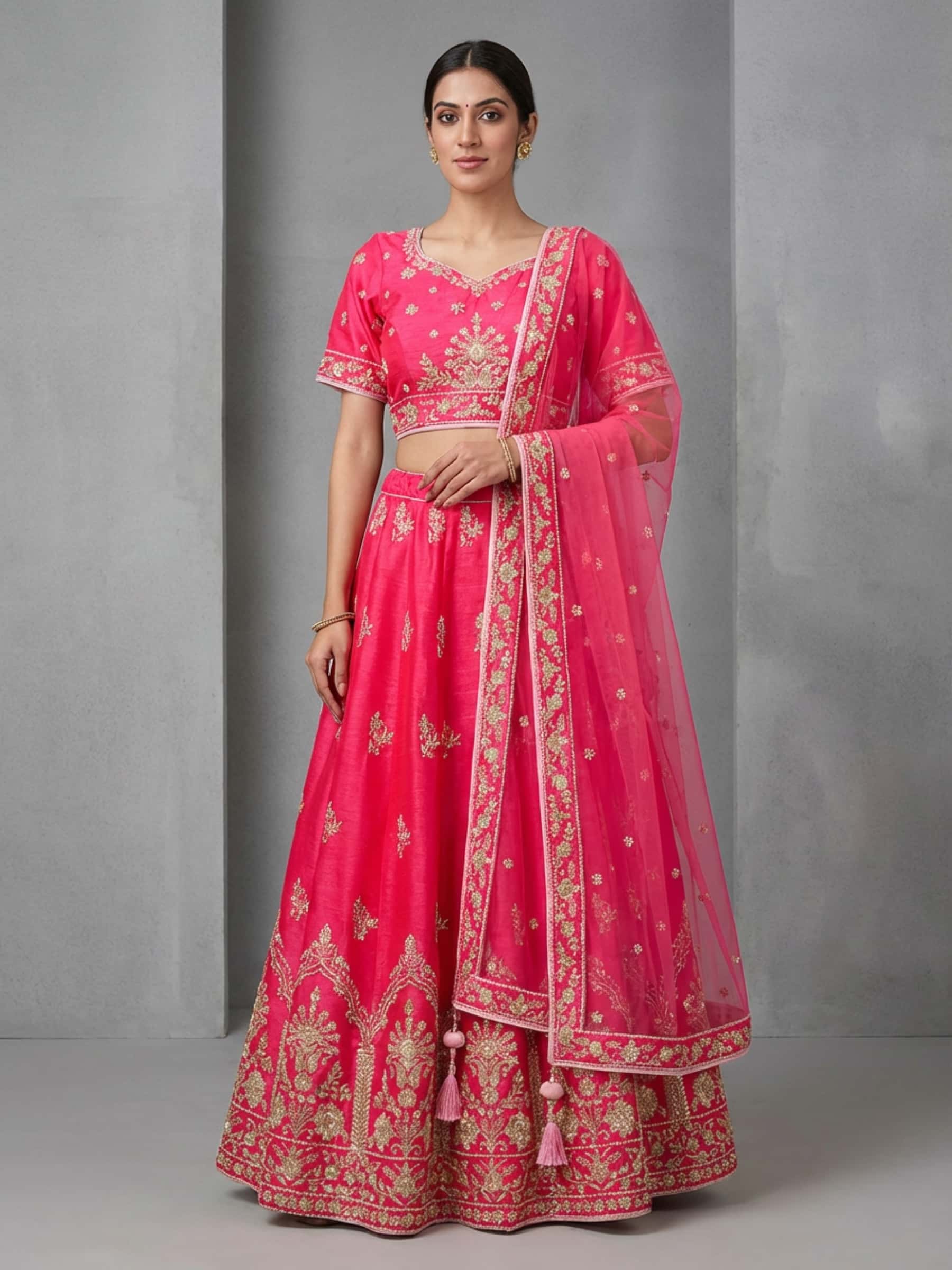
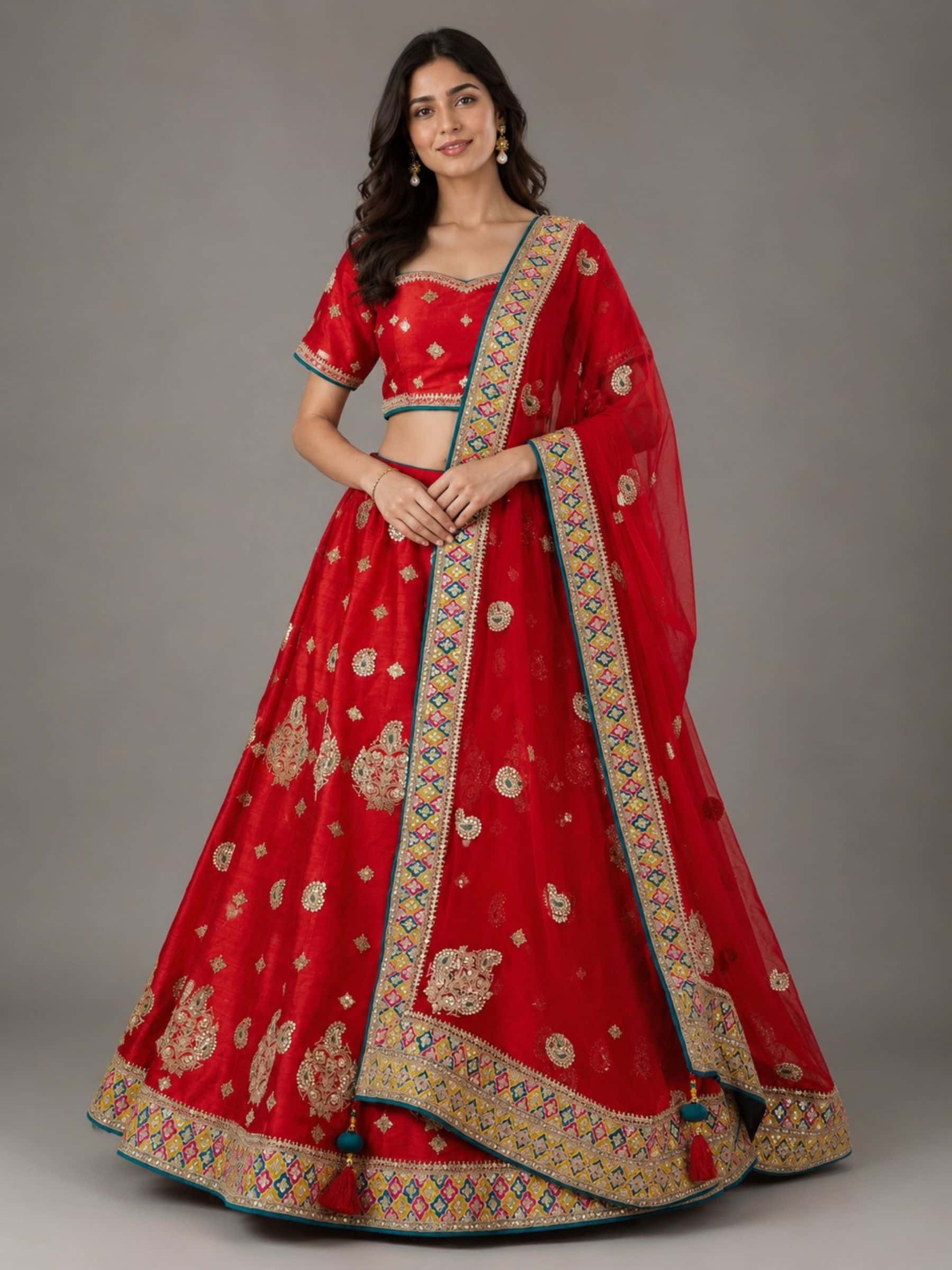
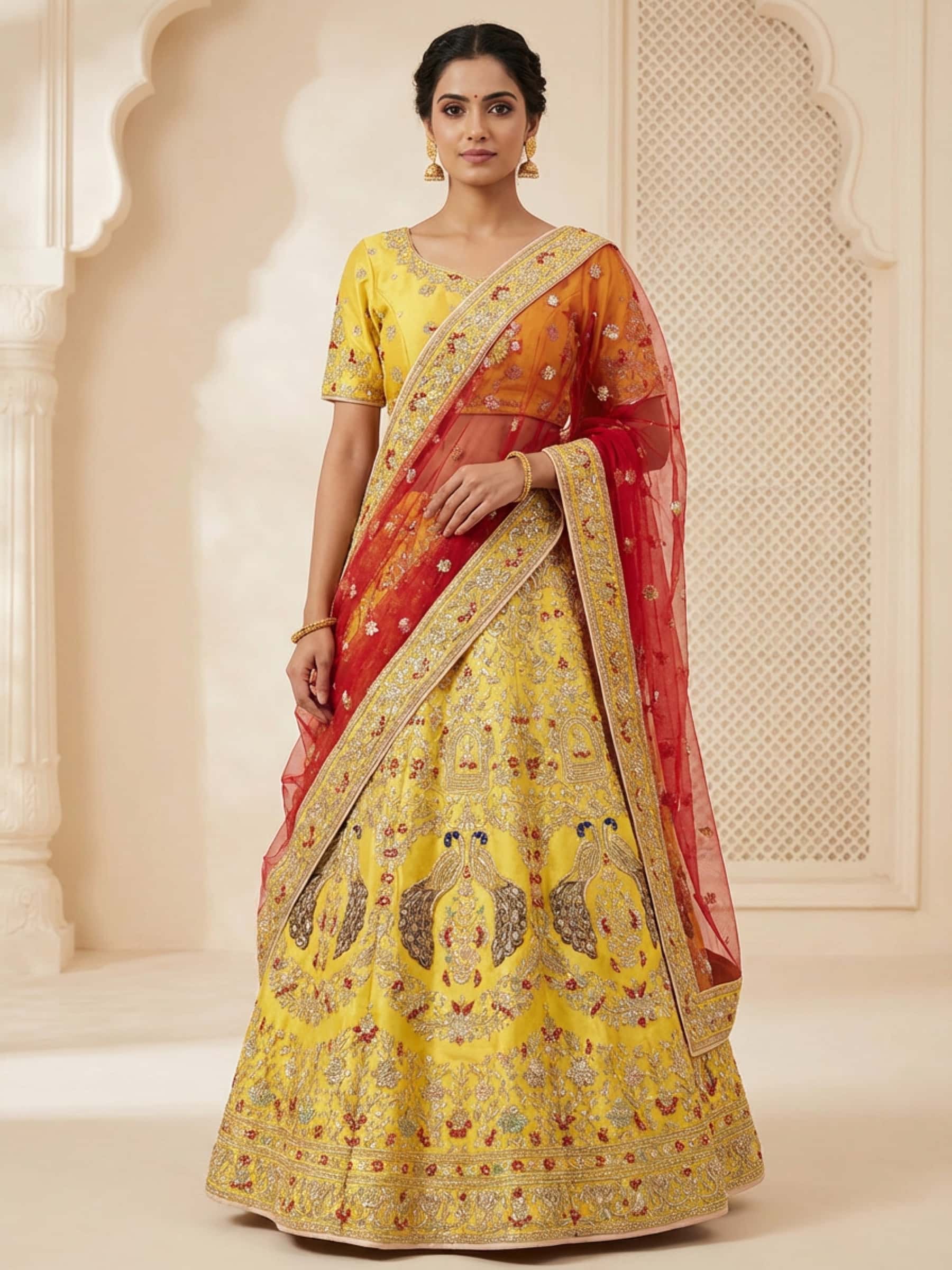
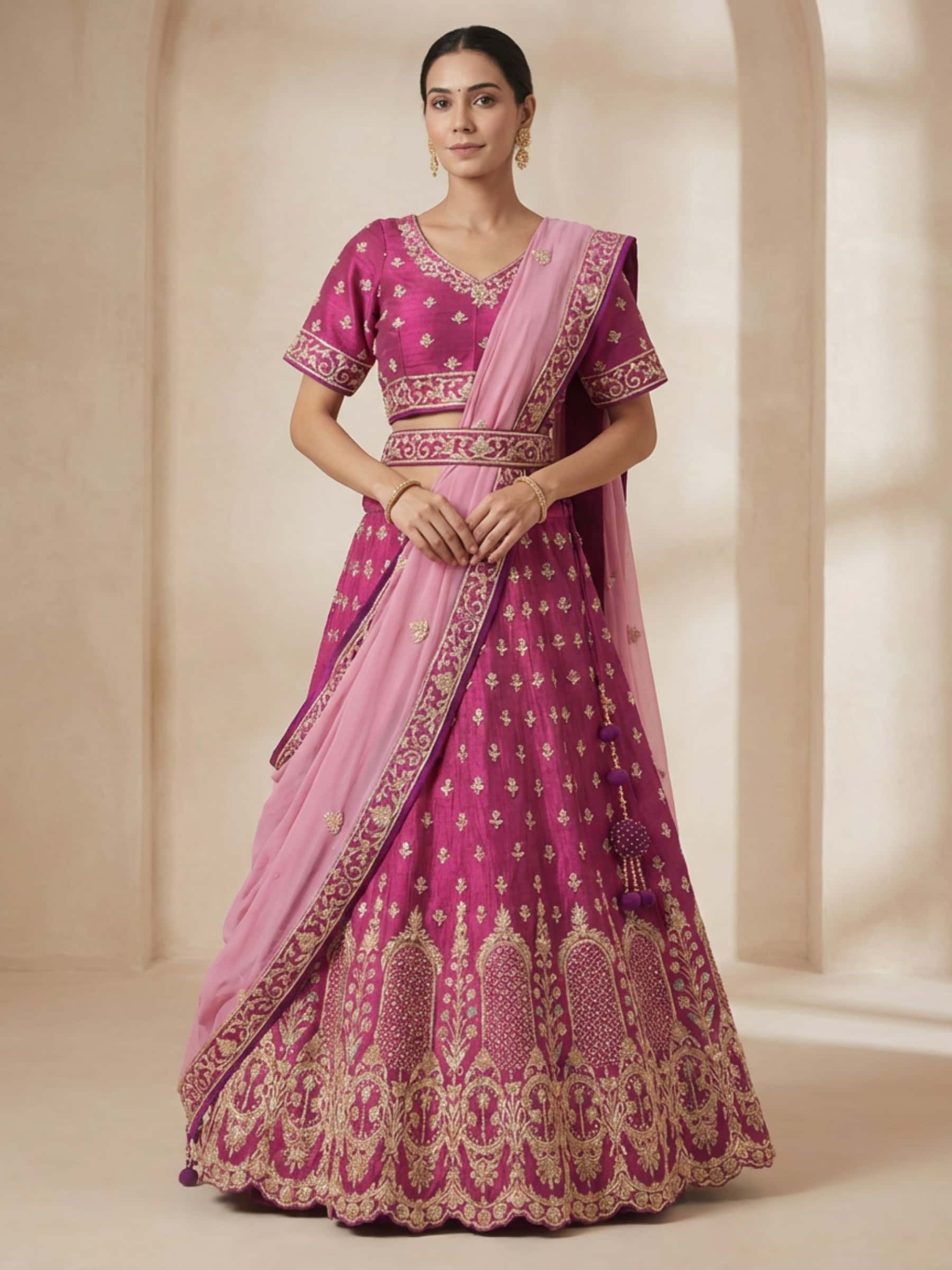
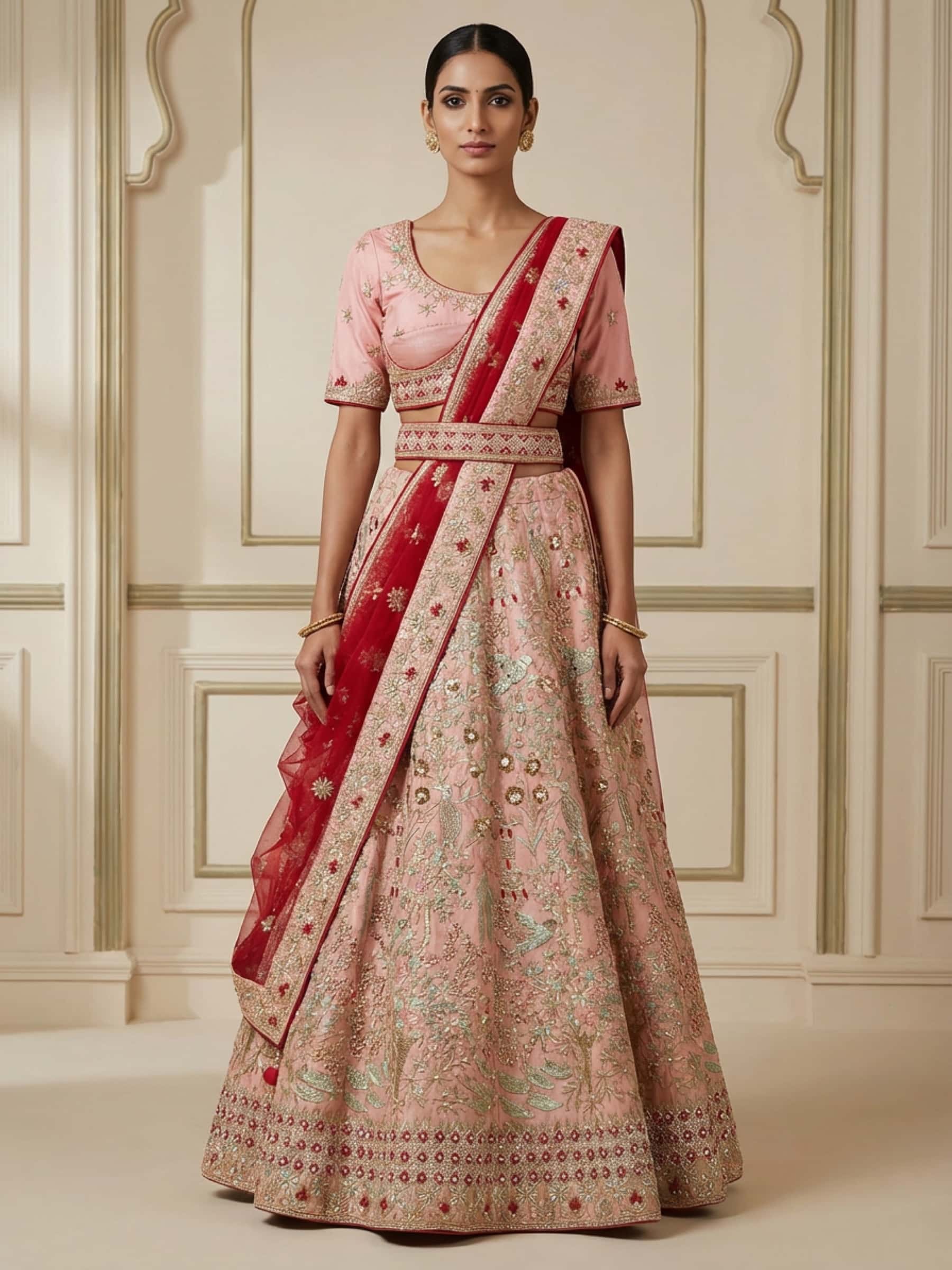
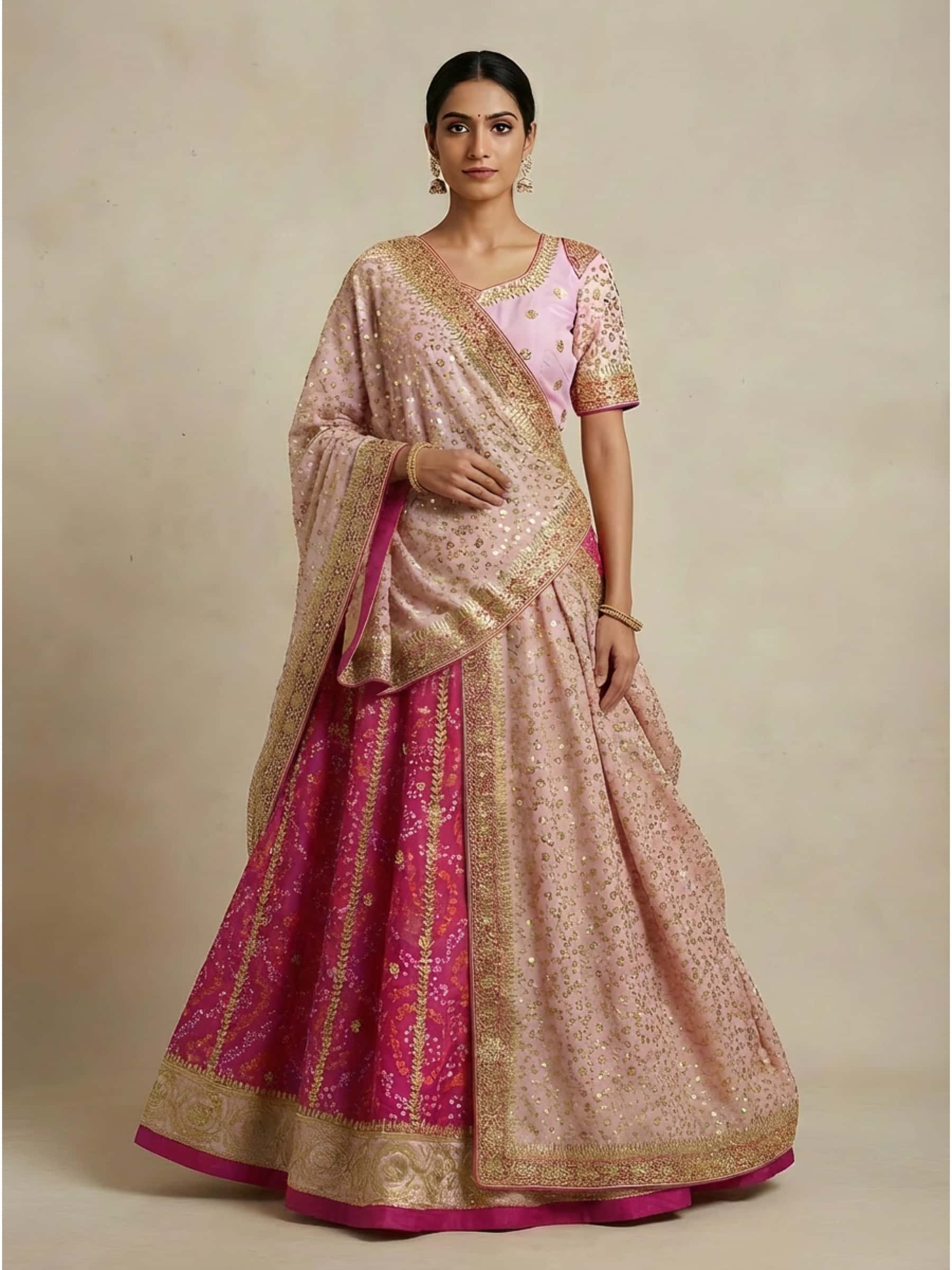
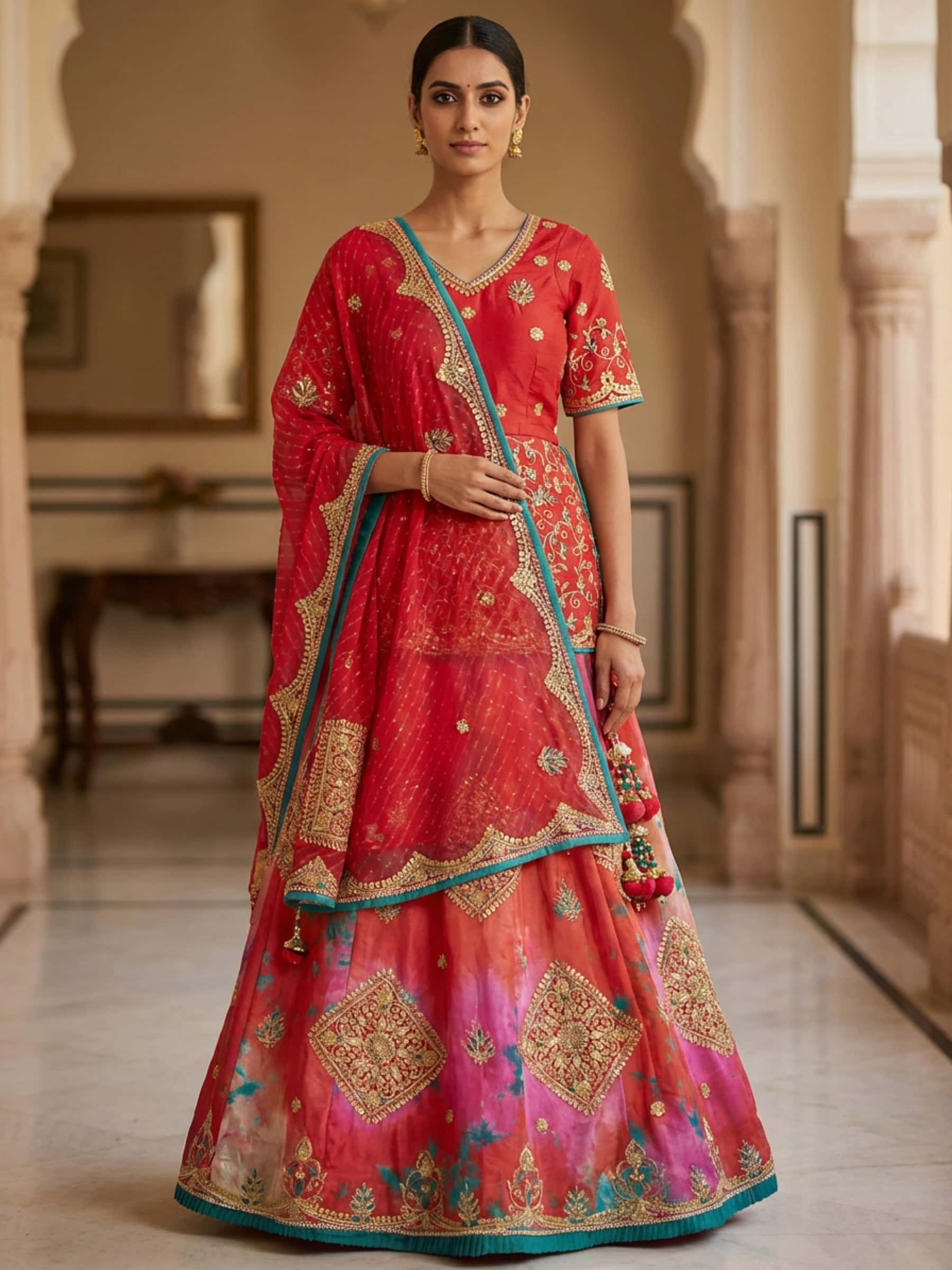
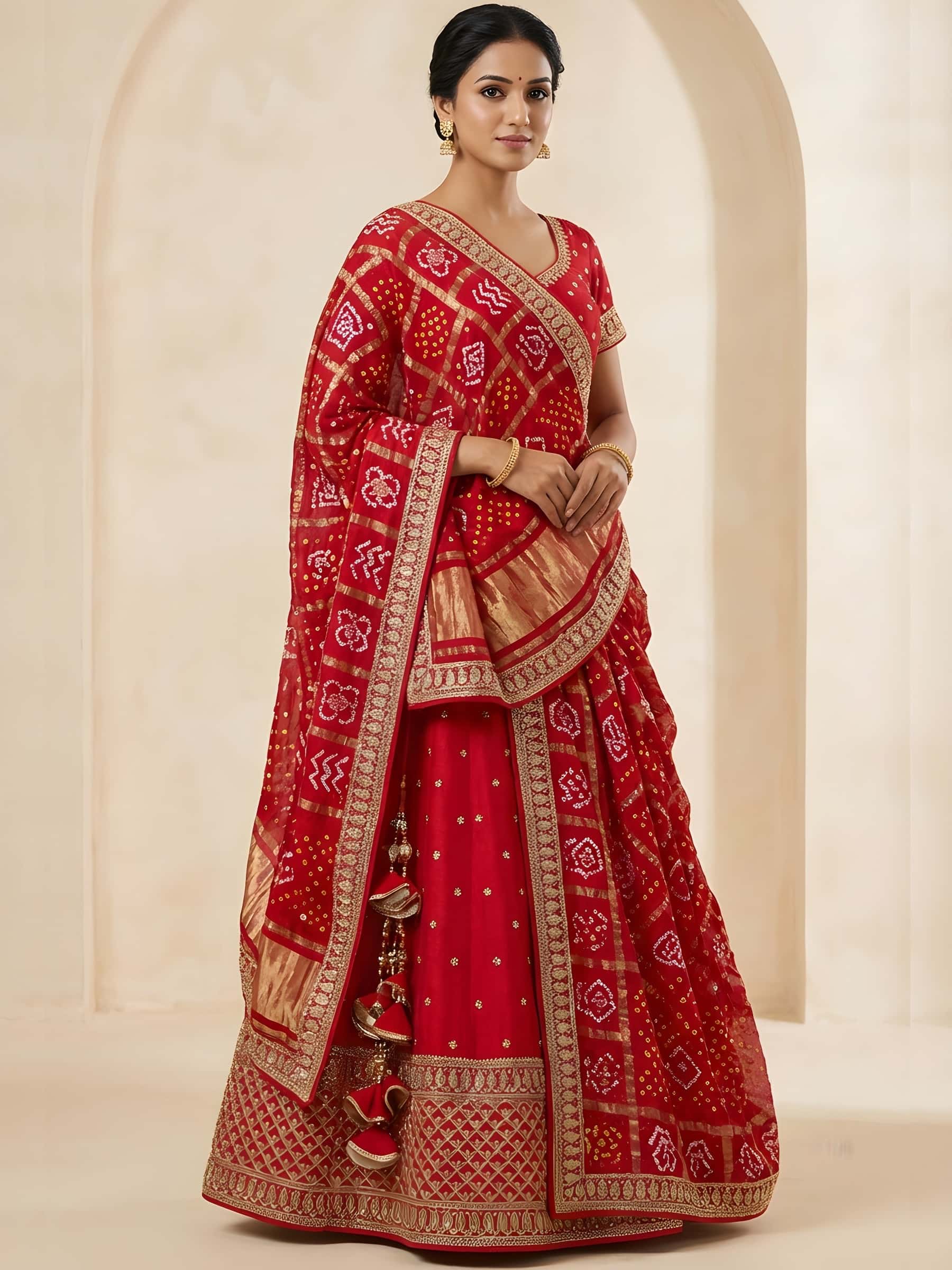
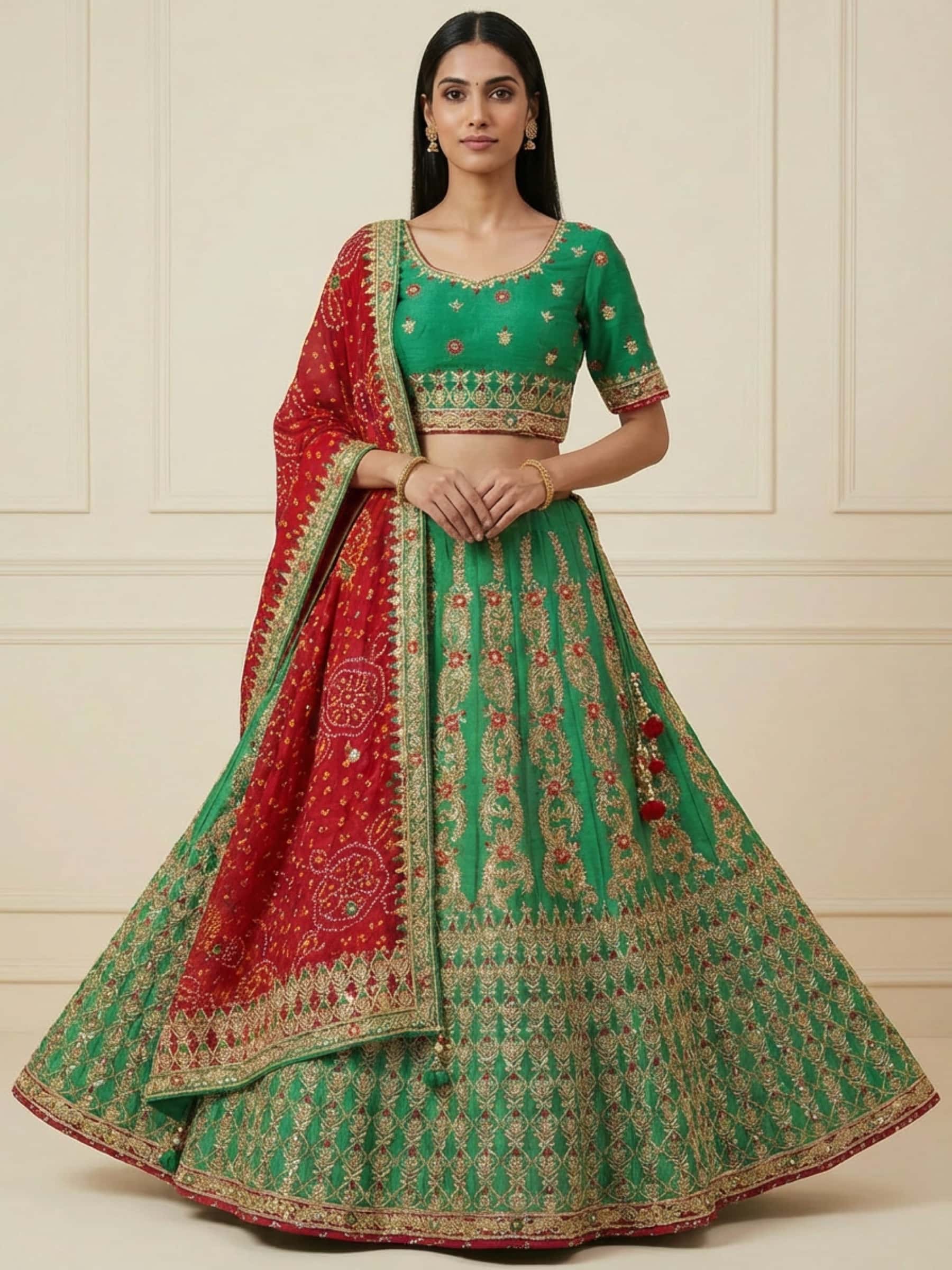
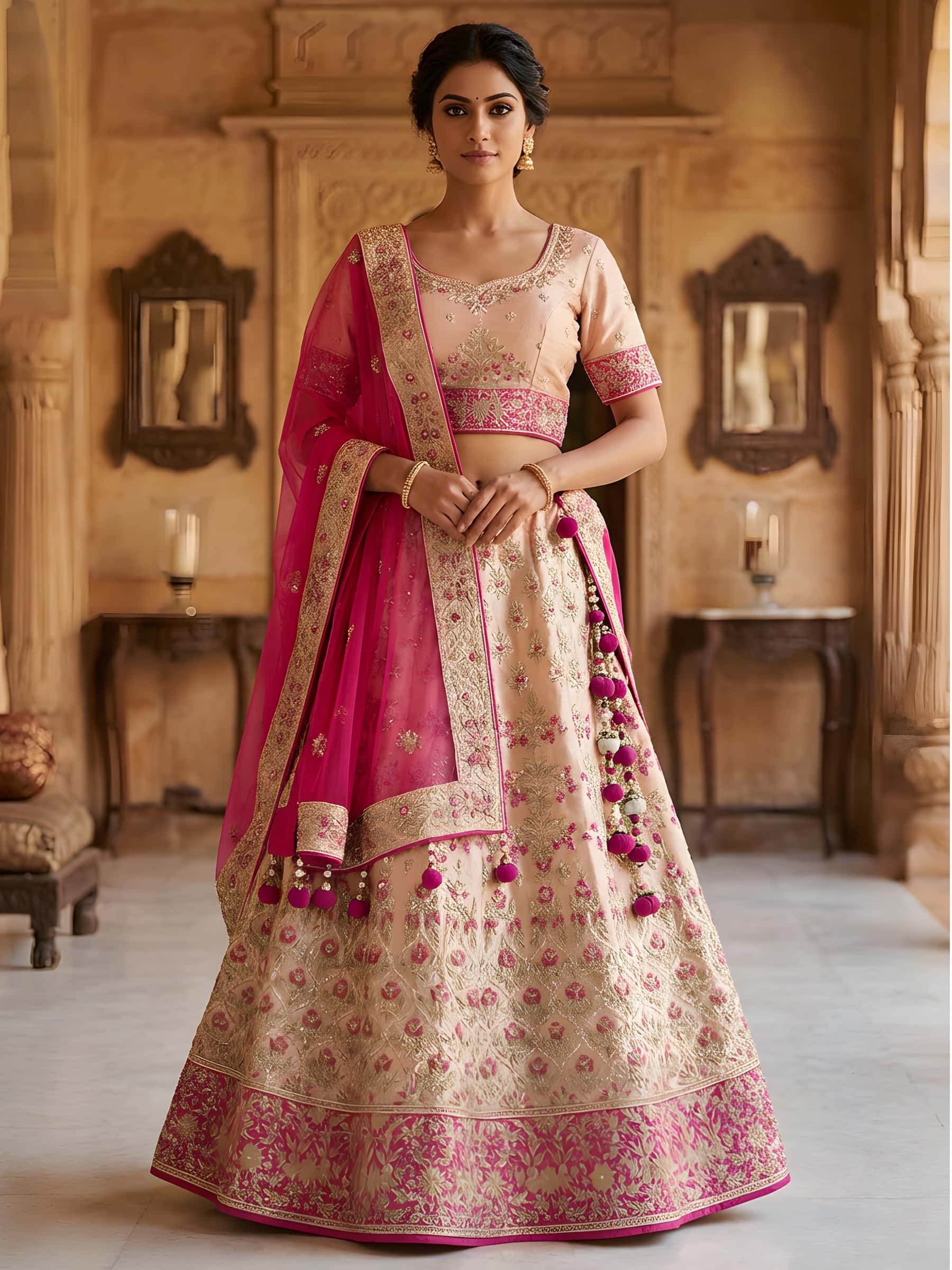
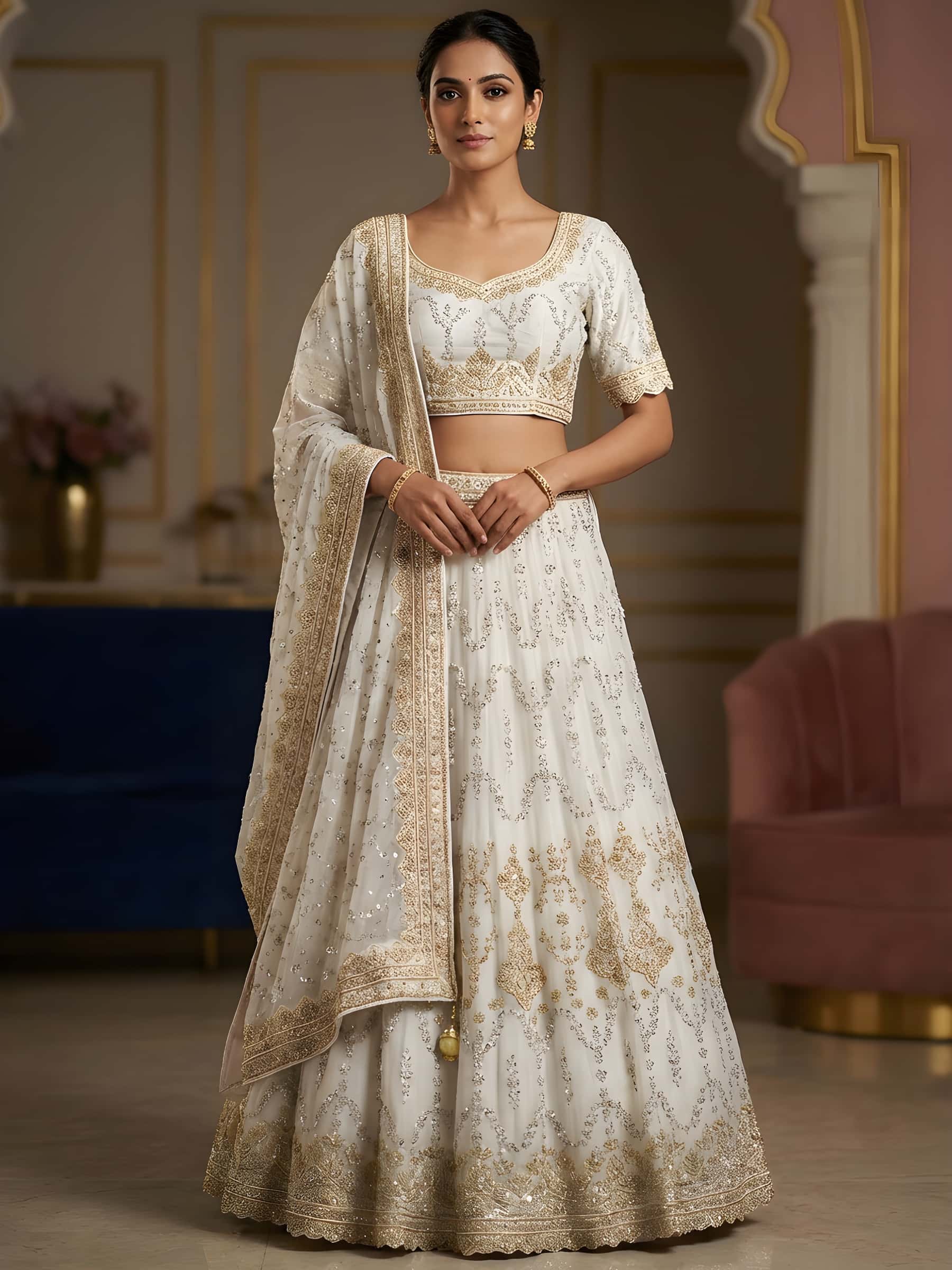
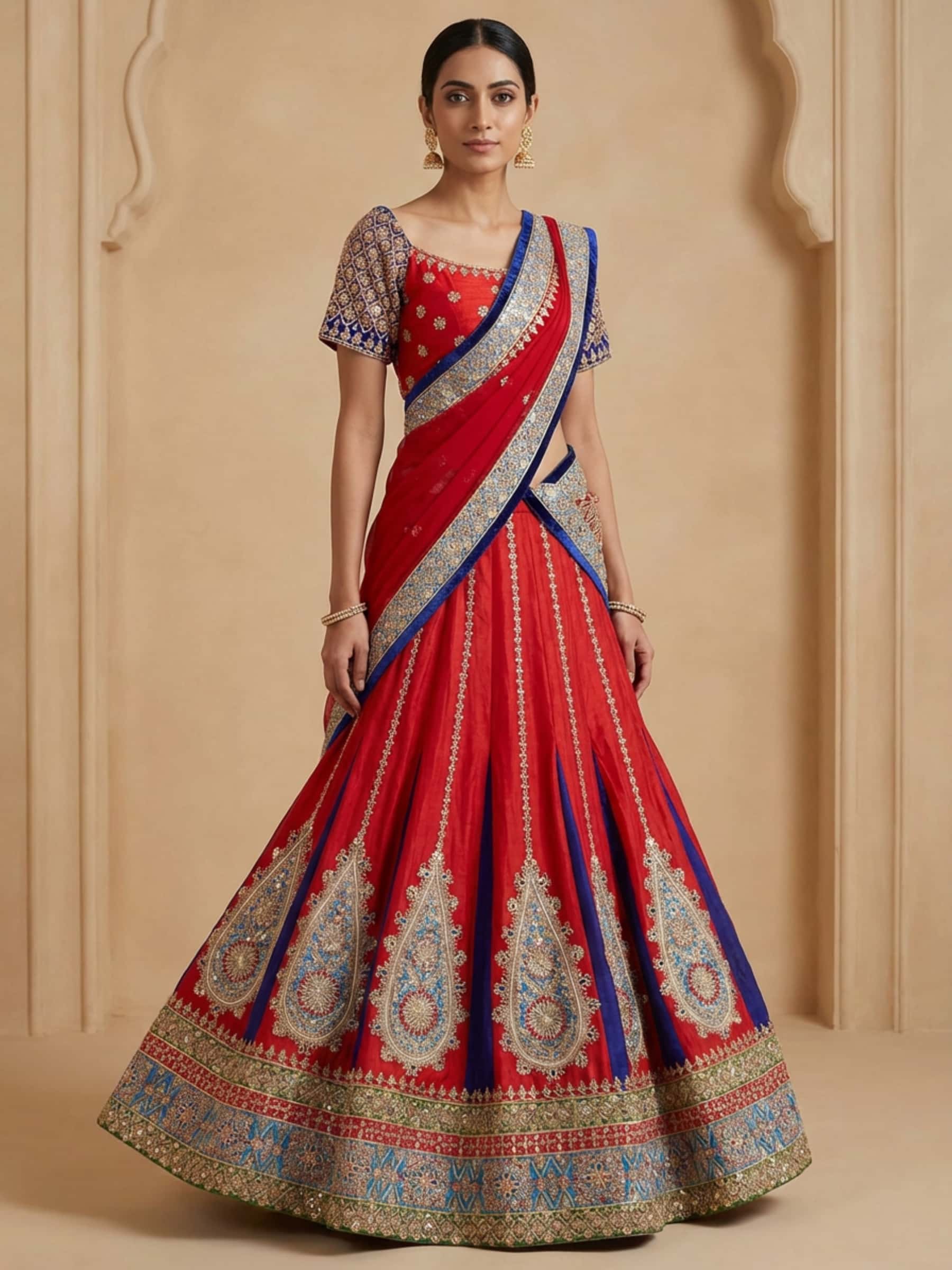
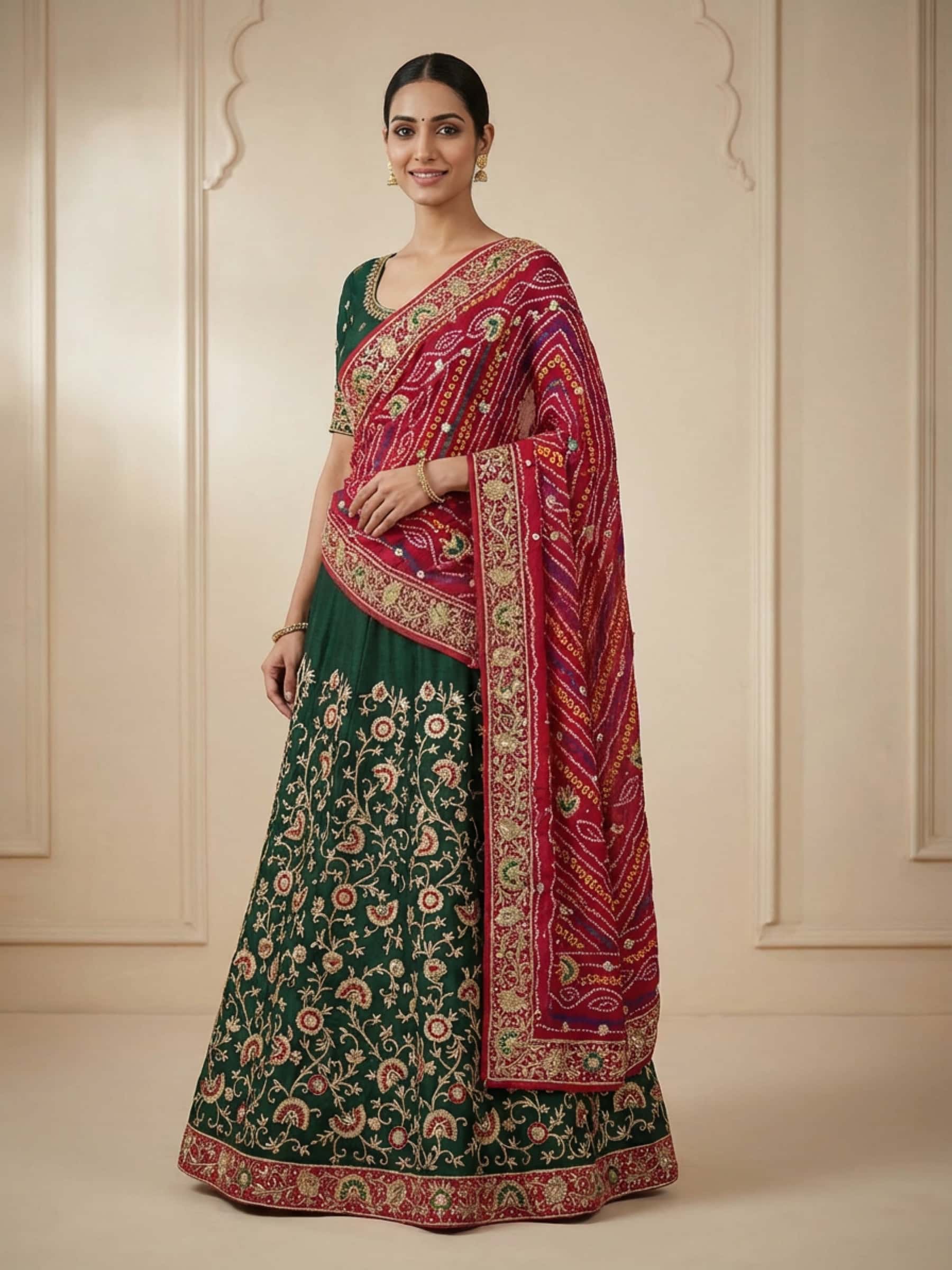
A bridal wardrobe is not a single saree or a single lehenga. It is a wardrobe — typically five to ten pieces, planned across five to seven wedding functions, designed to read as a deliberate set rather than a scramble of individual purchases. Most brides come to us at the point where they have already started buying. They have two sarees and a lehenga from three different sources, and they are realising the palette is inconsistent, the embellishment density does not progress from light to heavy as the functions move from engagement to wedding day, and there is no plan for the reception. Our Heritage Bridal Collection above is built for the bride who wants to start over — or, ideally, to start correctly the first time. Every piece in this collection is handcrafted in our Jaipur atelier, customisable to your measurements, and chosen to coordinate across a multi-function wedding wardrobe.
How an Indian bridal wardrobe is structured
A traditional North Indian Hindu wedding typically requires bridal outfits across these functions:
- Engagement / sagai / tilak — usually the first formal piece. Lighter weight, pastel or sorbet palette. Read as elegant rather than ceremonial.
- Mehendi — daytime, vivid colour, movement-friendly. Yellow, green, magenta, orange are traditional. Worn while seated for several hours, so comfort matters.
- Haldi — usually yellow or saffron. The piece will likely be stained with turmeric, so it is often a piece the bride does not plan to wear again.
- Sangeet — evening, photographs heavily. Vivid jewel tones. Often the most fashion-forward piece in the wardrobe.
- Wedding day — the heaviest piece, red or maroon traditionally, full ceremonial weight. The single saree or lehenga the bride will be photographed in most.
- Reception — second-heaviest. Photographs alongside the wedding-day piece, so colour and silhouette should contrast deliberately (if wedding day is red lehenga, reception is often gold saree, or vice versa).
- Post-wedding family events — milestone visits and ceremonies in the weeks after the wedding. Trousseau saree territory; see bridal trousseau guide.
Rajasthani, Marwari, Sindhi, Gujarati, Punjabi, and South Indian weddings each have their own function structures and additional ceremonies (mayra, bhaat, milni, varmala, ashirwad). The number of pieces scales accordingly — some traditional Rajasthani weddings require seven to nine bridal poshaks alone.
Saree or lehenga for the main ceremony
This is the most consequential decision in a bridal wardrobe and most brides default to family tradition without fully considering the trade-offs.
- Lehenga — easier to walk in (no fall to manage), holds heavy embellishment without sagging, more silhouette options (A-line, kalidar, mermaid, fishtail). Photographs as a more contemporary bridal look.
- Saree — heavier traditional symbolism in most Indian wedding contexts, single uncut nine-yard piece carries cultural weight, can be re-worn at family weddings for decades. Photographs as a more rooted classical look.
There is no universal right answer. South Indian, Bengali, Maharashtrian, and most Tamil-Brahmin weddings traditionally favour the saree; Punjabi, Marwari, and most North Indian Hindu weddings favour the lehenga; Gujarati and Rajasthani weddings split depending on family tradition. For a structured comparison, read our guide to bridal lehenga vs bridal saree.
Fabric weight by season
The most common bridal-wardrobe mistake is choosing fabric by photograph rather than by the actual weather of the wedding date.
- November–February weddings — silk and velvet hold up beautifully. Banarasi, Kanjivaram, Gajji silk, and velvet lehengas are all suitable.
- March–April weddings — georgette and Chanderi silk are more wearable than heavy Banarasi. Avoid velvet entirely.
- Monsoon weddings (June–September) — georgette and chiffon, never heavy silk. Plan for humidity affecting both the bride and the embellishment work.
- Outdoor / destination weddings — drop one weight tier from what you would normally wear indoors. A bride who would wear heavy Banarasi indoors should consider a medium-weight Chanderi or pure georgette outdoors.
Colour beyond the red default
Red and maroon are the traditional bridal colours across most of India, but the modern bridal palette has expanded substantially. Pieces in our Heritage Bridal Collection above include pieces in:
- Traditional red, maroon, rani pink — for brides who want to anchor in family tradition.
- Soft pastels (blush, peach, ivory, mint, dusty rose) — increasingly popular for daytime and destination weddings. Photographs beautifully in natural light.
- Jewel tones (emerald green, royal blue, wine, plum) — for brides who want statement-formal without classical red.
- Champagne and gold — read as ceremonial without leaning on red. Good reception choice.
- Ivory and cream — for Christian and inter-faith Indian weddings; also increasingly chosen by Hindu brides for civil/intimate ceremonies.
When planning a multi-piece bridal wardrobe, the rule is deliberate contrast across functions rather than colour repetition. If the wedding-day piece is red, the reception should not be red. If the mehendi is yellow, the haldi should not also be yellow.
Customisation, sizing, and timeline
Every bridal piece in our atelier is made to measure. The standard process:
- First consultation (in person or video call). Two-hour conversation covering wedding date, functions, family traditions, palette preferences, fabric preferences, and budget tier.
- Design finalisation. Sketches, fabric swatches, and embellishment density agreed in writing.
- Production. 8–10 weeks for light bridal pieces (engagement, mehendi, sangeet sarees and lighter lehengas). 12–24 weeks for standard heavy bridal pieces with substantial embellishment — heavy Gota Patti or Zardozi bridal sarees, mid-weight bridal lehengas. 32–52 weeks for the most intricate pieces — heavy bridal lehengas with full Gota Patti or Zardozi work across all 40+ kali panels, full custom Rajputi poshak sets with bridal-density embellishment, and heritage-grade custom Banarasi or Kanjivaram weaves. Add 1 week for domestic shipping or 3 weeks for international shipping on top of the production window.
- Two fittings. First fitting at ~70% completion (silhouette and base structure), second fitting at ~95% (final embellishment review and last alteration round).
- Final delivery. 2–3 weeks before the wedding day, allowing buffer for last-minute changes.
For NRI brides, this entire process scales by an additional 3 weeks for international shipping rounds. See our NRI brides guide for the cross-border specifics.
Care and longevity
Every piece in the bridal collection is dry-clean only — no exceptions. The combination of heavy embellishment, real or tested Zari, and pure silk or georgette base fabric makes home washing impossible without damage.
- Dry-clean only. Send to a professional cleaner familiar with heavy bridal handwork. Specify "delicate handwork — no chemical bleach" when handing over the piece.
- Store flat or rolled, never folded. Folded storage creates permanent crease lines through heavy embellishment.
- Acid-free tissue between layers. Plastic bags trap moisture and tarnish Zari. Cotton or muslin storage covers only.
- Keep away from direct sunlight. Even brief UV exposure tarnishes Zari over the lifespan of the piece.
- Air briefly in shade twice a year. Bridal pieces stored long-term need to breathe.
- Iron on the reverse, low heat, with a pressing cloth. Never iron directly on Gota Patti, Zardozi, or sequin work.
A correctly stored bridal saree or lehenga from our atelier lasts 50–80 years. We have customers wearing their mothers' Banarasi sarees from our 1980s archive at family weddings today.
What to look for when buying
If you are choosing a bridal wardrobe from any atelier — including us — these are the diagnostic questions:
- Will the atelier coordinate a full multi-function wardrobe, or only sell individual pieces?
- Is the timeline realistic? (Anything promising a custom bridal piece in under 8 weeks is cutting corners on handwork.)
- Is fabric composition disclosed in writing? (Pure georgette, pure Banarasi silk — not "designer silk".)
- Is the Zari type specified? (Real, tested, or polyester — see our silk saree guide for the difference.)
- What is the alteration policy after delivery?
- Is the consultation included or charged separately?
At Rana's, the bridal consultation is complimentary, the timeline is honest, fabrics are composition-disclosed, and Zari type is specified on every piece. Read the complete bridal trousseau checklist for a function-by-function planning template, and the bridal saree shopping checklist for the diagnostic questions worth asking at every atelier visit.
Browse adjacent collections: the Rajputi Poshak collection is the traditional bridal choice for Rajasthani and Marwari brides; the Designer Lehengas include festive-light pieces for the supporting wedding functions; the bridal trousseau saree collection anchors the saree wardrobe for the wedding year and beyond.