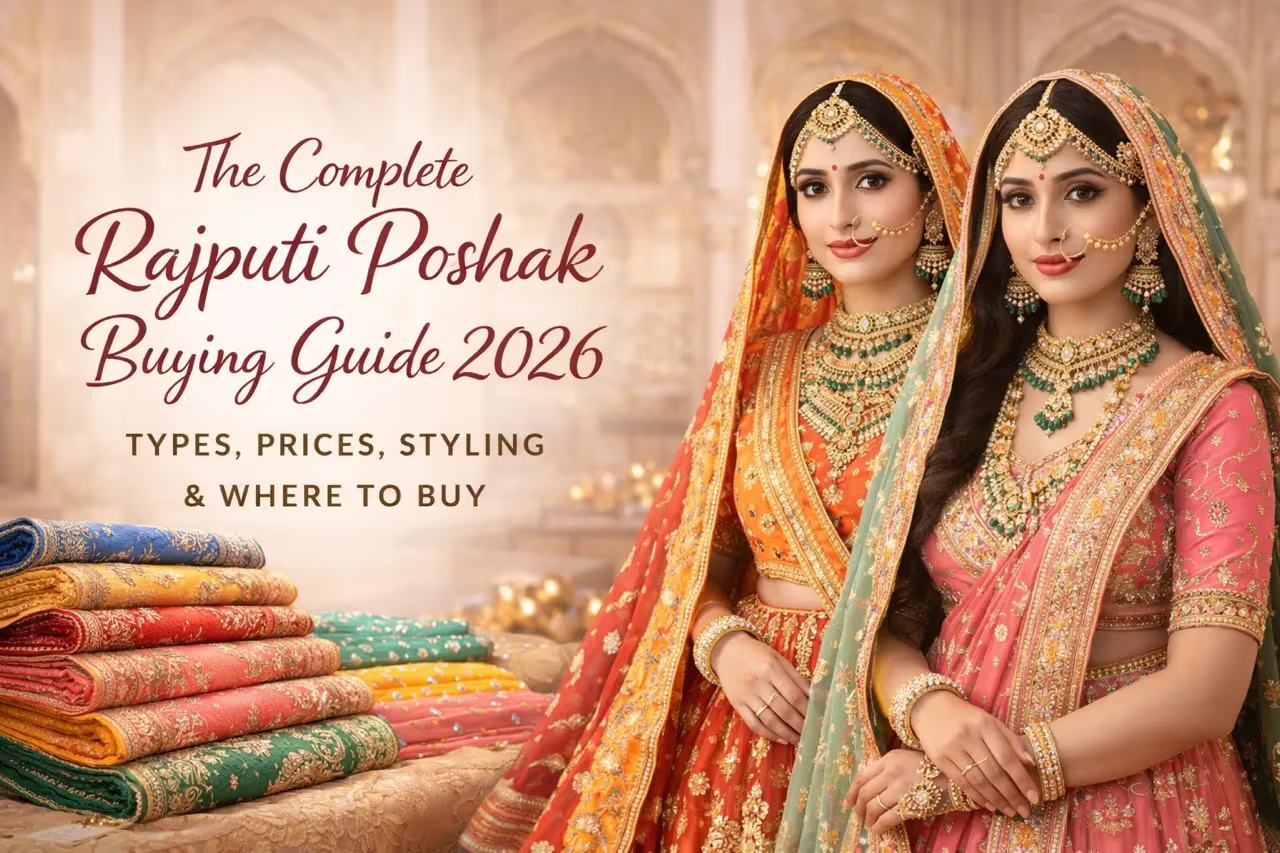
The Complete Rajputi Poshak Buying Guide 2026: Types, Prices, Styling & Where to Buy
Everything you need to know before buying a Rajputi Poshak — from Pyor to Gota Patti styles, pricing by craft level, occasion styling, and how to find an authentic handcrafted Poshak online.
Kshitija Rana
Editor
The Rajputi Poshak is more than a garment — it is one of India's most magnificent expressions of royal textile heritage, a three-piece ensemble rooted in the Rajput courts of Rajasthan that continues to be worn with pride at weddings, Teej, Gangaur, and celebrations across India and by the global Rajasthani diaspora. If you are considering buying your first Poshak, upgrading your collection, or choosing one for a bride in your family, this comprehensive guide covers everything: the different types available, what each one costs and why, how to style it for different occasions, and how to find authentic handcrafted pieces online. For the cultural history and significance, see our companion article: What is a Rajputi Poshak?
The Three Components of a Rajputi Poshak
Every Rajputi Poshak comprises three essential pieces, each with its own construction and embellishment:
1. Kanchli (The Blouse)
The Kanchli is a short, fitted blouse that traditionally ends just below the bust or at the waist. Unlike a standard lehenga blouse, the Kanchli has a specific cut that has remained largely unchanged for centuries. Traditional Kanchlis have a deep U-shaped or square neckline at the back and are fastened with ties (dori) rather than hooks or zippers. The front and back panels are often the most heavily embroidered parts of the entire Poshak, featuring concentrated Gota Patti, Zardozi, or mirror work.
2. Ghagra (The Skirt)
The Ghagra is a heavily flared, floor-length skirt that forms the visual centrepiece of the Poshak. The traditional Pyor Ghagra uses 12 to 16 metres of fabric to create its distinctive circular flare — this extreme volume is what gives the Rajputi Poshak its unmistakable silhouette. The Ghagra is gathered or pleated at the waist and secured with a drawstring (nara). The hem, known as the ghera, is traditionally the most embellished part, with Gota borders, zari work, or embroidered panels that create a dramatic effect when the wearer moves.
3. Odhni (The Drape)
The Odhni is a long dupatta — typically 2.5 to 3 metres — that is draped over the head and pinned at the shoulder. It is not simply an accessory: the Odhni is culturally integral to the Poshak and is worn at all times during formal occasions. The pallu (decorative end) of the Odhni is often the most elaborately embroidered section, featuring large motifs, broad Gota borders, and sometimes mirror or sequin work. The manner of draping the Odhni carries cultural significance — it is traditionally pulled forward over the forehead as a gesture of modesty and respect.
Types of Rajputi Poshak
Pyor Poshak (Full Flare)
The Pyor is the most traditional and regal form of the Rajputi Poshak. The word Pyor refers to the extreme flare of the Ghagra, achieved by using 12 to 16 metres of fabric. When the wearer twirls, the Pyor Ghagra creates a full circular spread that is one of the most visually spectacular sights in Indian fashion. Pyor Poshaks are typically the heaviest and most expensive, reserved for brides, senior family members, and the most important festive occasions. Our Assi Kali Rajputi Poshak with Bandhani Odhna is an excellent example of this traditional style.
Best for: Weddings (bride), Teej (married women), formal cultural events
Price range: ₹25,000 to ₹80,000+ depending on embroidery
Half Pyor Poshak
The Half Pyor uses less fabric — typically 6 to 8 metres — resulting in a lighter, more manageable Ghagra that still has visible flare but without the weight of a full Pyor. This style became popular as women sought the traditional silhouette in a more practical format. Half Pyor Poshaks are easier to drape, more comfortable for extended wear, and significantly lighter, making them a practical choice for wedding guests, younger women, and NRI brides who may not be accustomed to the weight of a full Pyor.
Best for: Wedding guests, bridesmaids, Gangaur, family functions
Price range: ₹15,000 to ₹45,000
Gota Patti Poshak
Gota Patti is the most iconic embroidery associated with the Rajputi Poshak. Gold and silver metallic ribbons are hand-folded and stitched onto fabric to create raised, luminous motifs — lotuses, peacocks, vines, and geometric patterns. A Gota Patti Poshak can be either Pyor or Half Pyor; the term refers specifically to the embroidery technique. Heavy Gota Patti bridal Poshaks can take 4 to 8 weeks of artisan work to complete.
Best for: Bridal wear, Teej, high-profile celebrations
Price range: ₹20,000 to ₹60,000+
Zardozi Poshak
Zardozi Poshak features metallic thread embroidery — heavier and more three-dimensional than Gota Patti. Zardozi uses thick gold and silver threads, wires, and sometimes semi-precious stones to create heavily sculpted designs. A Zardozi Poshak has a distinctly regal, Mughal-influenced aesthetic and is the heaviest of all embroidered styles. These are statement pieces for the most important occasions.
Best for: Bridal trousseau, reception wear, special family events
Price range: ₹30,000 to ₹1,00,000+
Bandhani Poshak
Bandhani (also called Bandhej) Poshak features the ancient tie-dye technique where artisans tie thousands of tiny knots by hand before the fabric is dipped in dye. The result is a fabric covered in tiny dots that form larger patterns — waves, circles, diamonds, and floral designs. Bandhani Poshaks are lighter than embroidered styles and have a vibrant, festive energy. They are especially popular for Teej and monsoon celebrations, where the bright colours echo the season.
Best for: Teej, Gangaur, casual festive wear, everyday elegance
Price range: ₹8,000 to ₹25,000
Contemporary Poshak
Modern designers have reimagined the Rajputi Poshak with lighter fabrics, contemporary colour palettes, and fusion silhouettes while retaining the essential three-piece structure. Contemporary Poshaks may feature shorter Kanchlis, slimmer Ghagras with less flare, or Odhnis styled as modern dupattas. These are popular among younger women and NRI brides who want a cultural connection without the full weight of tradition.
Best for: Engagement, pre-wedding events, cultural celebrations, NRI weddings
Price range: ₹12,000 to ₹40,000
Price Guide: What Affects the Cost of a Rajputi Poshak?
Understanding what drives pricing helps you make an informed choice:
Fabric
The base fabric is the foundation. Pure silk (Banarasi, Tussar, Crepe) commands the highest price, followed by pure georgette, satin, and organza. Blended fabrics and synthetic alternatives are significantly less expensive. The weight and quality of the fabric directly affect how the Poshak drapes and how the embroidery sits.
Embroidery Type and Density
This is the single largest cost factor. A lightly embellished Poshak with Gota borders might take 3 to 5 days of artisan work. A heavily worked bridal Poshak with full-surface Gota Patti or Zardozi can take 4 to 8 weeks, with multiple artisans working simultaneously. The number of hours of skilled handwork directly determines the price.
Fabric Volume
A full Pyor Ghagra (12-16 metres) requires significantly more fabric and embroidery than a Half Pyor (6-8 metres). The fabric volume also affects the weight and quantity of embellishment — more fabric means more border work, more booti placement, and longer finishing time.
Customization
Custom sizing, colour modifications, and bespoke designs carry a premium over ready-to-ship pieces, reflecting the additional design consultation, pattern-making, and individual attention required.
How to Style a Rajputi Poshak for Different Occasions
Bridal Poshak Styling
The bridal Poshak is the most elaborate. Traditional brides choose red or maroon with heavy Gota Patti and complement it with the full suite of Rajput bridal jewellery: Borla (maang tikka), Aad (choker), Timaniya (layered necklace), Bajuband (armlet), Haath Phool (hand ornament), Nath (nose ring), and Payal (anklets). The Odhni is draped over the head and pulled slightly forward. Bridal mehndi (henna) extends to the elbows and covers both hands.
Wedding Guest Poshak Styling
For wedding attendance, choose a lighter Half Pyor or Gota Patti Poshak in festive colours — pinks, oranges, greens, or jewel tones. Pair with a Borla, Aad, and matching bangles. The Odhni can be draped over the head or one shoulder depending on the formality of the event.
Teej and Gangaur Styling
Green is the traditional colour for Teej, while Gangaur favours bright pinks and saffron. Choose a Bandhani or light Gota Patti Poshak. Pair with lac bangles, lightweight jewellery, and fresh flowers in the hair. The Odhni is traditionally draped over the head for both festivals.
Contemporary Fusion Styling
For a modern take, pair a contemporary Poshak Ghagra with a Western-style crop top or cape blouse. Style the Odhni as a side-draped dupatta rather than a head covering. Minimalist gold jewellery — thin chains, statement earrings, a single bangle stack — keeps the look current while respecting the silhouette.
How to Find an Authentic Rajputi Poshak Online
With machine-made imitations flooding the market, here is how to identify genuine handcrafted pieces when shopping online:
Check the Artisan Details
Reputable sellers will tell you where and by whom a Poshak was made. Jaipur is the traditional home of Rajputi Poshak craftsmanship — look for sellers based in or sourcing from Jaipur's artisan communities.
Look at the Embroidery Closely
Zoom into product images. Genuine handmade Gota Patti has slight irregularities — petals vary in size, stitching spacing is not machine-precise. Machine-made imitations are unnaturally uniform.
Read the Fabric Description
Authentic sellers specify the exact fabric — "pure georgette," "Banarasi silk," "organza" — rather than vague terms like "premium material." The fabric type directly affects the price and drape.
Check Customization Options
Genuine artisan sellers typically offer customization (sizing, colour modifications) because they are producing pieces to order. Mass-produced Poshaks rarely offer this flexibility.
Review the Pricing
If a "Gota Patti Poshak" is priced at ₹2,000, it is almost certainly machine-printed, not hand-embroidered. Authentic handwork has a cost floor that reflects skilled artisan labour.
Caring for Your Rajputi Poshak
A well-maintained Rajputi Poshak can last a lifetime and be passed down as a family heirloom:
- Dry clean only. Never machine wash or hand wash embroidered Poshaks — water and agitation loosen the Gota stitching.
- Store flat, wrapped in muslin. Avoid plastic bags, which trap moisture and can discolour metallic embroidery. Soft muslin or cotton cloth is ideal.
- Avoid direct sunlight. Prolonged exposure fades both the fabric dye and the metallic sheen of Gota ribbon.
- Never iron directly on embroidery. Iron on the reverse side only, using a pressing cloth on a low heat setting.
- Stuff the Ghagra folds. When storing a Pyor Poshak long-term, place acid-free tissue paper between the folds to prevent creasing and colour transfer.
Frequently Asked Questions
How much does a Rajputi Poshak cost?
Rajputi Poshak prices range from approximately ₹8,000 for simple printed or light embroidery pieces to ₹50,000 and above for heavily handcrafted bridal Poshaks with Gota Patti, Zardozi, or Kundan work. The price depends on the fabric quality, complexity of embroidery, and the number of hours of artisan work involved.
What are the different types of Rajputi Poshak?
The main types are Pyor Poshak (full flare, traditionally 12-16 metres of fabric), Half Pyor Poshak (lighter version with less fabric), Gota Patti Poshak (with gold ribbon applique), Zardozi Poshak (metallic thread embroidery), Bandhani Poshak (tie-dye), and Contemporary Poshak (modern fusion designs). Each type suits different occasions and budgets.
Which Rajputi Poshak is best for a wedding?
For a Rajput wedding, the Pyor Poshak with heavy Gota Patti work in red or maroon is the most traditional choice. For bridesmaids or wedding guests, lighter Half Pyor or Gota Patti Poshaks in pink, orange, or green are popular.
Can I buy a Rajputi Poshak online?
Yes, reputable brands like Rana's by Kshitija offer authentic handcrafted Rajputi Poshaks online with free shipping across India and international delivery. Look for sellers who provide detailed product photos, artisan information, and fabric specifications.
What jewellery goes with a Rajputi Poshak?
Traditional Rajputi Poshak jewellery includes the Borla (maang tikka centrepiece), Aad (choker necklace), Timaniya (layered necklace), Bajuband (armlet), Haath Phool (hand ornament), and Payal (anklets). For a wedding Poshak, the full set is customary. For festive wear, a Borla and Aad with bangles is sufficient.
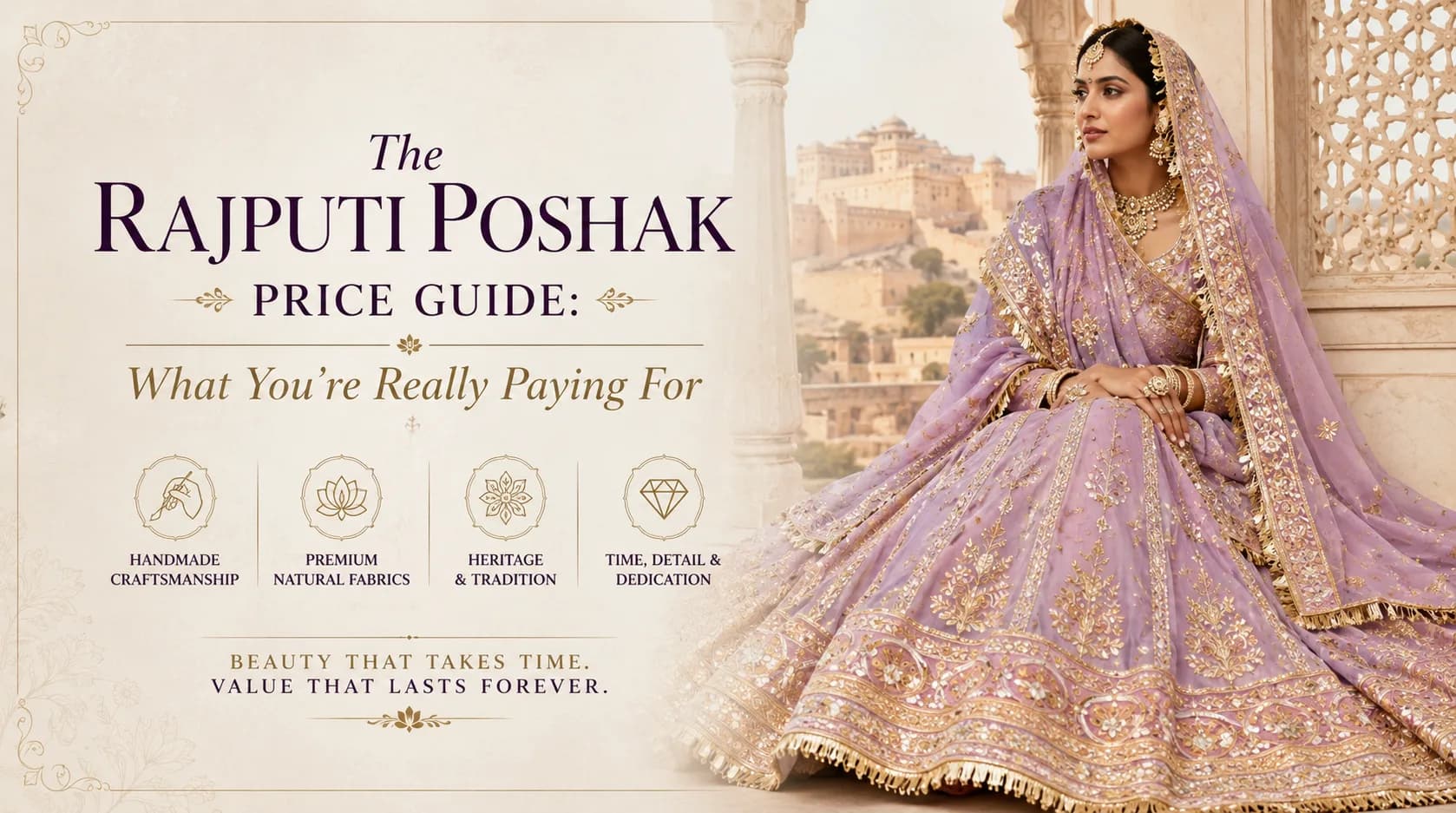
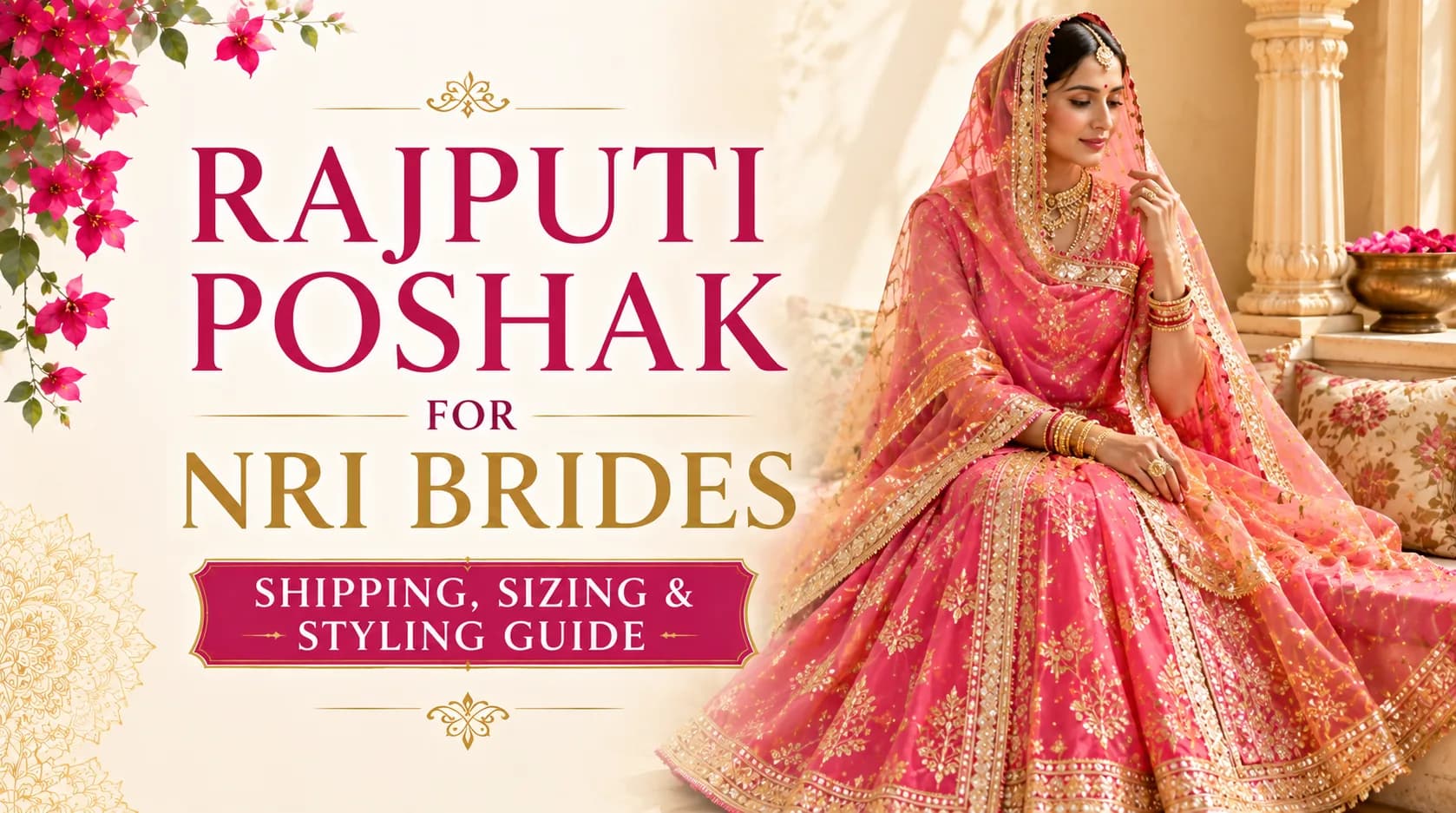
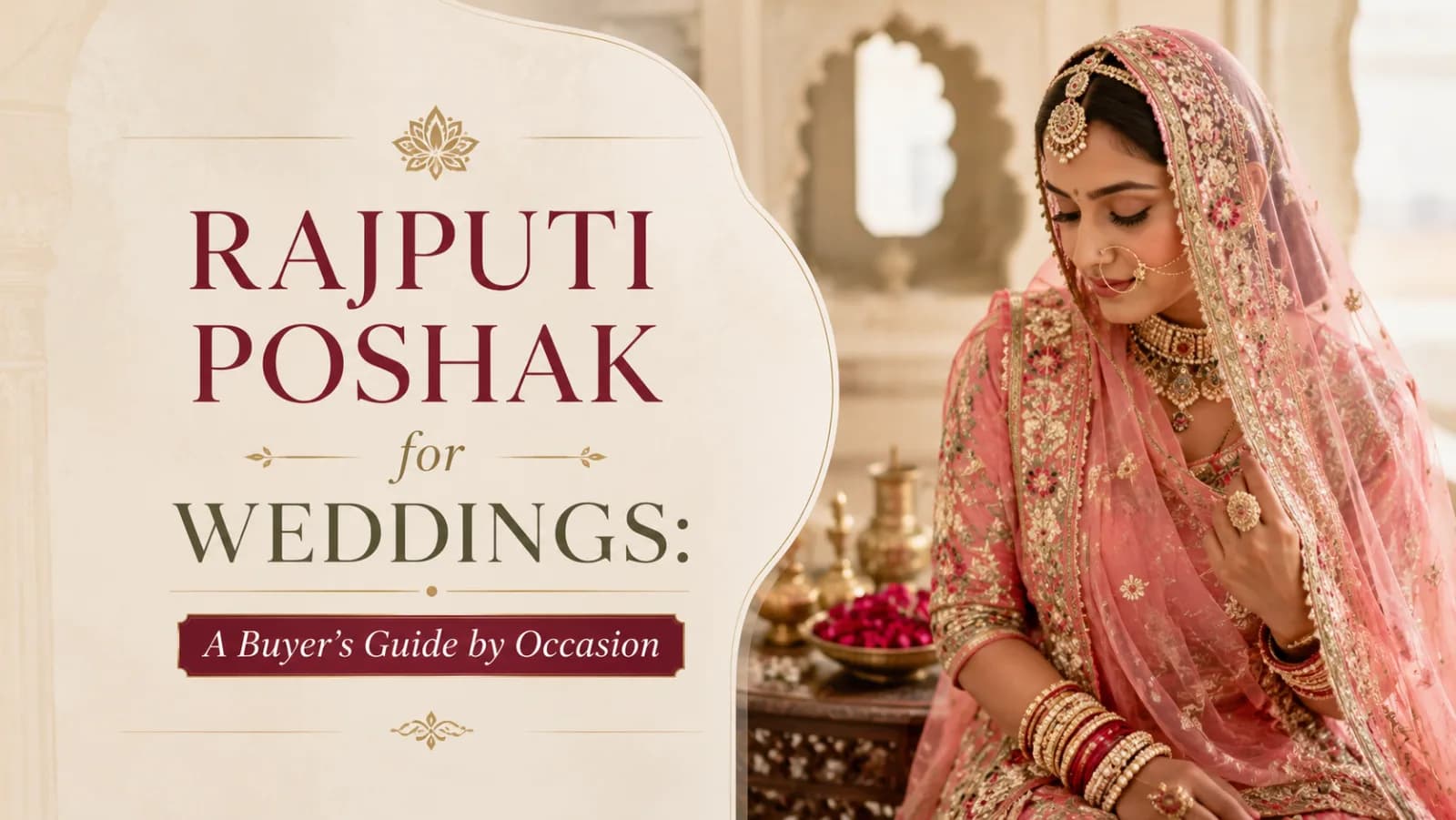
For deeper planning, read our companion guides: the function-by-function buyer's guide walks you through what to wear for engagement, mayra, haldi, mehendi, wedding day, and reception; the price guide breaks down what you're paying for across fabric, embroidery, and artisan hours; and the NRI brides guide covers shipping, sizing, and customs across 15+ countries.
Browse our full Rajputi Poshak collection to find your perfect piece, or explore our Heritage Bridal collection for wedding-ready ensembles. Our Banarsi Designer Lehenga Set in Rajputi Poshak Style is a popular choice for brides who want the Poshak silhouette with a contemporary lehenga twist. For custom orders and bridal consultations, visit our bridal consultation page or contact us via WhatsApp.