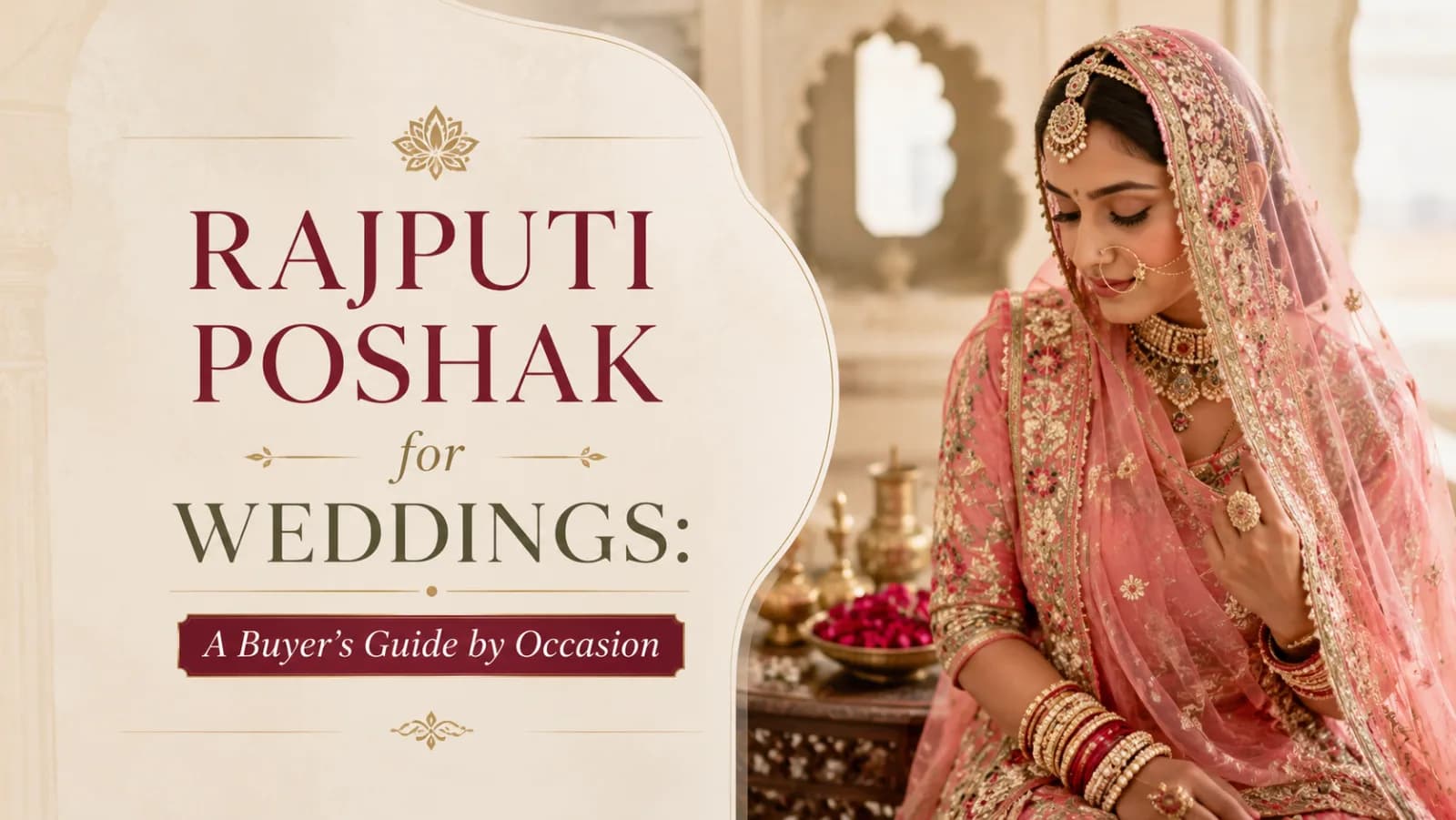
Rajputi Poshak for Weddings: A Buyer's Guide by Occasion (Engagement to Reception)
A function-by-function buyer's guide to the Rajputi poshak — what to wear for engagement, tilak, mayra, haldi, mehendi, wedding day, and reception. Fabrics, embellishments, colours, and styling by occasion.
Kshitija Rana
Editor
The Rajputi poshak is one of India's most regal traditional ensembles — a centuries-old, three-to-four-piece outfit that carries the identity of Rajasthan's royal courts into today's weddings. For Rajasthani brides and their families, a poshak is non-negotiable for at least two wedding functions. For non-Rajasthani brides, a poshak has become the signature "heritage look" that elevates a destination wedding from beautiful to unforgettable. But each wedding function asks for a different poshak — different fabric, different embellishment density, different colours. This buyer's guide walks you through the poshak by occasion, from the engagement to the reception.
The Poshak in a Rajasthani Wedding
Before we get to the function-by-function guide, it helps to understand the four components of a classical poshak:
- Kanchli — the short, fitted inner blouse, usually with Zari or Gota Patti handwork at the neckline and sleeves.
- Kurti — a long overbodice worn over the kanchli, reaching just below the hips, open or tied at the front.
- Ghagra — the floor-length pleated skirt, historically made with 30–50 metres of fabric, heavy with Gota Patti, Moti, or Zardozi handwork.
- Odhni — the long veil draped over the head and shoulders, usually embellished with a decorative pallu end and borders.
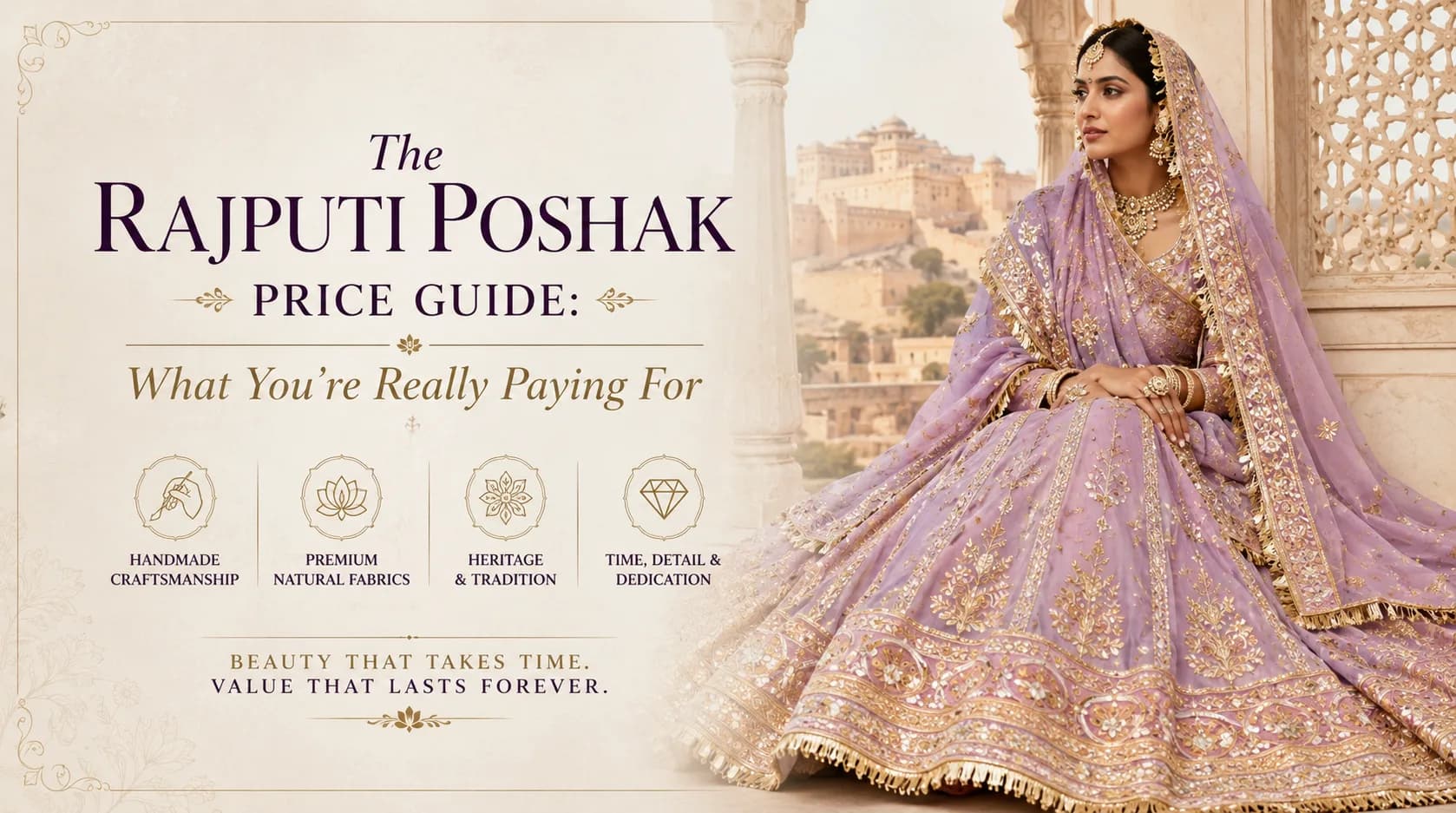
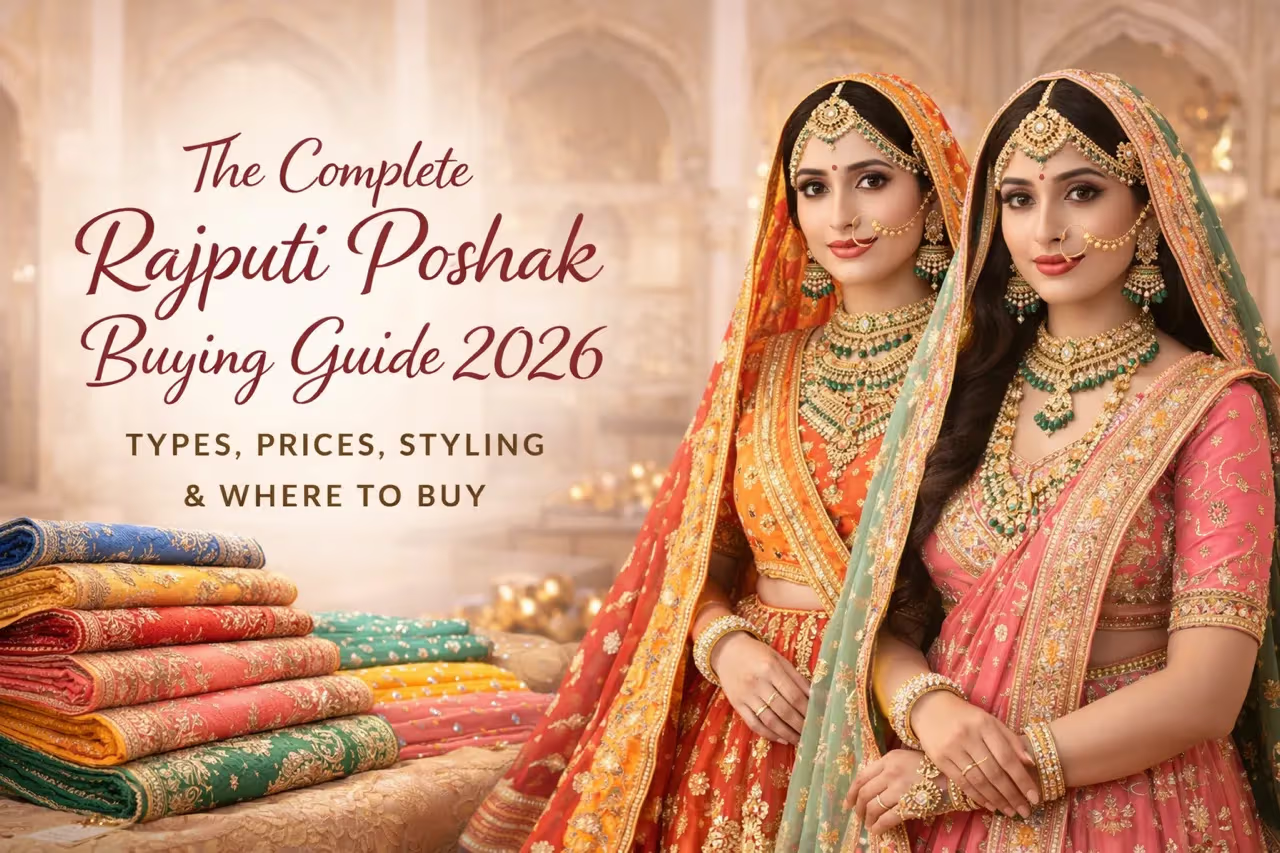
A new bride's poshak wardrobe for a traditional Rajasthani wedding typically includes three to five poshaks — one each for the engagement or tilak, mayra or bhaat, wedding day, and reception, with an optional lighter poshak for haldi or mehendi. The wedding day poshak is always the heaviest and most ceremonially significant. To understand the history, symbolism, and regional variations in more depth, read our guide to what a Rajputi poshak is and why it matters; for a complete decision framework on types, prices, and styling, see the complete Rajputi Poshak buying guide.
Engagement & Tilak Poshak
The engagement and tilak are the first formal announcements of the wedding. The mood is celebratory but not yet fully bridal — the poshak should feel special, but leave room for the escalation to come.
Recommended fabric: Georgette, Chanderi, or lightweight silk. A heavy silk base at this stage will leave nowhere to climb for the wedding day itself.
Recommended colours: Pastel pink, soft coral, mint, ivory with gold, powder blue, dusty rose. Avoid wedding-day reds and deep maroons — save those for the main ceremony.
Embellishment: Medium Gota Patti, Moti work, or light Zardozi on the kanchli and ghagra borders. Odhni should have a decorated pallu but relatively clean ground fabric.
Weight: Should feel comfortable for a 3–4 hour function. Target 3–4 kg total outfit weight including odhni.
Jewellery: A single statement set — either heavy earrings with a light necklace, or vice versa. This is the function where the ring will be the visual focus.
Mayra & Bhaat Poshak
The mayra (also called bhaat in some Rajasthani communities) is the ceremony where the maternal uncle and family bring gifts of clothes, jewellery, and money to the bride. It is one of the most emotionally significant functions in a traditional Rajasthani wedding, and the poshak choice often becomes a family heirloom.
Recommended fabric: Raw silk, tissue silk, or pure Georgette with silk lining. This function traditionally asks for something substantial.
Recommended colours: Deep red, maroon, wine, bottle green, or rich saffron. This is the poshak for true royal Rajput colours. Many families choose a colour that has been worn by the mother or grandmother in her own mayra poshak.
Embellishment: Heavy Gota Patti with real or semi-real Zari, traditional Moti and Dabka work, and thick gold borders. The kurti front often has a full-width decorative panel.
Weight: Substantial. Expect 5–7 kg total including the full-length odhni, which is often draped double.
Cultural note: The mayra poshak is often the one photographed most in family albums and the one preserved most carefully across generations. Many of our brides choose to invest here as much as or more than in the wedding day poshak itself.
Haldi & Mehendi Poshak
The haldi and mehendi functions are messy by design — turmeric paste, henna, oils, and outdoor setups. Dress accordingly.
Recommended fabric: Cotton, Chanderi, or light Georgette. Anything machine-washable is a bonus.
Recommended colours: Yellow, marigold, fresh green, coral, or orange for haldi. Green, saffron, or soft pink for mehendi.
Embellishment: Minimal — Gota Patti borders and small Mirror work accents at most. Heavy handwork will be ruined by turmeric and should be avoided. Keep the odhni light and short.
Weight: Target 2–3 kg. You will be seated for hours for mehendi and the weight matters.
Practical note: Many brides choose a shorter ghagra-kurti set rather than a full-length poshak for these two functions, or they skip the full poshak entirely in favour of a cotton lehenga-kurti. Save your investment pieces for the functions where they will show.
Wedding Day Poshak (The Bride's Look)
This is the centrepiece — the poshak the bride wears for the pheras, vidaai, and all wedding day rituals. It is the most photographed, most remembered, and most invested-in piece of the entire trousseau.
Recommended fabric: Pure silk, Banarasi silk, velvet, or heavy Georgette with silk lining. This is where you spend on fabric.
Recommended colours: Traditional red is still the most common and culturally anchored choice. Maroon, wine, rani pink, and deep coral are all culturally acceptable variations. Some modern brides choose burgundy, deep plum, or even forest green — these are beautiful but should be a conscious departure from tradition rather than a compromise.
Embellishment: The heaviest handwork in the entire trousseau — dense Zardozi, real or semi-real Zari Gota Patti, Moti, Kundan, Dabka, and often Mirror work all layered together. The ghagra may have 40–50 metres of fabric in the kalis (panels). The odhni is long, often bordered on all four sides, with a heavy embellished pallu.
Weight: 8–12 kg is typical for a bridal poshak. Stand in it for 15 minutes at fittings — this is how you know whether you can carry it through five hours of ceremony.
Jewellery: Full bridal set — rakhdi, bor, timniya, aad, choker, earrings, nath, bajuband, haath phool, kamarband, payal. The poshak should be designed to work with the jewellery, not compete with it. Reserve the heaviest embroidery for areas the jewellery will not cover.
Lead time: Minimum 12–16 weeks. Reputable ateliers decline rush orders on wedding day poshaks because the density of handwork cannot be compressed.
Reception Poshak
The reception is the function where the bride is introduced formally to the extended community and often to the groom's social and professional world. It is modern, photographed, and often held at a hotel banquet. The poshak should read as glamorous and celebratory, with a more contemporary energy than the wedding day look.
Recommended fabric: Georgette, net, tissue silk, or a modern silk-blend. Lighter than the wedding day, more flowing in the drape.
Recommended colours: Jewel tones — sapphire, emerald, ruby, amethyst, deep teal, wine, or midnight blue. Ivory and champagne are also increasingly popular for modern reception looks. This is the one function where you can step away from red entirely without raising any traditional eyebrows.
Embellishment: Heavy but more contemporary — sequin work, crystal accents, modern Zardozi patterns, Mirror work, and cutwork borders. The odhni is often draped differently — over one shoulder or as a cape — for photography.
Weight: 5–7 kg. You will be standing, mingling, and dancing. Slightly lighter than the wedding day poshak.
Jewellery: One statement piece — either a dramatic necklace set or bold earrings and a cuff. Pare back from the full bridal set. Let the poshak and your hairstyle carry the look.
Fabric & Embellishment Guide by Occasion
| Function | Fabric | Embellishment | Target Weight |
|---|---|---|---|
| Engagement / Tilak | Georgette, Chanderi | Medium Gota Patti, Moti | 3–4 kg |
| Mayra / Bhaat | Raw silk, tissue silk | Heavy Gota Patti, Zari | 5–7 kg |
| Haldi / Mehendi | Cotton, Chanderi | Minimal Gota borders | 2–3 kg |
| Wedding Day | Pure silk, velvet | Full Zardozi, Kundan, Moti | 8–12 kg |
| Reception | Georgette, net, silk-blend | Sequins, crystal, modern Zardozi | 5–7 kg |
Shop by Function
Our Rajputi poshak collection is organised by weight and occasion so you can find exactly the right piece for the right function. For first-time poshak buyers, we recommend booking a bridal consultation — fabric weight, colour, and handwork density are difficult to judge from photographs alone, and getting this right the first time saves you from expensive mid-process changes.
If you are building a full Rajasthani wedding trousseau, read our complete bridal trousseau checklist for 2026 for a function-by-function overview of every outfit you will need. For brides who want to coordinate a saree or lehenga alongside the poshak set, browse our Heritage Bridal Collection — palette-matched bridal sarees and lehengas that share the same handwork vocabulary as a Rajputi poshak.
A Final Word
A Rajputi poshak is not a fashion purchase — it is a piece of cultural architecture you wear on one of the most documented days of your life. Give yourself enough time. Choose fabric and colour that honours both tradition and your personal style. Work with an atelier that treats each poshak as a commissioned piece rather than a catalogue order. And trust the artisan craft that has defined this outfit for centuries — the handwork is what makes a poshak a poshak.
Book a bridal consultation at Rana's to begin your poshak journey.